
How Much Is a Plate Rack? 2026 Price Guide

Quick Answer
A plate rack can cost about $6 for a simple cabinet holder, $20–$50 for a basic household drying rack, $50–$80 for better aluminum or stainless designs, and $80–$110 or more for premium models. Before paying extra, I recommend choosing the right dish rack for your space, because size and drainage often matter more than brand name.
Typical Home Plate Rack Prices
- Simple plate holder: About $6–$15 for a basic bamboo, plastic, or coated-wire organizer.
- Budget dish rack: Around $20–$40 for a straightforward countertop model.
- Mid-range rack: Roughly $40–$70 for better drainage, metal construction, or expandable designs.
- Premium rack: Around $80–$110+ for heavier frames, refined drainage, and better accessories.
- Commercial plate rack: Professional countertop and mobile systems can cost hundreds of dollars.
My Buying Rule
- For most home kitchens, I would budget about $30–$70 unless you specifically need a premium or commercial design.
When someone asks me how much a plate rack costs, the first thing I clarify is what kind of rack they mean. A small cabinet plate holder and a full dish-drying rack can have completely different prices.
That distinction matters. In this guide, I’ll break down realistic 2026 U.S. prices and show what you get at each level.
How Much Is a Plate Rack in 2026?
For normal household use, expect to spend anywhere from about $6 to more than $100. The useful price range for most complete dish-drying racks is closer to $20–$80.
Current prices show just how broad the category is. A simple holder may cost less than lunch, while a premium drying station can reach three figures.
| Rack Type | Typical 2026 Price | Best For | What You Usually Get |
|---|---|---|---|
| Simple plate holder | $6–$15 | Cabinets and light drying | Basic slots, compact footprint |
| Budget dish rack | $20–$40 | Small households | Plate slots, utensil cup, simple tray |
| Mid-range rack | $40–$70 | Regular daily use | Better metal frame, drainage, adjustable parts |
| Premium dish rack | $80–$110+ | Busy kitchens | Heavy frame, advanced drainage, better accessories |
| Commercial plate system | $140–$1,000+ | Restaurants and catering | High capacity, wall or mobile frames |
Those ranges are starting points rather than fixed retail prices. Sales, materials, capacity, finish, and retailer promotions can move the final number considerably.
What Does a Real Plate Rack Cost Right Now?
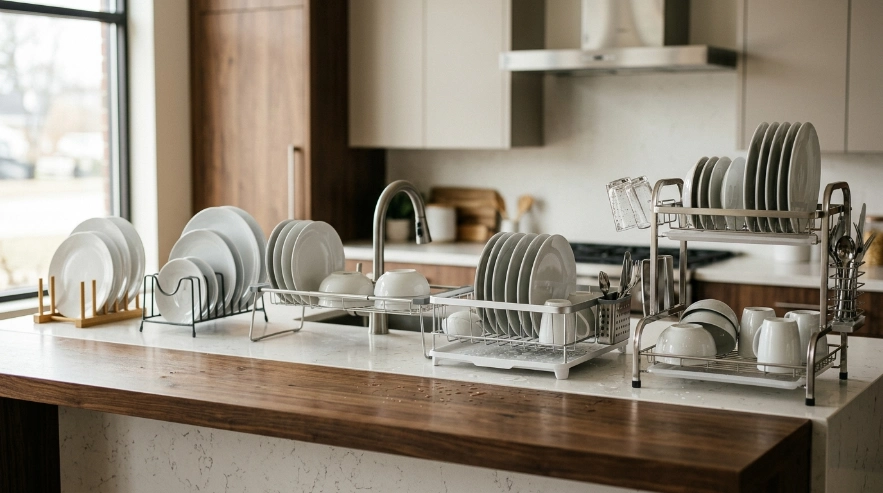
Current products give us a more useful benchmark than vague averages. During my August 2026 research, I found home plate-rack options ranging from under $10 to $100.
| Example | Observed Price | Type | Useful Detail |
|---|---|---|---|
| IKEA OSTBIT | $5.99 | Bamboo plate holder | Holds six plates and measures about 11 × 5 × 3 inches |
| Better Houseware 3-Section Plate Rack | $11.99 | Coated-steel organizer | Designed for upright cabinet or counter storage |
| OXO Over-the-Sink Aluminum Dish Rack | $46.99 | Over-sink drying rack | Extendable arms and removable utensil cup |
| OXO Aluminum Dish Rack | $64.99 | Countertop drying rack | 17.9 × 14.9 × 6.6 inches with adjustable drain board |
| simplehuman Compact Steel Frame Dishrack | $80 | Premium compact rack | Swivel drainage spout and five-year warranty |
| simplehuman Standard Steel Frame Dishrack | $100 | Premium full-size rack | Large capacity, swivel spout, and wine-glass holder |
The table also explains why one answer cannot fit every shopper. A $6 plate organizer and a $100 drying station solve different problems.
Why Do Plate Rack Prices Vary So Much?
The biggest price differences come from construction, size, and drainage design. Decorative finishes and extra accessories can raise the price further.
These are the factors I would compare before deciding whether a higher price makes sense:
- Material: Plastic and simple bamboo usually cost less than substantial aluminum or stainless steel frames.
- Capacity: Larger racks need more material and stronger support for cookware and heavy dinnerware.
- Drainage: Sloped boards, swivel spouts, removable trays, and direct-to-sink systems add complexity.
- Adjustability: Expandable sides and over-sink arms often increase the price.
- Accessories: Cup holders, cutlery baskets, knife blocks, and glass racks can push a model upward.
- Warranty: Better warranties often appear on more expensive products.
Does the material make a big difference?
Yes. Material affects both the purchase price and how well a rack handles constant moisture.
I would compare the actual metal grade and construction rather than trusting a vague “rust-resistant” description. Our guide to the best material for a dish rack explains the differences in more detail.
Stainless steel is popular because of its corrosion resistance and cleanability. The World Stainless Association also identifies grades such as 304 as widely used for kitchen applications.
Is a More Expensive Plate Rack Worth the Money?
A more expensive rack can be worth it when the extra money buys better drainage, capacity, stability, or corrosion resistance. Paying more only for appearance is harder to justify.
My practical rule is to identify the daily problem first. Then I look for the cheapest rack that solves that problem without creating another one.
- Spend more for drainage if your current rack leaves puddles on the counter.
- Spend more for capacity if dishes constantly pile outside the rack.
- Spend more for stability if you regularly dry stoneware, pans, or large cutting boards.
- Spend more for space efficiency if an over-sink or expandable design frees valuable work surface.
- Skip expensive extras if you rarely use wine-glass holders, detachable shelves, or oversized utensil cups.
The first measurement I check is usable countertop footprint. A beautiful rack becomes frustrating fast when it steals the prep space you use every day.
How Much Should You Spend on a Plate Rack?
For most households, I think $30–$70 is the sweet spot. That range gives you access to stronger frames and useful drainage without automatically entering premium pricing.
Your ideal budget depends on how many dishes you wash and where the rack will live.
| Kitchen Situation | Suggested Budget | Priority |
|---|---|---|
| Cabinet plate storage only | $6–$20 | Correct slot size |
| One or two people | $20–$45 | Compact footprint |
| Typical family kitchen | $40–$70 | Capacity and drainage |
| Small kitchen with little counter space | $40–$80 | Over-sink or expandable design |
| Premium permanent setup | $80–$110+ | Build quality and drainage |
What Should You Check Before Buying a Plate Rack?
Measure first and shop second. A few minutes with a tape measure can prevent an expensive return.
- Measure the counter: Record the maximum width and depth you can spare.
- Measure the sink: This matters for over-sink racks and drainage spouts.
- Count a normal dish load: Include plates, bowls, mugs, utensils, and pans.
- Check plate spacing: Thick stoneware needs wider slots than thin dinnerware.
- Inspect drainage: Water should move toward the sink instead of collecting underneath.
- Check removable parts: Trays and utensil cups should be easy to wash.
Should cleaning costs affect your choice?
Yes, because an awkward rack can become more work than it saves. Removable trays and open joints are usually easier to maintain than complicated frames with trapped wet areas.
I use a regular cleaning schedule rather than waiting for visible buildup. Our guide explains how often to wash a dish rack based on household use.
For the actual process, see the step-by-step guide to the best way to clean a dish rack. Routine washing with appropriate soap and clean surfaces also fits broader USDA kitchen cleanliness guidance.
The FDA’s food-safety guidance for home kitchens is another useful reference. I would never let a dirty drain tray sit directly beneath freshly washed dishes.
Which Plate Racks Are Worth Considering?
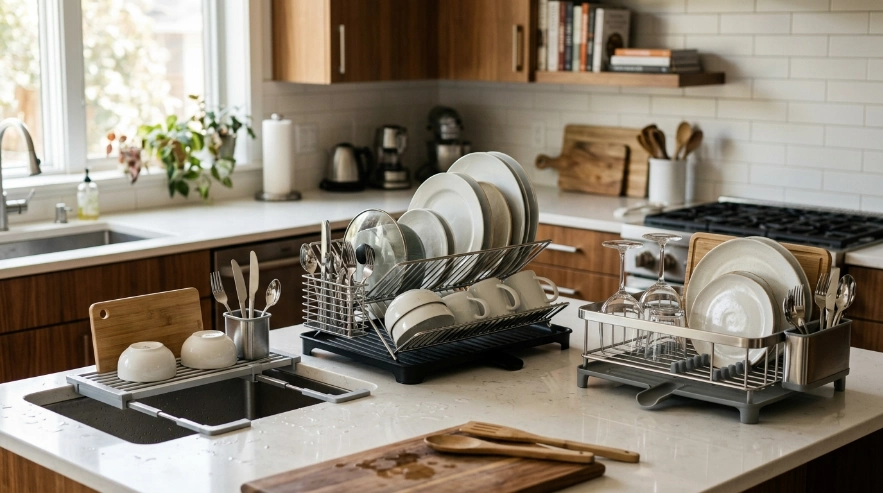
If you’re ready to buy, I would start with these three styles rather than choosing only by price. Each solves a different kitchen problem.
🏆 Best Premium Pick
simplehuman Steel Frame Dishrack
★★★★★
The standard model uses a swivel drain spout, silicone-capped plate supports, and a large-capacity frame. I like this style when drainage and long-term countertop stability matter more than getting the lowest price.
📏 Best for Small Spaces
OXO Good Grips Over-the-Sink Aluminum Dish Rack
★★★★☆
Its aluminum frame has extendable arms, upright plate holders, and a removable divided utensil cup. I would choose this format when preserving counter space is more important than maximum dish capacity.
💰 Best Family Value
KitchenAid Full Size Dish Rack
★★★★☆
Full-size KitchenAid racks typically combine a metal frame, angled drain board, removable flatware caddy, and non-slip feet. I see this style as a sensible middle ground when a family needs capacity without jumping straight to luxury pricing.
Frequently Asked Questions
How much does a simple plate holder cost?
A basic plate holder for a cabinet, drawer, or countertop can cost roughly $6–$15. These models usually focus on keeping plates upright and organized rather than handling a complete load of wet dishes, cups, cookware, and utensils.
How much should I pay for a good dish drying rack?
For most homes, I would budget about $30–$70. That range usually gives you more choices in metal construction, drainage design, capacity, and removable accessories without requiring the $80–$110+ price of premium models.
Are stainless steel plate racks more expensive?
They often cost more than basic plastic or simple bamboo holders, although construction quality matters as much as material. A well-designed stainless or aluminum rack can justify the extra cost when you need better strength, moisture resistance, and daily capacity.
Are expensive dish racks worth $100?
They can be worth $100 when you need excellent drainage, a sturdy permanent frame, large capacity, or specialized glass and utensil storage. For light dish loads, however, a simpler $30–$60 rack may perform every function you genuinely need.
Why are commercial plate racks so expensive?
Commercial racks are designed for restaurant, banquet, catering, or warewashing workloads rather than ordinary home drying. They may hold dozens of plates, use heavy frames or casters, and need to withstand frequent transport, so prices can rise from hundreds to well over $1,000.
Final Takeaway: How Much Should a Plate Rack Cost?
A plate rack can cost less than $10 or more than $100, depending on what you mean by “plate rack.” For an everyday home dish-drying rack, a realistic target budget is about $30–$70.
I would spend based on drainage, fit, material, and capacity rather than chasing the most expensive model. Measure your space first, choose the features you will use every day, and let the price follow those needs.