
How Often Should You Wash Your Dish Rack?

Quick Answer
I recommend washing a dish rack at least once a week under normal household use. Clean it sooner if you see slime, food bits, standing water, mold, or buildup, since good kitchen cleanliness helps reduce cross-contamination.
My Simple Cleaning Schedule
- Every day: Empty standing water and remove visible food scraps.
- Once a week: Wash the rack, tray, utensil holder, and drain spout.
- Heavy use: Wash every two to three days if the rack stays wet most of the day.
- Visible slime: Clean the rack immediately instead of waiting for your normal cleaning day.
- Raw-food contact: Wash and sanitize promptly if raw meat or egg liquid contaminates the rack.
One Tip That Helps
- Let the rack and drain board dry between loads whenever possible. Constant moisture makes grime harder to control.
I used to clean my dish rack only when it started looking dirty. That turned out to be a poor way to judge it.
The top wires could look fine while the drain tray underneath felt slick. Now I use a simple weekly routine and check the wet areas more often.
Why Does a Dish Rack Need Regular Washing?
A dish rack is a drying station that holds wet dishes while water drains and evaporates. Because it stays damp, soap residue, minerals, crumbs, and other debris can collect on its surfaces.
The part that surprised me most was the drain tray. I once lifted a rack that looked clean from above and found a slippery film around the tray edges and drain opening.
- Standing water: Water trapped in a flat tray keeps the area damp longer.
- Food residue: Tiny particles can fall from dishes that were not rinsed completely.
- Soap film: Detergent residue can create cloudy or sticky patches.
- Hard-water minerals: Calcium deposits often leave white crust or spots.
- Kitchen splashes: Sink water and food-prep mess can reach the rack.
The FDA recommends washing dishes, utensils, cutting boards, and countertops with hot, soapy water as part of safe kitchen cleaning. That same basic habit works well for most washable dish racks.
You can review the FDA’s broader kitchen cleaning guidance if you want more food-safety context.
How Often Should You Wash a Dish Rack Based on Use?

For most homes, once a week is my practical baseline. I adjust that schedule based on moisture, household size, and what happens around the sink.
A rack used twice a day by a large family needs more attention than one used for two coffee cups each morning.
| Situation | Suggested Cleaning | What I Check |
|---|---|---|
| Light use | About once weekly | Tray, corners, utensil cup |
| Normal family use | Once weekly, plus daily draining | Standing water and food particles |
| Heavy daily use | Every 2–3 days if needed | Slime, odor, wet joints |
| Visible grime or mold | Immediately | All removable parts |
| Raw-food contamination | Immediately | Contaminated surfaces and nearby sink area |
These are practical household intervals, not rigid health regulations. The condition of your rack should always override the calendar.
How Can You Tell Your Dish Rack Needs Cleaning?
You do not need to wait for a strong smell or obvious mold. Several smaller signs tell me it is time to wash the rack.
- Slippery surfaces: A slick feeling is enough reason for me to clean it.
- White crust: Hard water can leave mineral deposits around drains and wire joints.
- Pink or dark discoloration: Unusual growth or staining should be cleaned promptly.
- Musty smell: Odor often points to trapped moisture or residue.
- Water that will not drain: A dirty or blocked spout can leave the tray wet.
- Food particles: Crumbs and residue should not stay under clean dishes.
NSF has found that several high-contamination areas in homes are located in kitchens. Its kitchen hygiene guidance is one reason I do not judge cleanliness by appearance alone.
How Should You Wash a Dish Rack?
For most racks, I start with warm water and mild dish soap. I also check the manufacturer’s care instructions before using a dishwasher, abrasive pad, bleach, or strong cleaner.
- Empty the rack. Remove dishes, cups, cutlery, and drying mats.
- Take removable parts apart. Pull off the utensil cup, tray, drainboard, or spout if the design allows it.
- Rinse loose debris away. This keeps crumbs from spreading while you scrub.
- Wash with warm, soapy water. Use a soft sponge, cloth, or suitable brush.
- Scrub joints and corners. I spend extra time around wire intersections and drain openings.
- Rinse thoroughly. Remove detergent and loosened residue.
- Dry the pieces. Shake off water and let the parts air-dry fully before reassembling.
I avoid steel wool on coated or stainless racks unless the manufacturer specifically allows it. Scratching a protective surface can make future cleaning harder.
Should You Sanitize a Dish Rack Every Time?
No. Routine washing with soap and water is usually the first step for an ordinary household rack.
I consider sanitizing when the rack has contacted raw meat juices, raw egg, floodwater, or another meaningful contamination source. Cleaning should come before sanitizing because dirt and residue can reduce the effectiveness of the sanitizing step.
USDA explains this clean-first approach in its guidance on cleaning and sanitizing kitchen surfaces.
When using a commercial sanitizer, I follow its label exactly. I never mix bleach with vinegar, ammonia, or another household cleaner.
Can You Put a Dish Rack in the Dishwasher?
Only if the manufacturer says the rack or removable part is dishwasher safe. Materials, coatings, adhesives, and plastic parts respond differently to dishwasher heat.
This is one mistake I stopped making assumptions about. A metal-looking rack can still contain coated joints or plastic components that should be hand washed.
- Check the care label: Look underneath the rack or on the packaging.
- Read the manual: Manufacturer instructions take priority over general advice.
- Separate removable parts: One tray may be dishwasher safe while the frame is not.
- Watch the heat: High heat can deform some plastics or damage coatings.
For example, OXO lists its smaller Good Grips Dish Rack as dishwasher safe. Simplehuman says its steel-frame dishrack parts generally should not go in the dishwasher unless a specific part is identified as safe.
Does the Material Change How Often You Should Clean It?
The weekly baseline stays about the same for me, but the cleaning method changes. Stainless steel, coated wire, and plastic each have different weak points.
Stainless Steel Dish Racks
Stainless steel handles moisture well, but it can still collect fingerprints, soap film, mineral spots, and grime. I wipe it dry after washing when water spotting is a problem.
A soft cloth and mild detergent are safer than aggressive abrasives. Some manufacturers also warn that chlorine products can damage certain stainless finishes.
Coated Wire Dish Racks
Coated wire needs gentler scrubbing because damaged coating can expose the metal underneath. I check bends and welded joints for chips whenever I clean mine.
If rust keeps returning beneath damaged coating, replacement may make more sense than repeatedly treating the same spot.
Plastic Dish Racks
Plastic cannot rust, but grooves and molded corners can hold moisture. I pay close attention to the utensil holder and drain holes.
If the manufacturer allows dishwasher cleaning, that can simplify maintenance. Otherwise, warm water, dish soap, and a soft brush work well for routine cleaning.
How Do You Keep a Dish Rack Cleaner Between Washes?
The easiest cleaning job is the one that never becomes a major scrub. A few daily habits made a bigger difference for me than using stronger cleaners.
- Empty the drain tray: Do not let old water sit underneath the rack.
- Keep the spout open: Make sure drainage toward the sink is not blocked.
- Rinse dishes well: Less leftover food means less debris in the rack.
- Give it airflow: Avoid packing dishes so tightly that everything stays wet.
- Clean the sink too: A spotless rack beside a dirty sink does not solve the whole problem.
- Remove dry dishes: An empty rack gets more airflow and is easier to inspect.
As of 2026, manufacturers are also putting more focus on drainage design. Some racks use sloped trays, larger drainage holes, or movable spouts to reduce standing water.
When Should You Replace a Dish Rack Instead of Cleaning It?
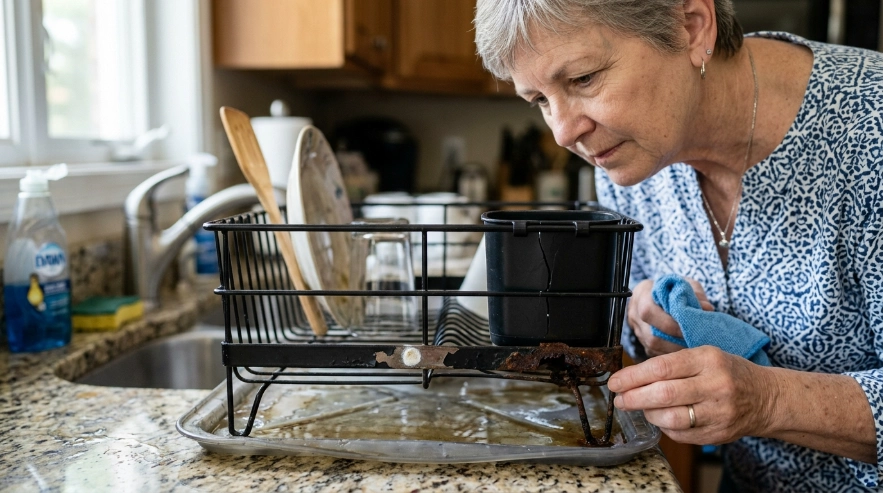
Cleaning cannot repair every problem. I replace a rack when damaged surfaces make it difficult to keep clean or safe to use.
- Deep rust: Severe corrosion can weaken metal sections.
- Peeling coating: Exposed wire may continue deteriorating.
- Cracked plastic: Deep cracks can trap debris and become difficult to scrub.
- Broken drainage: A warped tray that constantly holds water defeats the design.
- Persistent odor: Smells that remain after thorough cleaning can signal trapped residue.
I do not replace a rack just because it has a few harmless mineral spots. Those often need cleaning or descaling rather than a new rack.
Dish Racks I Like for Easier Cleaning and Drainage
If you are replacing a rack, I would focus on drainage, removable parts, and surfaces you can reach with a sponge. Those features matter more to me than decorative extras.
🏆 Best Overall
Simplehuman Steel Frame Dishrack
★★★★☆ Editor fit: 4.8/5
It has a swivel drain spout, removable components, and a large-capacity frame. I like this design when drainage is the main priority because water is directed toward the sink instead of sitting beneath the dishes.
↔️ Best Flexible Design
OXO Good Grips Foldaway Dish Rack
★★★★☆ Editor fit: 4.6/5
The plate rack folds down for larger cookware, and the unit includes a drain spout. I like adjustable layouts because opening the rack up also makes hidden wet areas easier to inspect.
🧽 Best for Easy Washing
Rubbermaid Antimicrobial Dish Drainer
★★★★☆ Editor fit: 4.4/5
Large drainage holes promote airflow, and Rubbermaid lists the rack as dishwasher safe. I would choose this style when simple maintenance matters more than a premium countertop appearance.
Frequently Asked Questions
Should I wash my dish rack every day?
You usually do not need to deep-clean a dish rack every day. I empty standing water and remove debris daily, then give the entire rack a thorough wash about once a week unless visible grime or contamination appears sooner.
How often should I clean the dish rack drain board?
I check the drain board daily and wash it at least weekly. Because water, soap film, and food particles collect there, I clean it sooner whenever it becomes slippery, develops mineral buildup, or stops draining freely.
Can mold grow on a dish drying rack?
Mold and other unwanted growth can develop where moisture and residue remain. Reduce the chance by draining standing water, cleaning the rack regularly, improving airflow, and letting removable pieces dry fully before putting them back together.
Is vinegar safe for cleaning a dish rack?
It depends on the rack material and manufacturer instructions. Diluted vinegar is often used for mineral deposits, but acids can affect some coatings and metals, so I check the care guide first and never combine vinegar with chlorine bleach.
Should I dry my dish rack after cleaning it?
Yes. I shake off excess water and let the rack dry fully before loading it again. Keeping the rack dry between uses also makes it easier to spot new residue, rust, clogged drainage areas, or other problems.
My Takeaway
Wash your dish rack about once a week for normal household use, but treat that as a baseline rather than a strict deadline. Heavy use, standing water, slime, food debris, odors, or contamination are all reasons to clean sooner.
The habit that works best for me is simple: drain it daily, inspect the wet areas, and give every removable part a proper weekly wash. Add that small job to your kitchen routine, and the rack becomes much easier to maintain.
