
How to Store Dishes in a Drawer: A Practical Step-by-Step Guide

Quick Answer
To store dishes in a drawer, use a deep drawer near your dishwasher or dining area, add a non-slip liner, and separate plate and bowl stacks with adjustable pegs or dividers. Keep stacks low enough to clear the drawer above, and secure them so they cannot slide when the drawer opens. A dedicated dish-storage setup can make everyday plates easier to reach while freeing upper-cabinet space.
Quick steps
- Measure first: Check the drawer’s inside width, depth, and usable height.
- Check the load: Follow your cabinet manufacturer’s drawer-weight guidance before adding heavy stoneware.
- Add grip: Use a washable non-slip drawer liner to reduce shifting.
- Create sections: Install adjustable pegs, plate holders, or dividers around each stack.
- Stack by type: Keep dinner plates, side plates, and bowls in separate groups.
- Test the drawer: Open and close it several times to confirm nothing slides or hits the cabinet.
One important rule
- Never assume a wide drawer can safely hold unlimited dishes. Dinnerware gets heavy fast, so check the hardware rating first.
I used to think plates belonged in an upper cabinet because that’s where everyone seemed to put them. Then I set up a deep drawer for everyday dishes and found the routine much simpler.
You can see every stack from above, and there’s less reaching over your head. The trick is stopping those dishes from sliding every time you pull the drawer open.
What Is Dish Drawer Storage?
Dish drawer storage means keeping plates, bowls, saucers, and similar dinnerware inside a pull-out kitchen drawer instead of a traditional upper cabinet. Deep base drawers usually work best because they provide enough height and easier access from above.
Simple definition: A dish drawer uses a deep drawer plus supports such as pegs, dividers, plate holders, or non-slip material to keep stacked dinnerware organized and stable.
This isn’t just a design trend. As of 2026, major kitchen-storage brands still sell pegboards and adjustable systems made specifically for organizing dishes inside drawers.
For example, IKEA’s UPPDATERA kitchen drawer organizer range includes pegboard organizers designed around stacked plates and bowls.
How Do You Store Dishes in a Drawer Without Them Sliding?
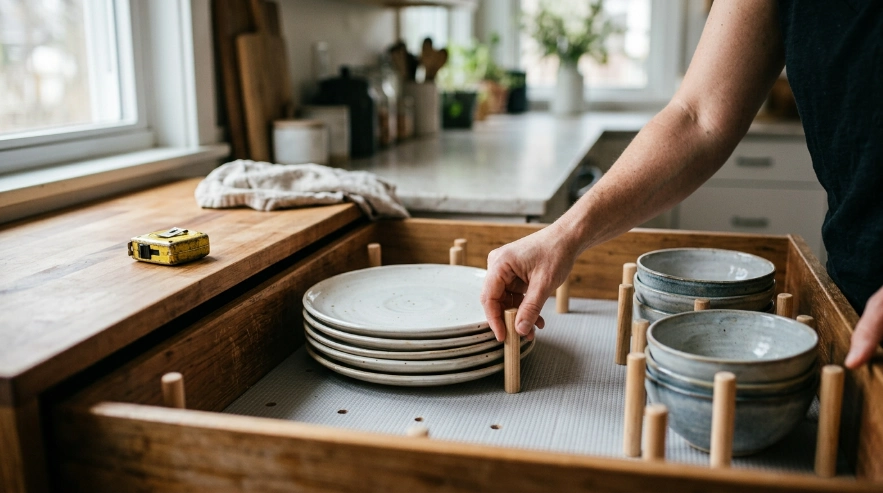
The best approach is to combine a grippy drawer base with firm supports around each stack. The supports stop sideways movement while the liner keeps the bottom plate from skating across the drawer.
1. Empty and measure the drawer
Remove everything before buying an organizer. Measure the usable inside width, front-to-back depth, and height below the drawer or countertop above it.
Then measure your largest dinner plate and tallest bowl stack. Don’t rely on the cabinet’s advertised exterior dimensions.
- Width: Measure from one interior side wall to the other.
- Depth: Measure from the inside front to the back panel.
- Height: Measure the real clearance available when the drawer closes.
- Dish diameter: Measure your widest plate, platter, or bowl.
2. Check whether the drawer can handle the weight
A stack of ceramic or stoneware plates can be surprisingly heavy. Several stacks may put far more stress on drawer slides than utensils or kitchen linens.
I never give a universal weight number here because drawer hardware varies. Check the cabinet or slide manufacturer’s load rating instead.
3. Add a non-slip liner
A liner is one of the simplest improvements you can make. It reduces sliding and also gives the bottom plate a softer surface.
Choose something washable and thin. A bulky liner can steal valuable height in a shallow drawer.
4. Create a separate zone for each dish type
Don’t build one giant mixed stack. Smaller groups are easier to lift, return, and secure.
- Dinner plates
- Salad or side plates
- Soup bowls
- Cereal bowls
- Saucers
- Small serving dishes
I like putting the most-used dinner plates toward the front. Less frequently used serving pieces can sit farther back.
5. Install pegs or adjustable dividers
Pegs are my favorite solution for wide, deep drawers because you can reposition them when your dishes change. Set three or four supports around a stack so it cannot shift sideways.
Rev-A-Shelf also offers a trim-to-fit drawer peg system in three standard sizes, showing why this approach works well in cabinets with different dimensions.
6. Test the finished setup
Open the drawer slowly at first. Then close it and repeat the motion at normal speed.
Listen for clinking and watch for movement. If the stacks shift, bring the supports closer or add more grip underneath them.
Should Plates Be Stored Flat or Vertically in a Drawer?
Most everyday dinner plates are easiest to store in short, flat stacks inside a deep drawer. Vertical storage can work for lightweight plates, lids, trays, or specialty dishes when a strong divider system keeps them upright.
For my own setup, I prefer flat stacks for dishes I handle every day. There’s less balancing involved when I pull one plate from the top.
| Storage Method | Real Example or Setup | Best For | Adjustability |
|---|---|---|---|
| Movable pegboard | IKEA UPPDATERA pegboard is offered in 24-inch and 30-inch U.S. versions | Flat stacks of plates and bowls | High |
| Trim-to-fit peg system | Rev-A-Shelf 4DPS is sold in three standard sizes and can be trimmed to fit | Custom or retrofit drawers | High |
| Adjustable dividers | Spring-loaded or fitted drawer partitions | Bowls, kids’ dishes, and mixed shapes | Medium to high |
| Non-slip liner only | Washable grippy liner cut to drawer size | Small, light stacks in slow-closing drawers | Low |
Better Homes & Gardens also shows adjustable pegboard inserts securing stacks of plates and bowls in deep drawers. That layout is close to what I recommend for most family kitchens.
What Kind of Drawer Is Best for Storing Plates and Bowls?
A wide, deep base-cabinet drawer is usually the most practical choice. It should open smoothly, provide enough vertical clearance, and support the combined weight of your dinnerware and organizers.
Put everyday dishes near the dishwasher
Location matters more than many people expect. A dish drawer beside or across from the dishwasher can shorten the put-away routine.
The same idea applies if you hand-wash dishes. Keep the drawer close to your usual drying area when the kitchen layout allows it.
Choose lower drawers for easier visibility
A lower drawer lets you look down at every group instead of reaching behind the first stack in an upper cabinet. That makes overlooked dishes easier to find.
The Spruce also includes plates stored inside kitchen drawers among its drawer-organization approaches.
Avoid overcrowding
The goal isn’t to squeeze every plate you own into one drawer. Leave enough room to lift a dish without scraping the stack beside it.
If the drawer is packed tightly, opening and closing it becomes harder. Overcrowding also defeats the convenience you’re trying to create.
How Do You Organize Different Types of Dishes in One Drawer?
Group dishes by both size and frequency of use. Put everyday pieces in the easiest positions and give fragile or irregular pieces their own protected section.
Here’s the layout I find easiest to maintain:
- Front left: Everyday dinner plates
- Front right: Everyday bowls
- Back left: Side plates and saucers
- Back right: Less-used serving bowls or specialty dishes
Keep similar diameters together
A large plate underneath a much smaller plate may look harmless, but mixed stacks are less stable. Similar sizes give the supports a cleaner contact point.
This also makes it easier to grab one item without disturbing several others.
Give delicate dishes extra space
Fine china, handmade pottery, and sentimental pieces deserve more breathing room. I wouldn’t cram these against heavy stoneware just to save a few inches.
Use soft separators when the finish is especially delicate. Store pieces so hard edges aren’t rubbing together whenever the drawer moves.
Keep dishes completely dry
Put clean dishes away only after they are dry. Moisture trapped under a stack can dampen liners and create an unpleasant drawer environment.
If your liner gets wet, remove it and let both the liner and drawer dry before restacking the dishes.
What Mistakes Should You Avoid With Dish Drawer Storage?
The biggest mistakes are skipping measurements, ignoring drawer capacity, and relying on loose stacks with no support. All three can turn a convenient setup into a noisy, frustrating one.
- Buying organizers first: Measure the actual interior before ordering anything.
- Ignoring vertical clearance: A stack can fit inside an open drawer yet hit the cabinet when you close it.
- Making stacks too tall: Shorter stacks are easier to handle and usually more stable.
- Using only slick plastic: Add a non-slip base or firm dividers if dishes move.
- Mixing heavy and delicate pieces: Give fragile dishes their own protected zone.
- Overloading the drawer: Check the manufacturer’s hardware specifications.
- Ignoring chipped dishes: Damaged edges can catch neighboring pieces and may continue deteriorating.
One test I always use is simple: open the drawer normally with one hand. If I hear several plates knock together, the setup needs adjusting.
Good drawer storage should feel uneventful. Everything should stay where you placed it.
Are Dish Drawers Better Than Upper Cabinets?
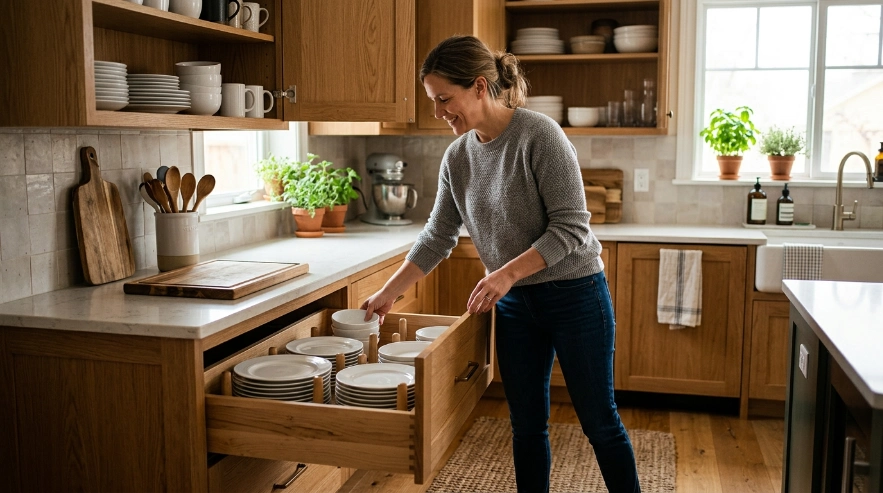
Dish drawers can be better for accessibility and visibility, while upper cabinets may be better when base-drawer space is limited. Neither layout wins in every kitchen.
| Factor | Dish Drawer | Upper Cabinet |
|---|---|---|
| Visibility | You can usually see stacks from above | Back items may be hidden |
| Reaching | Requires bending or reaching downward | Requires reaching upward |
| Movement control | Often needs pegs, dividers, or liner | Shelves remain stationary |
| Space tradeoff | Uses valuable base-cabinet drawer space | Leaves deep drawers available for cookware |
I prefer a drawer for everyday dinnerware and an upper cabinet for occasional serving pieces. That split keeps the daily routine easy without giving up all my lower storage.
Useful Products for Storing Dishes in Drawers
If you’re ready to build a more secure dish drawer, these are the three types of products I’d look at first. Measure your drawer before ordering any of them.
🏆 Best Overall
IKEA UPPDATERA Pegboard Drawer Organizer
My fit rating: ★★★★★
The U.S. range includes 24-inch and 30-inch pegboard options, and the movable layout makes it easy to build zones around plates and bowls. I like this style because you can reconfigure the drawer when your dinnerware changes.
🛠 Best for Custom Fit
Rev-A-Shelf 4DPS Drawer Peg System
My fit rating: ★★★★★
This system is available in three standard sizes and can be trimmed for the drawer. I’d consider it when you want a more built-in appearance instead of dropping a small organizer into a large drawer.
💰 Best Simple Upgrade
Adjustable Drawer Divider Set
My fit rating: ★★★★☆
Expandable dividers don’t offer the same custom support as a pegboard, but they can separate bowls, plates, and kids’ dishes without permanent installation. I use this approach when I want a layout that can change quickly.
Frequently Asked Questions
Can you put dinner plates in a kitchen drawer?
Yes. Dinner plates can be stored in a deep kitchen drawer when the drawer has enough clearance and suitable load capacity. Use pegs, dividers, or another support system so stacked plates stay stable when the drawer moves.
How do I stop plates from moving in a drawer?
Use a non-slip liner under the dishes and position adjustable pegs or dividers close to each stack. Test the drawer several times after setup. If the plates still slide or clink, tighten the spacing around them.
Is it safe to stack bowls in a drawer?
Yes, provided the bowls stack securely and the drawer can support their combined weight. Keep the stack short enough for easy handling and leave enough clearance so the upper bowls don’t hit the cabinet when the drawer closes.
What should I put under dishes in a drawer?
A thin, washable non-slip liner works well beneath dishes. It adds grip, reduces sliding, and protects the drawer surface. Avoid thick padding that takes away too much usable height or makes heavy stacks unstable.
How many plates should I stack in a drawer?
There isn’t one correct number because plate weight, drawer size, and slide capacity vary. Build manageable stacks that remain stable, clear the cabinet above, and stay within the drawer manufacturer’s specified weight limit.
Final Takeaway
Learning how to store dishes in a drawer comes down to three things: enough space, enough support, and a layout that matches your daily routine. Measure first, secure each stack, and keep your most-used dishes within easy reach.
Once the setup is right, a dish drawer can make unloading, setting the table, and finding the plate you want noticeably simpler. Start with one everyday drawer, test it for a week, and adjust the pegs or dividers until the layout feels natural.
