
Fresh Pineapple Juice Recipe (Blender or Juicer)

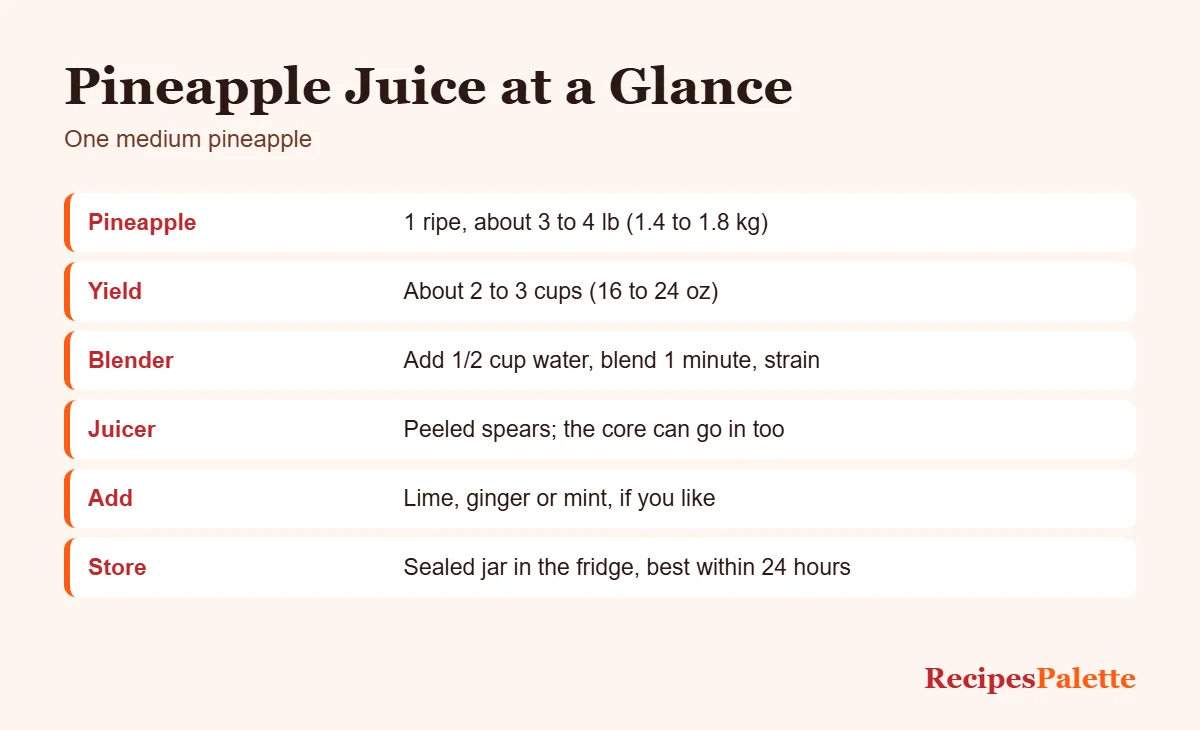
To make pineapple juice, peel and chop 1 ripe pineapple, blend the chunks with 1/2 cup of cold water until smooth, then strain through a fine sieve or nut milk bag. One medium pineapple (about 3 to 4 pounds) makes roughly 2 to 3 cups (16 to 24 oz) of juice. In a juicer, you can even juice the core. Add a squeeze of lime or a little ginger if you like, and serve it cold.
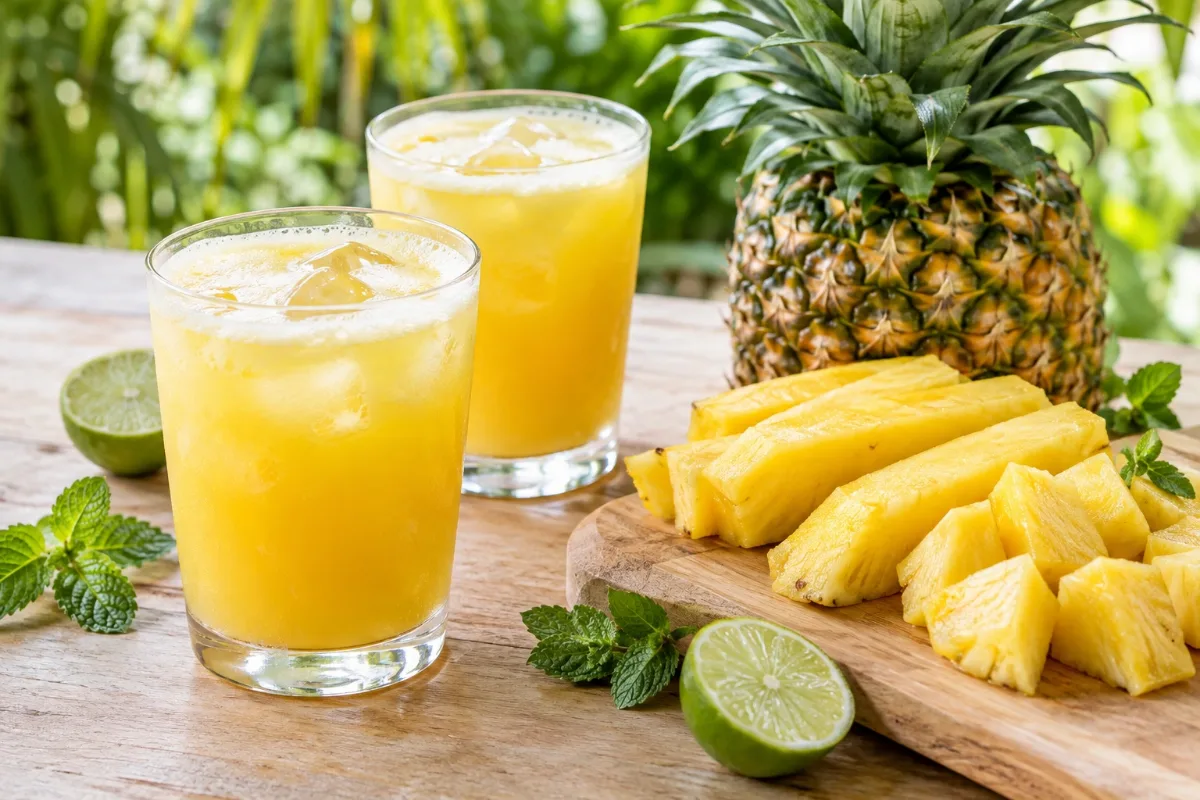
Fresh pineapple juice is sweet, tangy and frothy, and tastes far brighter than canned juice. It is easy to make with either a blender or a juicer. Below you will find how to pick a ripe pineapple, how to cut it, both methods, six flavor combinations, and storage tips.
Ingredients
For about 2 to 3 cups (16 to 24 oz):
- 1 medium ripe pineapple, about 3 to 4 pounds (1.4 to 1.8 kg)
- 1/2 cup (120 ml) cold water, for the blender method
- Optional: juice of 1/2 lime, a 1/2-inch piece of ginger, or a few mint leaves
- Optional: ice to serve
Pineapple is sweet enough on its own; there is no need to add sugar.
How to Pick a Ripe Pineapple
Pineapples do not get sweeter after they are picked, so choosing a ripe one matters.
- Smell the base. A ripe pineapple smells sweet and tropical at the bottom. No smell usually means underripe; a sour or fermented smell means it is past its best.
- Check the color. Golden-yellow skin, at least near the base, is a good sign. Some varieties stay greener when ripe, so use smell and feel too.
- Feel it. It should feel heavy for its size and give very slightly when pressed. Avoid soft, wet or moldy spots.
- Look at the leaves. Fresh, green leaves are better than dry, brown ones.
If you buy a pineapple that is not quite ripe, keep it at room temperature for a day or two. It will soften and smell a little stronger, but it will not get much sweeter, so for juice it pays to choose the ripest one in the store.
How to Cut a Pineapple for Juice
- Lay the pineapple on its side and cut off the top and bottom.
- Stand it up and slice off the skin from top to bottom, following the curve.
- Cut out any remaining brown “eyes” with the tip of your knife.
- Quarter it lengthwise.
- For a blender, cut out the hard core from each quarter. For a juicer, you can keep the core; it is fibrous but juicy.
- Cut into chunks that fit your blender or juicer chute.
Method 1: Blender Pineapple Juice
- Add the water and pineapple chunks to the blender.
- Blend on high for 45 to 60 seconds until completely smooth.
- Pour through a fine sieve or nut milk bag set over a bowl. Press or squeeze to get all the juice.
- Stir in lime juice if using.
- Let the foam settle for a minute or skim it off, then serve over ice.
For a thicker, fiber-rich drink, skip the straining. Pineapple is soft, so a blender is often quicker and easier than a juicer here. See how to make juice without a juicer for more straining tips.
Method 2: Juicer Pineapple Juice
- Cut the peeled pineapple, including the core if you like, into spears or chunks.
- Feed the pieces through the juicer.
- Stir, skim off the foam and serve.
Both centrifugal and slow juicers handle pineapple well. Centrifugal juicers make a very frothy juice; slow juicers make less foam. Not sure which one you have or need? Read masticating vs centrifugal juicer.
Pineapple Juice Combinations
1. Pineapple ginger
Blend or juice 3 cups pineapple with a 1-inch piece of ginger. Sweet and spicy.
2. Pineapple mint lime
3 cups pineapple, 8 mint leaves, juice of 1 lime. Cool and refreshing.
3. Pineapple cucumber
2 cups pineapple and 1 cucumber. Lighter and less sweet.
4. Pineapple orange
2 cups pineapple and 2 peeled oranges. Classic tropical breakfast juice. See how to make fresh orange juice.
5. Pineapple spinach (green)
1 1/2 cups pineapple, 2 handfuls spinach, 1 cucumber. The pineapple hides the green taste. Our green juice recipe has more ideas.
6. Pineapple carrot turmeric
1 cup pineapple, 3 carrots, 1/2-inch fresh turmeric. Golden and warm.
Pineapple also pairs nicely with beet and watermelon. Find more ideas in our juice combinations list.
Why Does Pineapple Juice Make My Mouth Tingle?
Fresh pineapple contains bromelain, a natural enzyme that breaks down proteins. It can make your tongue and lips feel tingly or slightly sore if you drink a lot. Canned and pasteurized juices have little active bromelain because heat breaks it down. If the tingle bothers you, mix pineapple with other juices or drink it with food.
Bromelain also explains why fresh pineapple juice can stop gelatin from setting and can make yogurt or milk-based drinks go thin or bitter if they sit. Add pineapple juice to dairy just before serving.
Serving Ideas
- Pineapple cooler: half pineapple juice, half sparkling water, a squeeze of lime.
- Pineapple ice cubes: freeze juice in trays and add to iced tea or lemonade.
- Tropical punch: mix pineapple, orange and a splash of pomegranate juice for parties. See how to juice a pomegranate.
- Ice pops: pour pineapple mint juice into molds and freeze.
- Marinade: fresh pineapple juice with soy sauce, garlic and ginger makes a quick marinade for chicken or pork. Marinate for no more than 2 hours, because bromelain can make meat mushy.
How to Store Pineapple Juice
- Fridge: sealed glass jar, filled near the top, at 40°F (4°C) or colder. Best within 24 hours; it can keep reasonable flavor for up to 2 to 3 days. Shake before serving.
- Freezer: freeze in ice cube trays or freezer-safe containers with 1 inch of headspace for several months.
- Whole pineapple: keep at room temperature for 1 to 2 days, or refrigerate for up to about 5 days. Cut pineapple keeps 3 to 4 days in a sealed container in the fridge.
Read how long fresh juice lasts for more, and our juicing safety tips for hygiene.
Tips for the Best Pineapple Juice
- Use a ripe pineapple. Underripe fruit makes sour, thin juice.
- Chill it first. Cold pineapple makes cold juice without watering it down.
- Add only a little water in the blender. More water makes thinner, weaker juice.
- Strain well if you want a smooth, clear juice.
- Use frozen pineapple in a blender if fresh is not in season; thaw it slightly first.
Common Pineapple Juice Mistakes
- Leaving brown eyes in. They are tough and add a woody taste. Cut them out.
- Blending the core. Most blenders leave it stringy. Remove it, or save it for a juicer.
- Adding too much water. Start with 1/2 cup per pineapple.
- Mixing it into milk drinks too early. Fresh pineapple juice can turn dairy bitter and thin as it sits.
- Using an overripe, fermented pineapple. If it smells boozy or has wet spots, skip it.
What to Do With Pineapple Pulp and Skin
The strained pulp is sweet and great in smoothies, muffins, pancakes and ice pops; see our juice pulp recipes. The washed skin and core can be simmered with water, ginger and cinnamon to make a lightly sweet pineapple tea, a drink popular in many Caribbean and Latin American homes, or composted.
Frequently Asked Questions
How much juice does one pineapple make?
A medium pineapple makes about 2 to 3 cups (16 to 24 oz) of juice, depending on its size and ripeness.
Can I juice the pineapple core?
Yes, in a juicer. It is fibrous but juicy. In a blender, it is better to remove it because it does not break down well.
Can I juice pineapple with the skin on?
It is not recommended. The skin is tough and can taste bitter, and it is hard on most juicers.
Can I use canned pineapple?
You can blend canned pineapple in juice, not syrup, but the flavor is flatter than fresh.
Why is my pineapple juice foamy?
Pineapple naturally froths when blended or juiced. Let it rest for a minute, then skim or stir.
Should I add sugar to pineapple juice?
No need if the pineapple is ripe. Add a sweeter fruit like mango or orange if it tastes too tart.
Pick a fragrant, heavy pineapple, cut it carefully, blend or juice it, and add a squeeze of lime. That is all it takes for a bright tropical glass any time of year.