
Best Type of Juicer for Celery, Leafy Greens and Ginger

The best type of juicer for celery, leafy greens and ginger is a slow (masticating) juicer. Its slowly turning auger presses fibrous produce instead of shredding it, so it gets more juice from celery, kale, spinach and herbs, and copes well with hard ginger root. A vertical slow juicer suits most kitchens; a horizontal model is best if you also juice wheatgrass. Look for a strong auger, a fine screen, good anti-clog design and a long motor warranty.
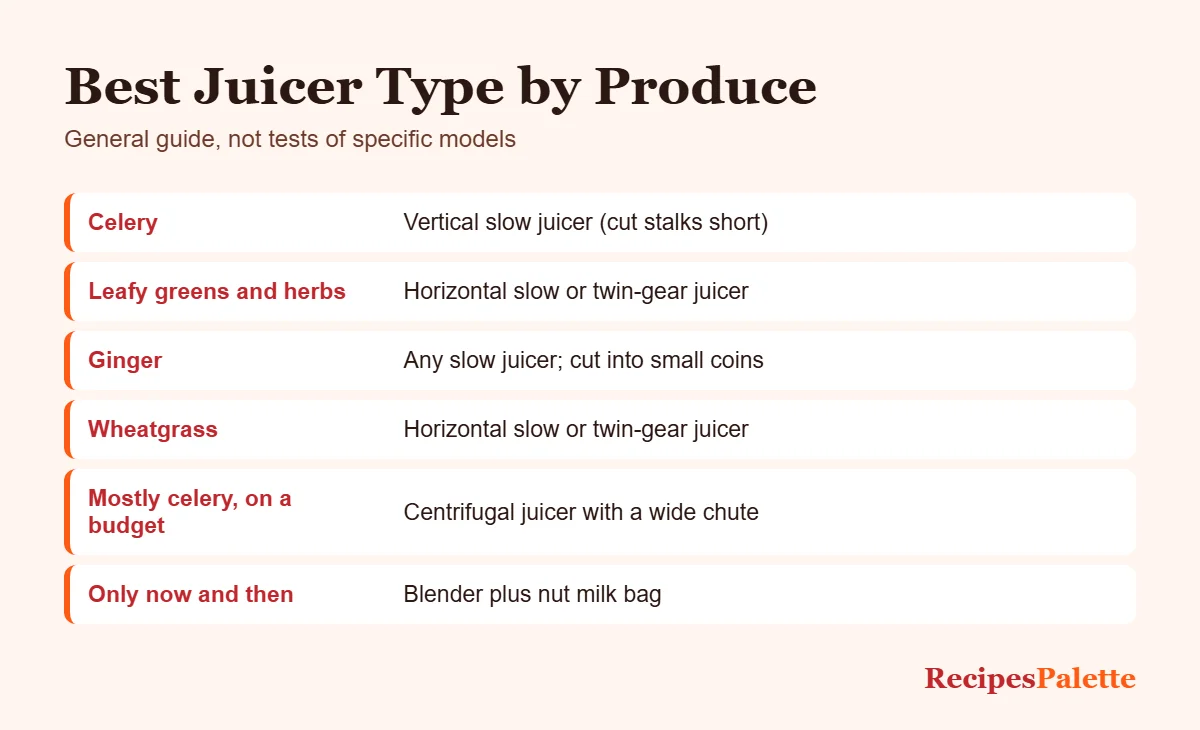
Celery, greens and ginger are the produce that separates a good juicer from a frustrating one. Celery has long, stringy fibers, leaves are light and slip past fast blades, and ginger is dense and tough. This guide explains which juicer types handle them best, the features to check, and how to get the most juice from each, without pointing you toward any one brand.
Why These Ingredients Are Tricky
- Celery: very juicy, but its long strings can wrap around a slow juicer’s auger or clog a screen if the stalks are not cut short.
- Leafy greens: spinach, kale, chard and herbs are light and thin. A fast spinning blade often throws them into the pulp before much juice comes out.
- Ginger: hard and fibrous, with a small amount of juice. It needs firm pressure, and its fibers can collect on the screen.
- Wheatgrass: very fibrous and almost impossible to juice in a centrifugal machine.

Juicer Types Compared for Celery, Greens and Ginger
| Juicer type | Celery | Leafy greens | Ginger | Wheatgrass |
|---|---|---|---|---|
| Vertical slow juicer | Very good (cut short) | Very good | Good | Fair to good |
| Horizontal slow juicer | Good (cut short) | Excellent | Very good | Excellent |
| Centrifugal juicer | Good, fast | Poor to fair | Good | Poor |
| Twin-gear (triturating) juicer | Very good | Excellent | Very good | Excellent |
| Blender plus strainer bag | Good | Good | Fair (small amounts) | Fair |
These ratings are general for each type, not tests of particular models. Results vary by machine and produce.
Vertical Slow Juicers
The most popular choice for home juicing. They stand upright, take up little counter space and handle a mix of fruit, vegetables and greens well. Celery should be cut into 2 to 3-inch pieces so the strings do not wrap around the auger. Many newer models have wide hoppers that save prep time. If you make celery juice or green juice most days, this is the type most people should start with. Learn more in what is a cold press juicer.
Horizontal Slow Juicers
These have a long, low body with the auger lying flat. They feed a bit more slowly but are very good with leafy greens, herbs, ginger and wheatgrass, and often leave very dry pulp. Many also come with attachments for nut butters or pasta. They need more counter width, and their chutes are usually narrow, so expect more chopping.
Twin-Gear Juicers
Two interlocking gears crush and press produce. They are excellent with greens and wheatgrass and give very dry pulp, but they are heavy, slow, expensive and take longer to clean. They make most sense for people who juice large amounts of greens every day.
Centrifugal Juicers
Fast and affordable, centrifugal juicers do fine with celery and ginger, but they get much less juice from leafy greens and herbs. If you mostly juice celery and occasionally add a handful of spinach, a centrifugal juicer with a wide chute can still work. If greens are the main event, choose a slow juicer. See masticating vs centrifugal juicer for the full comparison.
What About a Blender?
A high-speed blender and a nut milk bag make good celery and green juice. Chop celery into 1-inch pieces, blend with a little water and strain. It is cheaper and more versatile, but straining every glass gets tiresome if you juice daily. Our guide on how to make juice without a juicer shows the method, and juicer vs blender compares the two.
Features to Look For
- A sturdy auger. Look for a strong material and a design built for fibrous produce. Some brands sell separate “fine” and “coarse” screens.
- Anti-clog or reverse function. A reverse button helps free celery strings and ginger fibers if the auger jams.
- Screen with a rotating wiper. On vertical models, a wiper brush that turns with the auger keeps the screen clear while you juice.
- Pulp outlet design. A wide, smooth outlet stops fibrous pulp from backing up.
- Feed chute size. Wider chutes save chopping, but celery still needs to be cut short in most slow juicers.
- Warranty. Slow juicers often carry long motor warranties. Check cover on the auger and screen too.
- Easy cleaning. Fibrous produce leaves more residue in the screen. Fewer parts and a good brush make a big difference. See how to clean a juicer.
For the full list of buying checks, read how to choose a juicer.
How to Juice Celery, Greens and Ginger for the Best Yield
Celery
- Cut stalks into 2 to 3-inch pieces for slow juicers.
- Feed steadily, not all at once.
- Use crisp, fresh celery; limp stalks give less juice.
Our celery juice recipe has the full method.
Leafy greens
- Roll leaves into tight bundles.
- Alternate them with firm, juicy produce such as cucumber, apple or celery to push them through.
- Remove very thick stems from kale and chard if your juicer struggles.
Ginger
- Cut it into small coins or thin slices.
- Juice it between other produce so the juice gets washed through.
- Peeling is optional for young ginger with thin skin; scrub it well either way.
Try these in our green juice recipe and carrot ginger juice.
Which Juicer Fits Your Routine?
- “I drink plain celery juice every morning.” A vertical slow juicer with a wide hopper and a reverse button. It handles a whole bunch quickly once the stalks are cut, and cleanup is reasonable.
- “I make big green juices with kale, spinach and herbs.” A horizontal slow juicer or a twin-gear juicer, for the best yield from leaves.
- “I want ginger shots and the odd green juice.” Almost any slow juicer works. Even a centrifugal juicer copes with ginger if you cut it small.
- “I also grow wheatgrass.” A horizontal slow juicer or a twin-gear model.
- “I only juice at weekends.” A blender and a nut milk bag may be all you need.
- “I have very little counter space.” A compact vertical slow juicer.
Common Mistakes With Fibrous Produce
- Overloading the chute. Pushing in a big handful of celery or kale at once jams the auger. Feed steadily.
- Juicing ginger in big chunks. Large pieces stress the motor and leave juice in the pulp.
- Skipping the screen brush. Celery and ginger fibers build up in the mesh, and yield drops with every use.
- Using wilted greens. Limp leaves give little juice. Revive them in cold water for 20 minutes first.
- Forcing produce with the pusher. Pressing too hard on a slow juicer can strain the motor. Let the auger pull the produce in.
How Much Should You Spend?
Prices change often, but as a rough US guide, centrifugal juicers often sit around $60 to $200, vertical and horizontal slow juicers around $150 to $500, and twin-gear juicers around $400 and up. For celery and greens, a mid-range slow juicer with a good warranty is usually the sweet spot. Spending more mostly buys wider chutes, quieter motors, extra screens and longer warranties.
Frequently Asked Questions
Is a slow juicer or centrifugal juicer better for celery?
A slow juicer usually gets more juice from celery and gives drier pulp. A centrifugal juicer is faster and handles whole stalks, but wastes more juice.
Can a centrifugal juicer juice leafy greens?
It can, but not well. Much of the leaf ends up in the pulp. Bundle greens tightly and juice them between firmer produce to help.
Why does celery clog my slow juicer?
The long fibers wrap around the auger. Cut stalks into short pieces and use the reverse function if the machine slows.
What is the best juicer for wheatgrass?
A horizontal slow juicer or a twin-gear juicer. Centrifugal juicers get very little juice from wheatgrass.
Can I juice ginger in any juicer?
Yes, most juicers handle small pieces of ginger. Slow juicers squeeze a little more juice from it.
Do I need a juicer to make celery juice?
No. A blender and a nut milk bag work well, especially if you only juice now and then.
If celery, greens and ginger are what you juice most, a slow juicer is worth it. Pick one with a sturdy auger, a reverse button and easy cleanup, keep your celery pieces short, and you will get more juice from every bunch.