
How to Make Apple Juice at Home (Juicer, Blender or Stovetop)

To make apple juice at home, wash 4 to 5 medium apples, core and cut them, and run them through a juicer, which gives about 12 ounces (350 ml). Without a juicer, blend chopped apples with a little water and strain, or simmer them in water for 20 to 30 minutes and strain for a clear, mellow juice. Add a squeeze of lemon to keep the color bright, and drink fresh juice within a day or two.
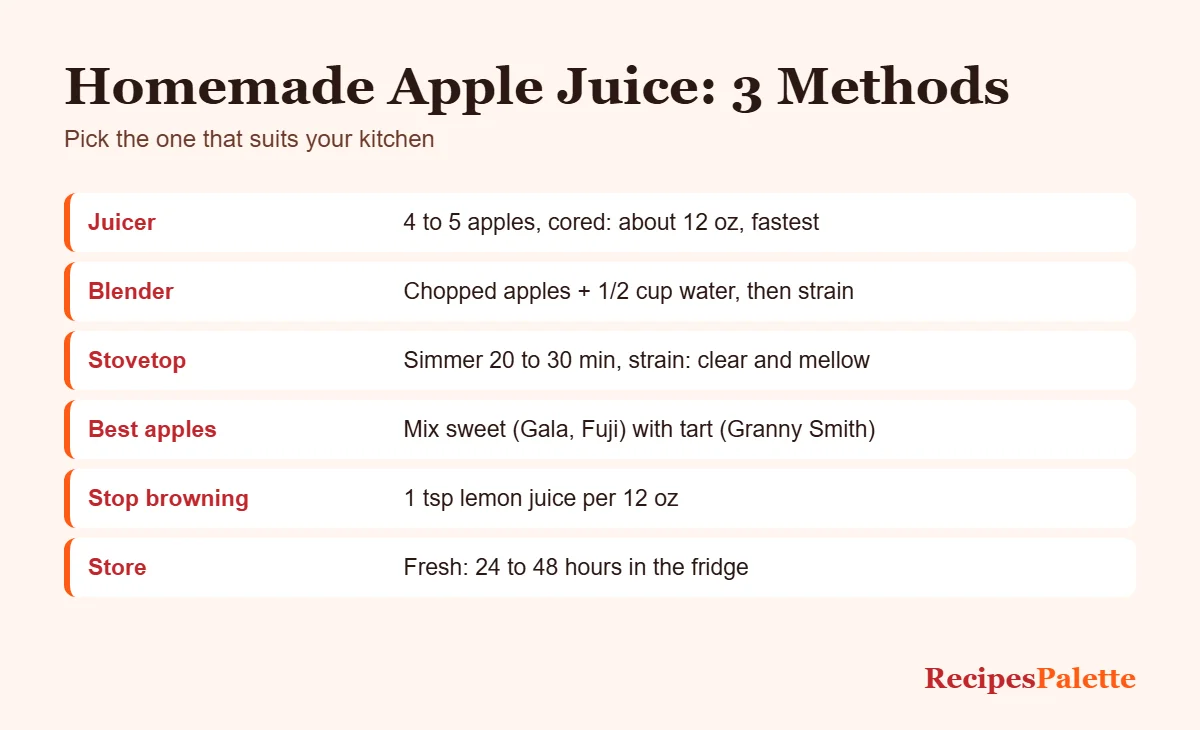
Homemade apple juice tastes like biting into a crisp apple, nothing like the flat, sugary juice in many cartons. It is easy to make with a juicer, a blender or just a pot on the stove. This guide covers the best apples to use, three methods, how much juice to expect, and how to keep it from turning brown.
Ingredients
For about 12 ounces (350 ml) using a juicer:
- 4 to 5 medium apples (about 2 pounds / 900 g)
- 1 teaspoon lemon juice (optional, to slow browning)
- Optional flavors: a small piece of ginger, a pinch of cinnamon, or a few mint leaves
For the blender method, add 1/2 cup cold water and a nut milk bag. For the stovetop method, use 3 pounds (1.4 kg) apples and about 6 cups (1.4 liters) water.
The Best Apples for Juice
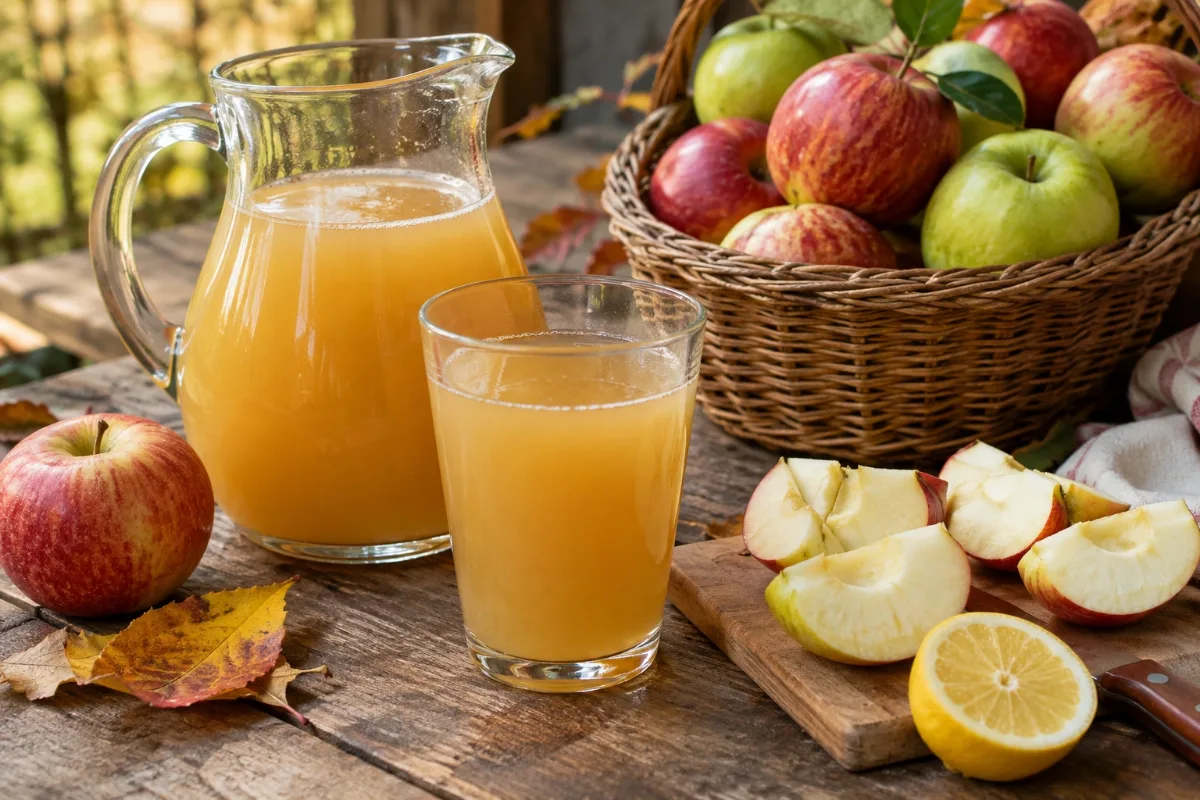
The best apple juice usually comes from a mix of sweet and tart apples. A blend gives a fuller flavor than any single variety.
| Apple | Flavor in juice | Notes |
|---|---|---|
| Gala | Sweet, mild | Juicy and easy to find |
| Fuji | Very sweet, crisp | High juice yield |
| Honeycrisp | Sweet-tart, bright | Very juicy, but pricier |
| Granny Smith | Tart, sharp | Mix with sweeter apples |
| Pink Lady (Cripps Pink) | Tangy-sweet | Holds its flavor well |
| McIntosh | Tangy, aromatic | Soft; best for stovetop juice |
| Golden Delicious | Sweet, honeyed | Good in blends |
A good starting mix is 2 Gala or Fuji, 2 Honeycrisp and 1 Granny Smith. Choose firm, crisp apples. Soft or mealy apples give less juice from a juicer, though they are fine for the stovetop method. Apples are at their best and cheapest in fall, roughly September to November in most of the US.
Method 1: Using a Juicer
- Wash the apples well under running water and scrub off any stickers or wax.
- Cut and core. Quarter the apples and remove the cores and seeds. Apple seeds contain a natural compound that can release small amounts of cyanide when crushed; a few are not a concern, but there is no reason to juice them, and cores make the juice more bitter.
- Juice. Feed the quarters through your juicer. Both centrifugal and slow juicers handle apples well. A centrifugal juicer is faster; a slow juicer gives a little more juice with less foam.
- Add lemon. Stir in a little lemon juice straight away to slow browning.
- Skim and serve. Skim off the foam, or strain the juice through a fine sieve for a smoother drink. Serve over ice.
Leave the skins on. They add color and flavor, and peeling wastes time.
Method 2: Blender (No Juicer)
- Wash, core and chop the apples into 1-inch pieces.
- Add 1/2 cup cold water and a squeeze of lemon to the blender, then the apples.
- Blend on high for 60 to 90 seconds, until smooth.
- Pour into a nut milk bag over a bowl and squeeze firmly.
- Taste, adjust with more lemon if you like, and serve cold.
Blender apple juice is cloudy and full-flavored, similar to fresh-pressed cider. Our guide to making juice without a juicer has more straining tips.
Method 3: Stovetop Apple Juice
This makes a clearer, mellower juice and works well with soft or slightly bruised apples. It is also the method to use if you plan to can the juice.
- Wash and quarter 3 pounds (1.4 kg) of apples. Coring is optional here, but remove any bruised or damaged parts.
- Put the apples in a large pot and add water to just cover them, about 6 cups.
- Bring to a boil, then lower to a gentle simmer for 20 to 30 minutes, until the apples are very soft.
- Mash lightly with a potato masher.
- Pour through a fine sieve lined with cheesecloth or a nut milk bag. Let it drip for 15 to 30 minutes. Press gently for more juice; pressing hard makes it cloudier.
- Taste. Add a little sugar or honey only if needed, plus a pinch of cinnamon if you like.
- Cool and refrigerate.
This makes about 6 to 7 cups of lighter-bodied juice. It is similar to the method in our homemade grape juice recipe.
How Much Juice From Apples?
- 1 medium apple gives about 1/4 to 1/3 cup (2 to 3 oz) of juice in a juicer.
- About 3 to 4 medium apples make 1 cup (8 oz).
- About 1 pound (450 g) of apples gives roughly 6 to 8 oz of juice.
- A bushel of apples (about 42 pounds) gives roughly 3 gallons of juice.
Juicy varieties like Fuji and Honeycrisp give the most.
How to Keep Apple Juice From Turning Brown
Fresh apple juice starts to brown within minutes because of a natural reaction with air. It is harmless, but it changes the look and taste.
- Add 1 teaspoon lemon juice per 12 ounces as you juice.
- Juice cold apples straight from the fridge.
- Drink it quickly, or store it in a jar filled to the top.
- Strain off the foam, which browns fastest.
- For stovetop juice, browning is less of an issue because heating slows the reaction.
Flavor Combinations
- Apple ginger: 4 apples and 1/2-inch ginger. Sweet and zippy.
- Apple carrot: 3 apples and 4 carrots. A family favorite. See our carrot ginger juice.
- Apple pear cinnamon: 2 apples, 2 pears, a pinch of cinnamon. Cozy and mellow.
- Apple celery lemon: 3 apples, 3 celery stalks, 1/2 lemon. Crisp and savory-sweet.
- Apple beet: 3 apples and 1 small beet. Pink and earthy. Try our beet juice recipe.
- Green apple cucumber mint: fresh and light.
For more pairings, see our juice combinations list.
Apple Juice vs Apple Cider
In the US, “apple cider” usually means raw, unfiltered apple juice: cloudy, with fine pulp. “Apple juice” usually means it has been filtered to be clear and is often pasteurized. Blender and juicer apple juice is closer to cider; stovetop juice that is strained well is closer to clear apple juice.
How to Store Homemade Apple Juice
- Fresh (juicer or blender): keep in a sealed glass jar in the fridge at 40°F (4°C) or colder, and drink within 24 to 48 hours. It tastes best on the first day.
- Stovetop juice: keeps a few days longer in the fridge, about 5 to 7 days.
- Freezer: freeze in freezer-safe containers with 1 inch of headspace for several months.
- Canning: for shelf-stable juice, follow a tested home-canning guide, such as the USDA or National Center for Home Food Preservation, for heating and processing times.
Fresh-pressed juice is unpasteurized. See our juicing safety tips and how long fresh juice lasts.
Common Apple Juice Mistakes
- Using only one sweet variety. The juice can taste flat. Add one tart apple for balance.
- Juicing soft, mealy apples in a juicer. They turn to mush and give little juice. Use them for stovetop juice instead.
- Leaving the cores in. They add bitterness and seeds you do not need.
- Boiling hard on the stove. A rolling boil makes the juice taste cooked. Keep it at a gentle simmer.
- Squeezing the cloth too hard. It pushes fine pulp through and makes stovetop juice cloudy.
- Making too much fresh juice at once. Fresh apple juice browns and loses flavor quickly; freeze any extra.
What to Do With Apple Pulp
Apple pulp is sweet and fine. Use it in muffins, oatmeal, quick breads, pancakes or homemade fruit leather, or compost it. Find more in our juice pulp recipes.
Frequently Asked Questions
Do I need to peel apples for juice?
No. Wash them well and leave the skin on.
How many apples make a gallon of juice?
Roughly 36 to 48 medium apples, or about 12 to 16 pounds, depending on variety and method.
Can I make apple juice without a juicer?
Yes. Blend and strain for fresh, cloudy juice, or simmer and strain for clearer juice.
Should I add sugar?
Usually not. A mix of sweet apples makes juice that is sweet enough on its own.
Why is my apple juice foamy?
Fast juicers whip air into the juice. Skim or strain it, or use a slow juicer.
Can I use bruised apples?
Cut away the bruised or damaged parts and use the rest. Avoid any apples with mold or rot.
Mix sweet and tart apples, add a squeeze of lemon, and choose your method: juicer for speed, blender for cloudy cider-style juice, or the stovetop for a mellow, clear batch.