
How to Transfer Dough to Dutch Oven

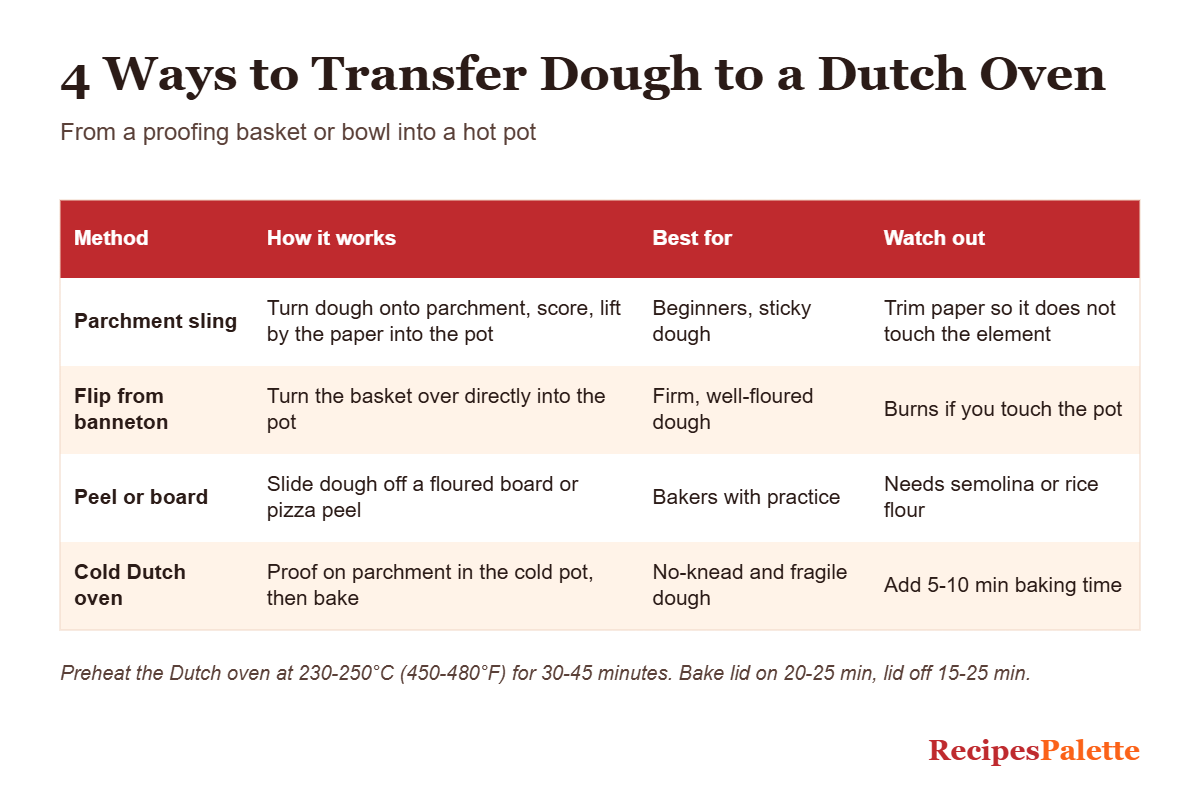
The easiest and safest way to transfer dough to a Dutch oven is the parchment sling: turn the proofed dough out onto a sheet of parchment paper, score it, then lift it by the edges of the paper and lower it gently into the preheated pot. Put the lid on and bake. The paper stops the dough sticking, keeps your hands away from the 250°C (480°F) metal and keeps the loaf’s shape. You can pull the paper out when you take the lid off.
Why Transferring Dough Is Tricky
Baking bread in a Dutch oven traps steam around the loaf, which gives it a great rise and a crisp, blistered crust. The problem is getting soft, proofed dough into a pot that has been heating in a very hot oven. The sides are deep, the metal can burn you instantly, and dropping or squashing the dough knocks out the air you spent hours building.
What You Need
- A Dutch oven (cast iron or enameled cast iron, 4.5 to 6 liters / 5 to 7 quarts)
- Parchment (baking) paper
- Thick oven mitts that cover your wrists
- A proofing basket (banneton) or bowl lined with a floured towel
- Rice flour or semolina for dusting
- A razor blade, bread lame or very sharp knife for scoring
Step 1: Preheat the Dutch Oven
Place the empty Dutch oven with its lid on in the oven and heat it to 230 to 250°C (450 to 480°F) for 30 to 45 minutes. A fully heated pot gives the dough a burst of heat from all sides. Check that your lid knob can handle that temperature; some plastic knobs cannot.
Step 2: Turn the Dough Out
- Cut a piece of parchment about 30 cm (12 inches) square, or a long strip with “handles” on two sides.
- Dust the top of the dough in the basket lightly with rice flour.
- Place the parchment over the basket, put a flat plate or board on top, and flip everything over in one quick movement.
- Lift the basket away. The dough is now sitting on the parchment, seam side down.
Step 3: Score the Dough
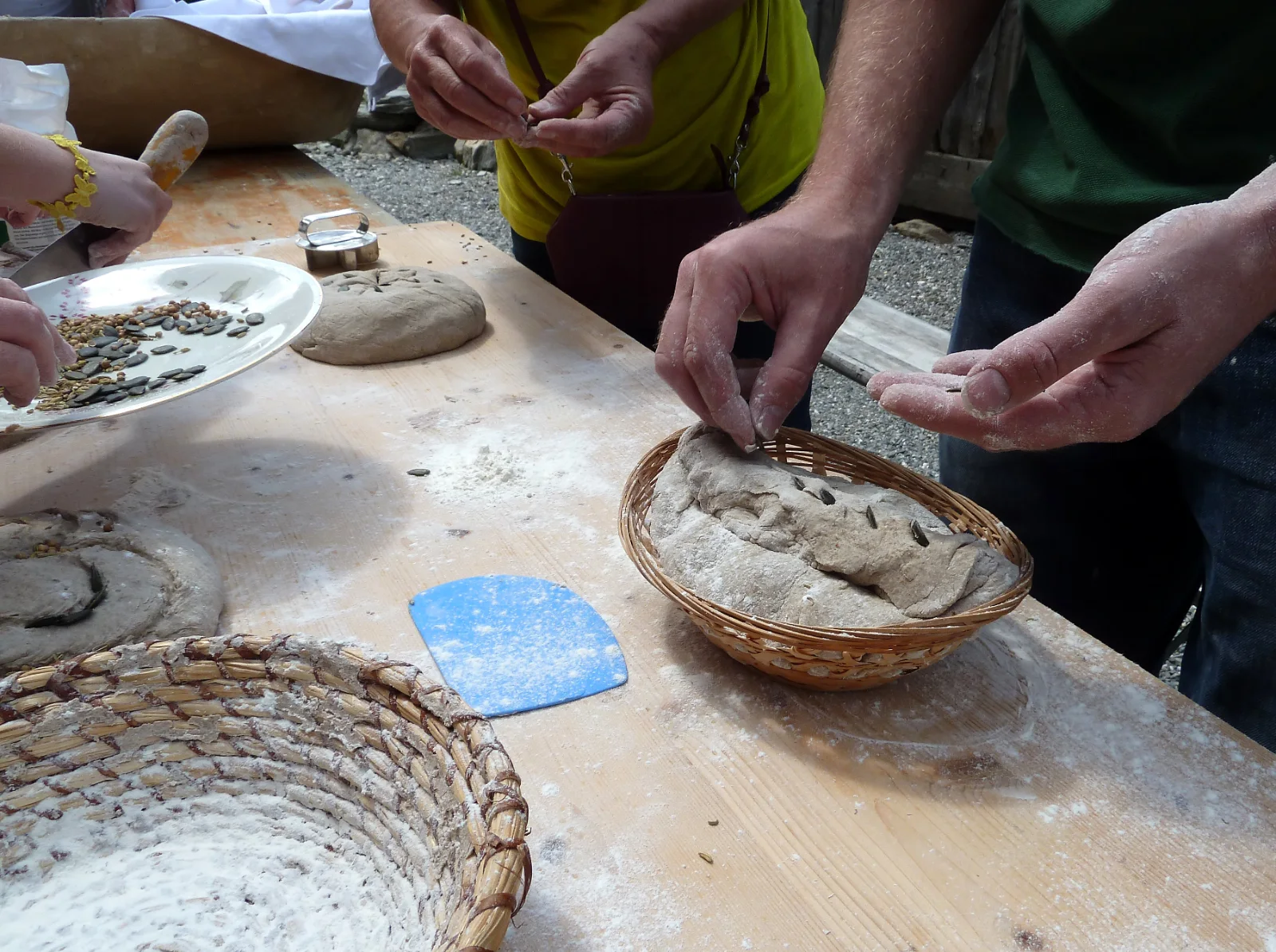
Make one confident slash about 1 cm (1/2 inch) deep across the top, at a shallow angle, or cut a cross or square. Scoring controls where the loaf opens as it rises in the oven.
Step 4: Lower It Into the Pot
- Put on your oven mitts and take the hot Dutch oven out of the oven. Set it on a heatproof surface and remove the lid.
- Pick up the parchment by two opposite edges.
- Lower the dough straight down into the center of the pot. Let the paper fold up the sides.
- Trim any paper that sticks out far above the rim, so it does not touch the oven element.
- Put the lid back on and return the pot to the oven.
Step 5: Bake
- Lid on: 20 to 25 minutes at 230 to 250°C (450 to 480°F)
- Lid off: lower to 220 to 230°C (430 to 450°F) and bake 15 to 25 minutes more, until deep brown
- Done: the loaf sounds hollow when tapped underneath, and reads 96 to 99°C (205 to 210°F) inside
When you remove the lid, you can lift the loaf by the parchment and pull the paper out to crisp the bottom crust.
Other Transfer Methods
Flip straight from the basket
Experienced bakers sometimes turn the banneton directly over the hot pot. It is quick, but the dough must be firm and well floured, and you need to keep your hands and wrists well clear of the metal.
Slide off a peel or board
Turn the dough onto a board dusted with semolina, score it, then slide it into the pot with a quick jerk. It works, but it is easier to misjudge than a sling.
Start in a cold Dutch oven
For very soft or no-knead dough, let the dough do its final rise on parchment inside the cold Dutch oven, then put the covered pot into a hot oven. There is no hot transfer at all. Add 5 to 10 minutes to the lid-on time.
Tips for a Better Loaf
- Chill the dough: dough proofed overnight in the fridge is firmer and easier to handle and score.
- Use rice flour: it does not absorb into the dough like wheat flour, so it stops sticking better.
- Move quickly: the pot loses heat every second the lid is off.
- Use a reusable silicone sling: if you bake often, a silicone bread sling replaces parchment.
- Protect the base: if the bottom crust burns, put a baking tray on the rack below the pot.
Safety Tips
- Use long, thick oven mitts, not a thin towel.
- Clear your counter before you open the oven.
- Lift the lid away from you so the steam does not hit your face.
- Never let parchment touch the oven’s heating element.
Frequently Asked Questions
Can I put parchment paper in a Dutch oven at 250°C?
Most parchment is rated to about 220 to 230°C (420 to 450°F). Inside a covered pot it usually darkens but does not burn. Trim the excess and check your brand’s rating.
Do I have to preheat the Dutch oven?
Preheating gives the best rise and crust, but the cold-start method also works, especially for no-knead bread.
Why does my dough stick to the basket?
The basket was not floured enough or the dough was very wet. Dust generously with rice flour, and chill the dough before turning it out.
Why did my loaf spread flat after the transfer?
It was likely over-proofed, or it was not shaped tightly enough. A tighter shape and a shorter or colder final proof help it hold its height.
Final Thoughts
Transferring dough to a Dutch oven gets easy once you use a parchment sling. Turn the dough onto the paper, score it, lower it into the hot pot and cover it. Your hands stay safe, the loaf keeps its shape, and you get a crackly, bakery-style crust every time.
For more Dutch oven baking, see our guides on how to bake in a Dutch oven and adding ice to a Dutch oven for steam.
🎥 Related Video: How to move sourdough from a banneton/bowl to a Dutch oven using a cutting board.
📺 The Salty Bee Bakery