
Rice Steamer vs Rice Cooker: How to Use a Rice Steamer

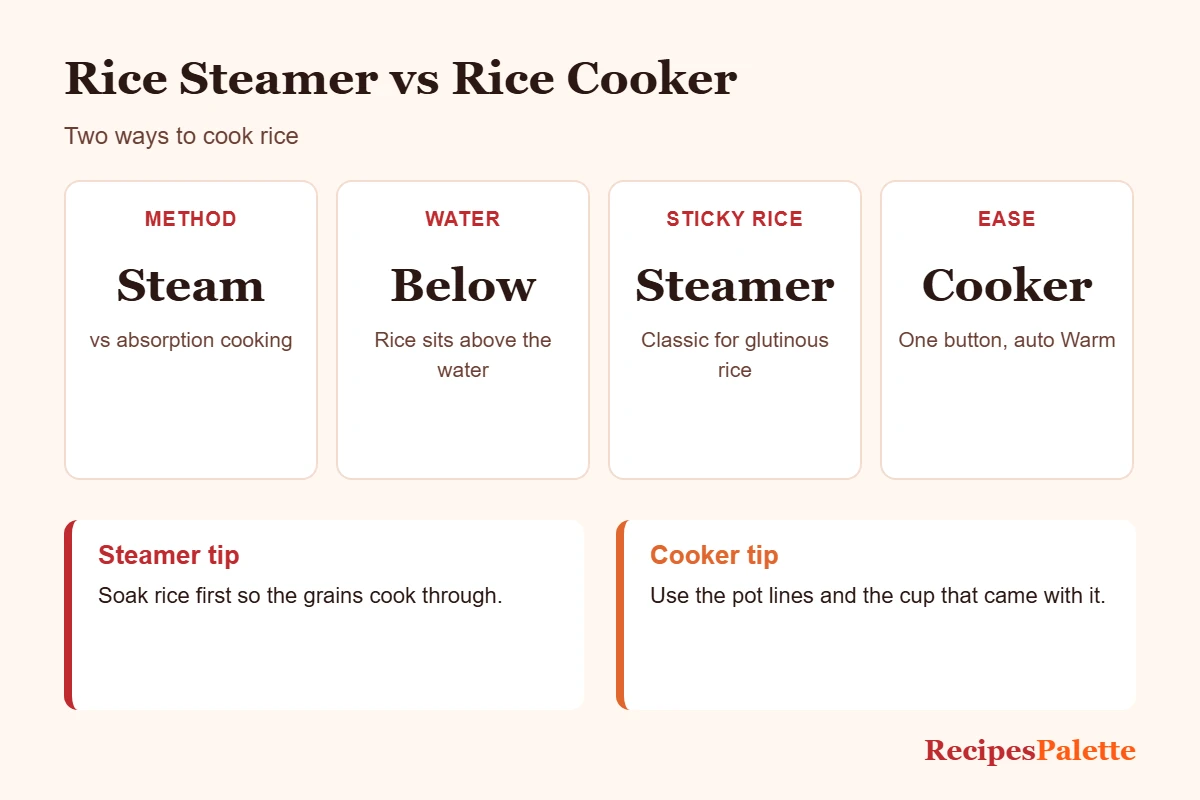
A rice steamer cooks rice with steam: the rice sits in a basket above boiling water and the steam cooks it. A rice cooker cooks rice in water, which the grains absorb as it boils, then switches to Keep Warm automatically. The terms are often mixed up, and many electric “rice steamers” sold today are actually rice cookers with a steamer basket. Traditional steaming is especially good for sticky (glutinous) rice, while a rice cooker is the easiest way to make everyday white or brown rice.
Here is how each works, how to use a rice steamer step by step, and which one is right for your kitchen.
What Is a Rice Steamer?
A rice steamer can mean several things:
- Traditional steamers: Bamboo baskets, metal steamer pots or cloth-lined baskets set over a pot or wok of boiling water. Common in many Asian cuisines, especially for sticky rice.
- Electric food steamers: Countertop appliances with stacked trays and a rice bowl. Water heats in the base, and steam rises through the trays.
- Rice cookers with steaming trays: Rice cookers that include a basket for steaming vegetables or fish above the rice. These are often marketed as “rice cooker and steamer.”
- Microwave rice steamers: Plastic containers with vented lids for cooking rice in the microwave. Despite the name, they work more like absorption cooking.
Rice Steamer vs Rice Cooker: Key Differences
| Feature | Rice steamer (traditional) | Rice cooker |
|---|---|---|
| How it cooks | Steam passes through the rice | Rice absorbs boiling water |
| Rice touches water? | No, it sits above it | Yes |
| Best for | Sticky rice, reheating rice, delicate textures | Everyday white, brown, jasmine, sushi rice |
| Soaking needed? | Usually yes, often for hours | Optional; built into some cookers |
| Hands-on time | More; check water and flip | Minimal; one button |
| Auto shut-off | No (stovetop) / yes (electric) | Yes, switches to Warm |
| Other uses | Vegetables, dumplings, fish, buns | Porridge, grains, soups, steaming with a basket |
How to Use a Traditional Rice Steamer
This method is best for glutinous (sticky) rice, which is too sticky to cook well by absorption.
- Rinse the rice. Rinse glutinous rice a few times until the water is mostly clear.
- Soak. Cover with water and soak for at least 4 hours, or overnight. Soaking lets the grains absorb water so they cook through with steam alone.
- Prepare the steamer. Line a bamboo or metal steamer basket with cheesecloth, a damp cotton cloth or perforated parchment.
- Heat the water. Fill a wok or pot with a few inches of water and bring it to a boil. The water should not touch the basket.
- Add the rice. Drain the soaked rice and spread it evenly in the lined basket. Make a few holes with a chopstick to help steam rise.
- Steam. Cover and steam for 20 to 30 minutes. Halfway through, flip the rice so the top layer moves to the bottom.
- Check and top up water. Add boiling water to the pot if it runs low.
- Test. The rice is done when the grains are glossy, translucent and tender.
How to Use an Electric Rice Steamer or Food Steamer
- Fill the water reservoir to the indicated level.
- Rinse the rice and place it in the rice bowl with the amount of water stated in the manual. Many models use about 1 part rice to 1 to 1.5 parts water in the bowl.
- Place the bowl in a steaming tray and cover with the lid.
- Set the timer, often 30 to 45 minutes for white rice.
- Let the rice rest for a few minutes, then fluff.
Times and ratios vary by model, so follow the manual.
How to Use a Rice Cooker Steamer Basket
If your rice cooker came with a steamer basket, you can cook rice and steam food at the same time:
- Add rinsed rice and water to the inner pot as usual.
- Place vegetables, fish, dumplings or eggs in the steamer basket and set it on top.
- Close the lid and start the cooker.
- Check the food when the rice finishes, or remove quick-cooking items earlier.
Learn more about these models in our guide to rice cookers with a steamer basket.
Which Should You Choose?
Choose a rice cooker if you:
- Cook white, brown or jasmine rice often
- Want push-button cooking and automatic Keep Warm
- Prefer the simplest, most consistent results
Choose a rice steamer if you:
- Make sticky rice for dishes like mango sticky rice or Lao and Thai meals
- Steam dumplings, buns, fish and vegetables often
- Want to reheat rice gently without drying it out
Many cooks have both, or use a rice cooker with a steamer basket to cover most needs.
Tips for Steaming Rice
- Do not skip the soak for sticky rice. Unsoaked rice stays hard in the center.
- Keep the water at a steady boil. Weak steam cooks unevenly.
- Do not let the pot boil dry. Check the water level every 10 minutes.
- Use a cloth liner so rice does not fall through or stick to the basket.
- Be careful with steam. Lift lids away from your face.
Reheating Rice With a Steamer
Steaming is an excellent way to reheat leftover rice. Place cold rice in a heatproof bowl or cloth-lined basket and steam for 5 to 10 minutes until it is steaming hot all the way through. Reheat only once, and only rice that was refrigerated promptly. See is it safe to reheat rice? for more.
Popular Dishes Made With Steamed Rice
- Mango sticky rice: Steamed glutinous rice soaked in sweetened coconut milk, served with ripe mango.
- Lao and Thai sticky rice: Served in small baskets and eaten by hand with grilled meats, dips and salads.
- Zongzi and lo mai gai: Sticky rice wrapped in leaves with fillings, then steamed.
- Japanese okowa: Steamed glutinous rice mixed with vegetables, beans or mushrooms.
Each of these depends on steaming soaked rice rather than boiling it, which keeps the grains whole, chewy and glossy.
Cleaning and Caring for Steamers
- Bamboo steamers: Rinse with hot water and a soft brush, avoid soap if possible, and let them air dry completely before storing to prevent mold.
- Cloth liners: Rinse and wash after each use, then dry fully.
- Metal steamers: Wash with warm soapy water. Remove mineral deposits with diluted vinegar.
- Electric steamers: Empty and dry the water reservoir after each use, and descale it regularly with vinegar or a descaling solution, following the manual.
For rice cooker cleaning, see how to clean a rice cooker.
Choosing Rice for Each Method
| Rice type | Rice cooker | Steamer |
|---|---|---|
| Long-grain white / jasmine | Excellent | Works in a bowl with water |
| Short-grain / sushi rice | Excellent | Works in a bowl with water |
| Brown rice | Very good with Brown setting | Slow; needs long soak |
| Glutinous (sticky) rice | Possible with Sweet setting | Classic method |
| Basmati | Very good | Works, but a pot or cooker is easier |
For everyday water ratios, see our rice to water ratio chart.
Frequently Asked Questions
Is a rice steamer the same as a rice cooker?
Not exactly. A steamer cooks rice with steam above water, while a rice cooker cooks rice in water. Many appliances combine both functions.
Can I make sticky rice in a rice cooker?
Some rice cookers have a sweet or glutinous rice setting. Steaming usually gives a more traditional texture.
How long does rice take in a steamer?
Soaked sticky rice usually takes 20 to 30 minutes. White rice in an electric steamer bowl often takes 30 to 45 minutes.
Do I need to soak rice before steaming?
For sticky rice, yes. For white rice cooked in a bowl with water in an electric steamer, soaking is optional.
Can I steam rice without a steamer?
Yes. Set a heatproof colander or a metal rack over a pot of boiling water, line it with cloth, add soaked rice and cover with a lid.
The Bottom Line
A rice steamer cooks rice with steam above boiling water, while a rice cooker cooks rice in water and switches to Warm on its own. Use a steamer for sticky rice, dumplings and reheating, and a rice cooker for easy everyday rice. A rice cooker with a steamer basket can handle both.