
How to Get Burnt Rice Off a Pot

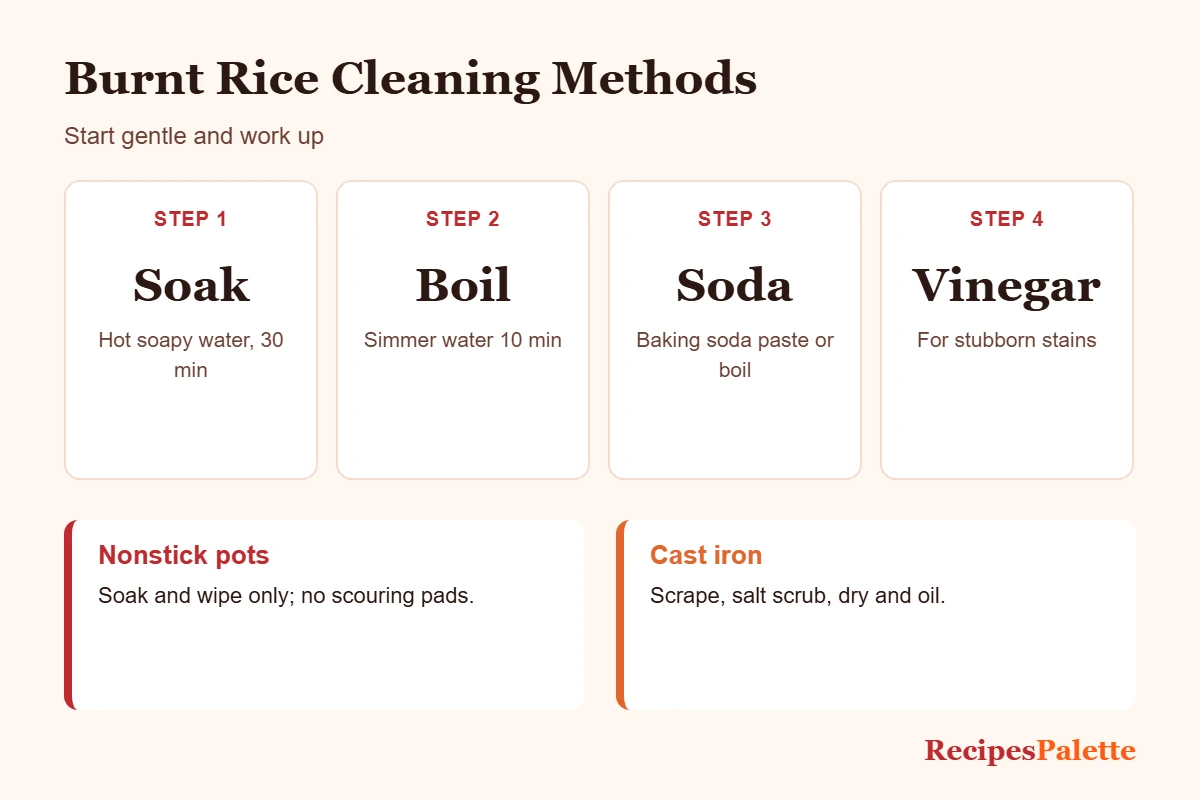
The easiest way to get burnt rice off a pot is to soak it in hot, soapy water, then simmer water in the pot for 5 to 10 minutes to loosen the crust. For tougher layers, add baking soda to the water and boil it, then scrape gently with a wooden spatula. Vinegar helps with leftover brown stains on stainless steel. The best method depends on whether your pot is stainless steel, nonstick, enameled or cast iron.
Here are step-by-step methods for each type of pot, what to avoid, and how to stop rice from burning next time.
First: Remove the Rice That Is Still Good
If the rice on top is fine, spoon it into another container without scraping the bottom. Burnt rice gives the whole pot a smoky, bitter taste. Placing a slice of bread on top of the rice for a few minutes is an old trick to absorb some of the burnt smell, but it does not fix rice that is badly scorched.
Method 1: Hot Water and Dish Soap Soak
Best for: light burning on any pot.
- Let the pot cool slightly so you do not shock the metal.
- Fill it with hot water to cover the burnt area and add a squirt of dish soap.
- Let it soak for 30 minutes to a few hours.
- Scrape with a wooden or silicone spatula, then wash with a sponge.
Method 2: Simmer Water in the Pot
Best for: stuck-on crusts in stainless steel and enameled pots.
- Add enough water to cover the burnt layer by about an inch.
- Bring it to a boil, then lower to a simmer for 5 to 10 minutes.
- As the crust softens, gently scrape with a wooden spoon.
- Pour out the water, let the pot cool, and wash as usual.
Method 3: Baking Soda Boil
Best for: thick burnt layers in stainless steel and enameled pots.
- Cover the burnt area with water.
- Add 1 to 2 tablespoons of baking soda.
- Bring to a boil, then simmer for 10 to 15 minutes.
- Turn off the heat and let it sit until cool.
- Scrape with a wooden spatula and scrub with a nonabrasive pad.
Baking soda is mildly alkaline and slightly abrasive, which helps break down burnt starch without scratching most surfaces.
Method 4: Baking Soda Paste
Best for: patches left after soaking.
- Mix 3 parts baking soda with 1 part water to make a thick paste.
- Spread it on the remaining burnt spots.
- Leave for 15 to 30 minutes, or overnight for stubborn spots.
- Scrub gently and rinse.
Method 5: Vinegar and Baking Soda
Best for: stubborn brown stains on stainless steel.
- Pour in enough white vinegar and water (about equal parts) to cover the stain.
- Bring to a boil, then remove from the heat.
- Add 2 tablespoons of baking soda. It will fizz.
- Let it cool, then scrub and rinse.
Do not seal the pot with a lid while the mixture fizzes.
Method 6: Stainless Steel Cleanser
For the last brown marks and rainbow heat stains on stainless steel, a powdered stainless steel cleanser (such as an oxalic acid cleanser) used with a damp sponge works well. Rinse thoroughly. See our guide on stainless steel cookware for more care tips.
Cleaning Burnt Rice by Pot Type
| Pot | Do | Avoid |
|---|---|---|
| Stainless steel | Soak, simmer, baking soda, vinegar, stainless cleanser | Steel wool on polished finishes (can scratch) |
| Nonstick and ceramic | Soak and simmer water, soft sponge, baking soda paste | Scouring pads, metal tools, harsh powders |
| Enameled cast iron | Simmer water with baking soda, nylon brush | Metal scrapers, sudden temperature changes |
| Bare cast iron | Scrape, coarse salt scrub, hot water, dry and oil | Long soaks, vinegar boils (strip seasoning) |
| Aluminum | Soak, simmer water, gentle scrub | Long vinegar boils and harsh alkaline cleaners (can discolor) |
| Rice cooker inner pot | Soak with warm soapy water, soft sponge | Abrasives, metal tools |
How to Clean Burnt Rice From a Cast Iron Pot
- Scrape out as much rice as possible with a wooden spatula or pan scraper.
- Add a few tablespoons of coarse salt and a little water, and scrub with a stiff brush or paper towel.
- Rinse with hot water. A small amount of soap is fine.
- Dry the pot on the stove over low heat.
- Rub a thin layer of oil inside and heat for a few minutes to protect the seasoning.
How to Clean a Burnt Rice Cooker Pot
Most rice cooker inner pots have a nonstick coating, so be gentle. Fill the pot with warm, soapy water and let it soak for 30 minutes. Wipe the softened rice away with a soft sponge. Never use steel wool. For a full routine, see how to clean a rice cooker.
Why Rice Burns
- Too little water: The rice absorbs all the water before it is cooked.
- Heat too high: The bottom scorches before the top is done.
- Thin pot: Thin bases create hot spots.
- Cooking too long: Forgetting to turn off the heat after the water is absorbed.
- Not rinsing: Extra surface starch can stick and scorch.
How to Prevent Burnt Rice
- Use the right ratio of water to rice. Our rice to water ratio chart covers common types.
- Rinse rice until the water runs mostly clear.
- Bring to a boil, then reduce the heat to the lowest setting and cover.
- Use a heavy-bottomed pot or a heat diffuser on strong burners.
- Set a timer and let the rice rest off the heat for 10 minutes.
- Consider a rice cooker, which shuts off automatically when the water is absorbed.
What Not to Do
- Do not scrape with a knife or metal spoon, especially on nonstick and enameled pots. It can gouge the surface.
- Do not pour cold water into a very hot pot. Sudden temperature changes can warp metal and crack enamel.
- Do not mix bleach with vinegar or other cleaners. Some combinations release harmful gases.
- Do not use oven cleaner on cookware unless the maker says it is safe.
- Do not leave cast iron to soak. It will rust.
Quick Guide: Which Method to Try First
| How bad is it? | Try this |
|---|---|
| A thin film of stuck rice | Hot soapy soak for 30 minutes |
| A firm crust | Simmer water for 10 minutes, then scrape |
| A thick, dark layer | Baking soda boil, then paste on leftovers |
| Brown stains left after cleaning | Vinegar, or stainless steel cleanser on stainless |
| Burnt smell | Simmer water with lemon juice, then wash |
Most burnt rice comes off with the first two steps. Save the stronger methods for stubborn layers.
Natural Cleaners Compared
| Cleaner | How it helps | Best on |
|---|---|---|
| Hot water | Softens dried starch | All pots |
| Dish soap | Cuts oil and loosens residue | All pots |
| Baking soda | Mild alkali and gentle scrub | Stainless, enameled, nonstick (gently) |
| White vinegar | Mild acid; lifts stains and mineral marks | Stainless, enameled |
| Coarse salt | Abrasive scrub that does not harm seasoning | Cast iron, carbon steel |
| Lemon juice | Freshens odors, light stain removal | Stainless, enameled |
Cleaning Rice Burned Onto an Enameled Dutch Oven
Enameled cast iron is tough but the glass-like coating can chip. Fill the pot with water to cover the burnt area, add 2 tablespoons of baking soda, and simmer for 10 to 15 minutes. Let it cool, then lift the residue with a wooden spatula or nylon brush. Repeat if needed. For tips on cooking rice in one without sticking, see how to cook rice in a Dutch oven.
Frequently Asked Questions
Can I leave a burnt pot to soak overnight?
Yes for stainless steel, enameled and nonstick pots. Do not soak bare cast iron overnight, as it can rust.
Does salt help remove burnt rice?
Coarse salt works as a gentle scrub, especially for cast iron. It is less effective than baking soda on stainless steel.
Is it safe to eat rice that burned on the bottom?
Lightly toasted rice is enjoyed in many cuisines. Rice that is blackened and bitter should be thrown away.
Why does my pot still smell after cleaning?
Simmer water with a little lemon juice or vinegar for a few minutes, then wash and dry.
Can I use a dishwasher for a burnt pot?
A dishwasher rarely removes a burnt crust. Soak and simmer first, then wash.
The Bottom Line
To remove burnt rice, soak the pot in hot soapy water, simmer water to loosen the crust, and use baking soda for stubborn layers. Match the method to your pot: be gentle with nonstick, avoid long soaks for cast iron, and use vinegar or a stainless cleanser for leftover stains on stainless steel.