
Do I Need a Dish Rack? A Practical Answer for Every Kitchen

Quick Answer
No, you don’t absolutely need a dish rack. However, one makes hand-washed dishes easier to organize and gives water somewhere to drain while dishes air-dry. The CDC’s air-drying guidance also reinforces the value of letting cleaned items dry thoroughly instead of routinely rubbing them dry with a used kitchen towel.
A dish rack makes the most sense when:
- You hand-wash often: A rack keeps several wet dishes upright and separated while they dry.
- You lack dishwasher space: Pots, knives, cutting boards, and delicate items often need another drying area.
- Your counter gets wet: A draining tray or spout can direct drips toward the sink.
- You wash large batches: Plates, bowls, cups, and utensils are easier to keep organized.
- You want hands-off drying: You can wash, rack, and leave dishes alone until dry.
You can probably skip one when:
- You use a dishwasher for almost everything, wash only a few items by hand, or prefer a clean drying mat that stores away after use.
I used to think of a dish rack as one of those kitchen items everyone simply bought. Once counter space became more important to me, I started looking at it differently.
The better question isn’t whether every kitchen needs a rack. It’s whether a rack solves a drying, drainage, or organization problem in your kitchen.
What Is a Dish Rack Actually For?
A dish rack is a raised holder designed to keep washed dishes separated while water drains and air moves around them. It normally holds plates, bowls, cups, flatware, and small kitchen tools.
Some versions include a drain board underneath. Others use a movable spout that directs water back into the sink.
A typical rack can help with four jobs:
- Air drying: It holds dishes above pooled water.
- Drainage: Water drips into a tray or toward the sink.
- Organization: Plates, utensils, and cups have separate spaces.
- Counter protection: A good drain board keeps repeated drips off the worktop.
The main benefit isn’t fancy technology. It’s simply creating an organized drying zone beside your sink.
Do I Need a Dish Rack If I Hand-Wash Dishes?
If you hand-wash dishes every day, a dish rack is usually worth having. It gives wet dishes a predictable place to sit while they dry.
The U.S. Food and Drug Administration recommends washing dishes and utensils with hot, soapy water after food preparation. You can review its broader safe food handling guidance for kitchen-cleaning practices.
Air drying can also reduce the need to repeatedly handle clean dishes with towels. NSF similarly recommends air drying after hand washing for various kitchen items in its kitchen cleaning guidance.
Where I notice the difference most
A rack becomes especially helpful after a larger meal. Six plates, several bowls, glasses, utensils, a cutting board, and a saucepan quickly overwhelm a flat towel.
A rack uses vertical space instead. Plates stand upright, cups can sit inverted, and utensils stay together.
- Plates stay separated instead of being stacked wet.
- Bowls don’t occupy as much flat counter space.
- Utensils stay contained in one holder.
- Water is easier to control.
That convenience is the strongest reason I recommend a rack to frequent hand-washers.
Is Air-Drying Dishes Better Than Towel-Drying?
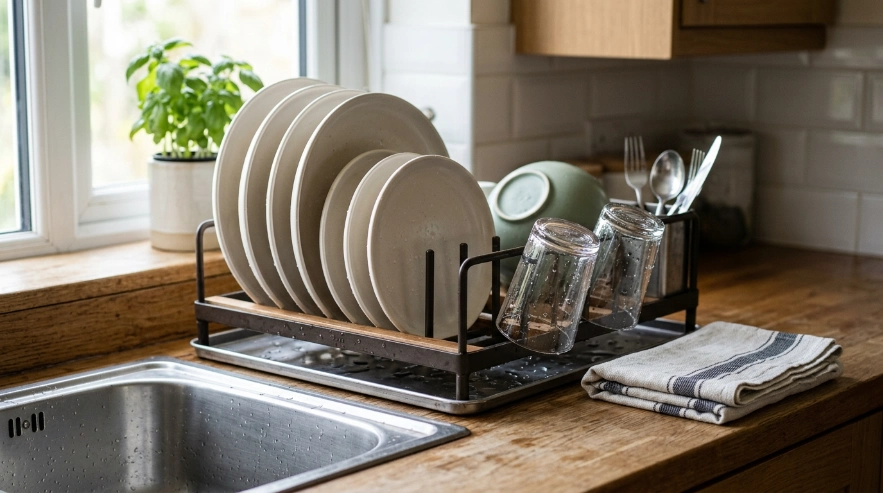
Air drying is a simple, low-contact way to let cleaned dishes dry thoroughly. A rack makes that process easier, although a rack itself isn’t required.
The CDC advises allowing cleaned items to air-dry thoroughly and warns against rubbing certain cleaned items dry with a dish towel because germs may transfer back onto them.
That doesn’t mean every clean kitchen towel is automatically unsafe. It means air drying removes an unnecessary handling step when you have the room.
| Drying Method | Counter Space | Storage | Best For |
|---|---|---|---|
| Dish rack | Moderate | May stay on counter | Daily hand washing |
| Drying mat | Moderate to high while used | Easy to fold away | Small kitchens and occasional washing |
| Clean unused towel | High for larger loads | Very easy | A few lightweight items |
| Dishwasher drying | Very low | Built in | Dishwasher-safe loads |
Do I Need a Dish Rack If I Already Have a Dishwasher?
You may still benefit from a small dish rack even if you own a dishwasher. Plenty of kitchen items are washed between full dishwasher loads.
I find this especially true with sharp knives, wooden items, oversized cookware, insulated drinkware, and anything whose manufacturer recommends hand washing.
A dishwasher doesn’t eliminate hand washing
Think about what normally lands beside your sink during one day. The list is often longer than expected.
- Chef’s knives
- Cutting boards
- Large pots and pans
- Reusable water bottles
- Travel mugs
- Delicate glasses
- Wooden utensils
- Small appliance parts
A compact rack can handle those items without becoming a permanent destination for every plate you own.
Just remember that some cookware needs different drying care. For example, bare cast iron shouldn’t sit wet in a rack; our guide on when to clean and dry a cast iron skillet explains why immediate drying matters.
Do I Need a Dish Rack in a Small Kitchen?
In a small kitchen, the answer depends more on footprint than on drying performance. A large rack can solve one problem while creating another.
Measure the usable counter area beside your sink before buying anything. Don’t rely only on the product’s marketing description of “compact.”
Consider these small-space alternatives
- Fold-flat rack: Store it after the dishes dry.
- Over-sink rack: Uses sink space instead of counter space.
- Roll-up rack: Rolls away when you need the sink.
- Compact draining mat: Good when you wash just a few pieces.
- Two-tier rack: Adds vertical capacity without greatly increasing width.
Small kitchens reward multipurpose tools and careful measurements. The same principle appears in our guide to choosing a rice cooker for a small kitchen.
If the rack would permanently consume your only prep area, I’d skip it. A foldable mat or over-sink design will usually make more sense.
What Are the Pros and Cons of Using a Dish Rack?
A dish rack is convenient, but it isn’t automatically the best choice for every sink setup. The tradeoff is usually drying convenience versus counter space and cleaning.
| Advantages | Disadvantages |
|---|---|
| Keeps wet dishes organized | Uses counter or sink space |
| Supports hands-off air drying | Needs regular cleaning |
| Can direct water into the sink | Poor drainage can leave standing water |
| Separates plates, cups, and utensils | Oversized models can look cluttered |
| Useful for hand-wash-only items | Not useful if almost everything goes into a dishwasher |
What Should I Look for in a Dish Rack?
Prioritize drainage, usable capacity, easy cleaning, and the correct dimensions. Those features matter more to me than decorative extras.
1. Measure first
Measure the width and depth of the space beside your sink. Also check the distance from the rack to the wall, backsplash, faucet, and cabinet doors.
2. Look at drainage
A rack with a drain board should move water away instead of letting it collect underneath dishes. Removable trays make cleaning easier.
3. Match the rack to what you wash
Large families need capacity. A one-person household may be happier with a narrow or folding model.
- Lots of plates: Look for sturdy plate dividers.
- Many utensils: Choose a divided flatware caddy.
- Large cookware: Prioritize an open center area.
- Wine glasses: Consider dedicated stemware support.
- Tiny kitchen: Consider folding or over-sink designs.
4. Pick materials you can maintain
Stainless steel and aluminum racks are common because they’re durable and suit modern kitchens. Plastic components can also work well when they’re easy to remove and wash.
The more complicated the rack, the more crevices you’ll eventually need to clean.
How Often Should You Clean a Dish Rack?
Clean a dish rack whenever you notice residue, standing water, discoloration, food debris, or a stale smell. A quick regular cleaning is easier than waiting for buildup.
A rack handles clean dishes, but water and stray food particles can still collect in its tray and corners.
- Remove the dishes and utensil holders.
- Empty any standing water.
- Wash removable pieces with warm water and dish soap.
- Scrub corners and drainage channels with a soft brush.
- Rinse thoroughly.
- Let every component dry before reassembling.
Check the manufacturer’s cleaning instructions first. Some plastics and coated components shouldn’t go through high-temperature dishwasher cycles.
What Can I Use Instead of a Dish Rack?
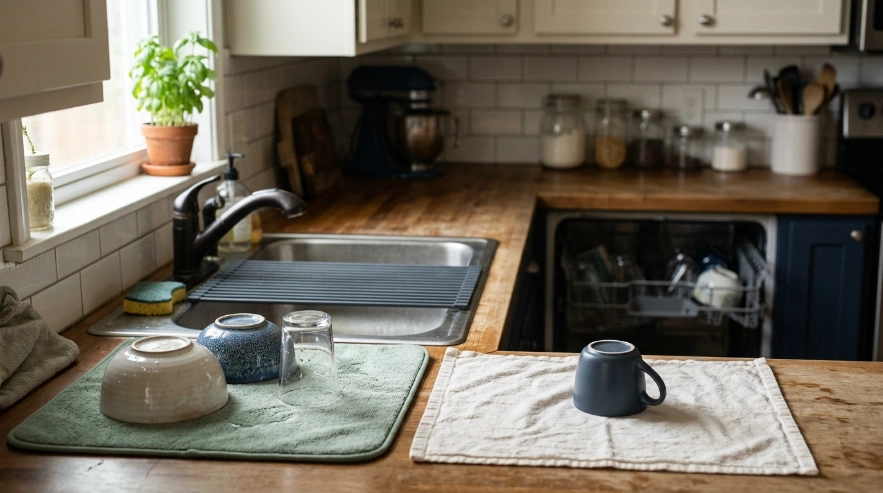
You have several workable alternatives if a traditional rack doesn’t suit your space. The best option depends on how many dishes you wash at once.
- Drying mat: Soft, foldable, and easy to store.
- Clean unused towel: Simple for a few items that can air-dry on top.
- Over-sink drying rack: Keeps the counter open.
- Roll-up sink rack: Works for light loads and food prep.
- Dishwasher rack: Leave dishwasher-safe items there to finish drying.
For cabinets crowded with cookware, organization elsewhere can also free useful kitchen space. Our frying pan rack guide covers another common storage problem.
When Is a Dish Rack Worth Buying?
I think a dish rack is worth buying when you regularly have wet dishes sitting beside the sink. That repeated inconvenience is a stronger buying signal than any kitchen checklist.
I’d buy one when at least two of these statements are true:
- You hand-wash dishes almost every day.
- Your current drying towel becomes crowded.
- Water regularly pools on the counter.
- You wash several hand-wash-only items.
- You have enough permanent space beside the sink.
- You dislike drying dishes individually by hand.
I’d skip a traditional rack when you wash only one or two items at a time. I’d also skip a full-size model when counter space matters more than added capacity.
If you’re ready to buy one, these are two practical styles I’d consider first:
🏆 BEST FOR LARGE LOADS
KitchenAid Large Capacity Full Size Dish Rack
★★★★☆ 4.6/5
Its spacious layout, angled drain board, and removable flatware caddy suit larger hand-washed loads. I’d choose this style for a family kitchen where pots, bowls, plates, and glasses often dry together.
💧 BEST FOR EASY DRAINAGE
OXO Good Grips Aluminum Dish Rack
★★★★☆ 4.6/5
The aluminum frame, raised drying ridges, removable utensil cup, and adjustable drain tray create a straightforward everyday setup. I’d lean toward this one when drainage and simple organization matter more than maximum capacity.
Frequently Asked Questions
Do I really need a dish drying rack?
No. You can air-dry dishes on another clean drying surface, use a drying mat, or let dishwasher-safe items dry in the dishwasher. A rack becomes worthwhile when you hand-wash frequently and want better organization and drainage.
Can I just dry dishes on a towel?
Yes, a clean unused towel can serve as a temporary surface for air drying. Avoid repeatedly rubbing clean dishes with a damp or previously used towel, and give items enough space to dry thoroughly.
Is a dish rack hygienic?
A dish rack can be a practical drying surface when you keep it clean and allow water to drain. Wash the rack and drip tray whenever residue, food debris, standing water, or odors begin to develop.
Should I get a dish rack or drying mat?
Choose a dish rack if you wash several plates, bowls, and utensils at once. Choose a drying mat if you have limited counter space, wash smaller loads, and want something that folds away after the dishes dry.
Can I leave dishes in the rack overnight?
Yes, clean dishes can remain in a clean rack while they finish air-drying. Once they’re fully dry, putting them away keeps your sink area clearer and makes room for the next washing session.
Final Verdict: Do You Need a Dish Rack?
You don’t need a dish rack simply because kitchens traditionally have one. You need one only when it makes your own washing routine easier.
For frequent hand washing, I’d choose a properly sized rack with good drainage and easy-to-clean parts. For a tiny kitchen or occasional washing, a foldable mat or over-sink solution may be smarter.
Look at what happens beside your sink tonight. If wet dishes are crowded, stacked, or covering half the counter, you’ve probably answered the question already.
