
How to Juice a Lemon (and Lime): 6 Easy Ways, Plus How Much Juice per Lemon

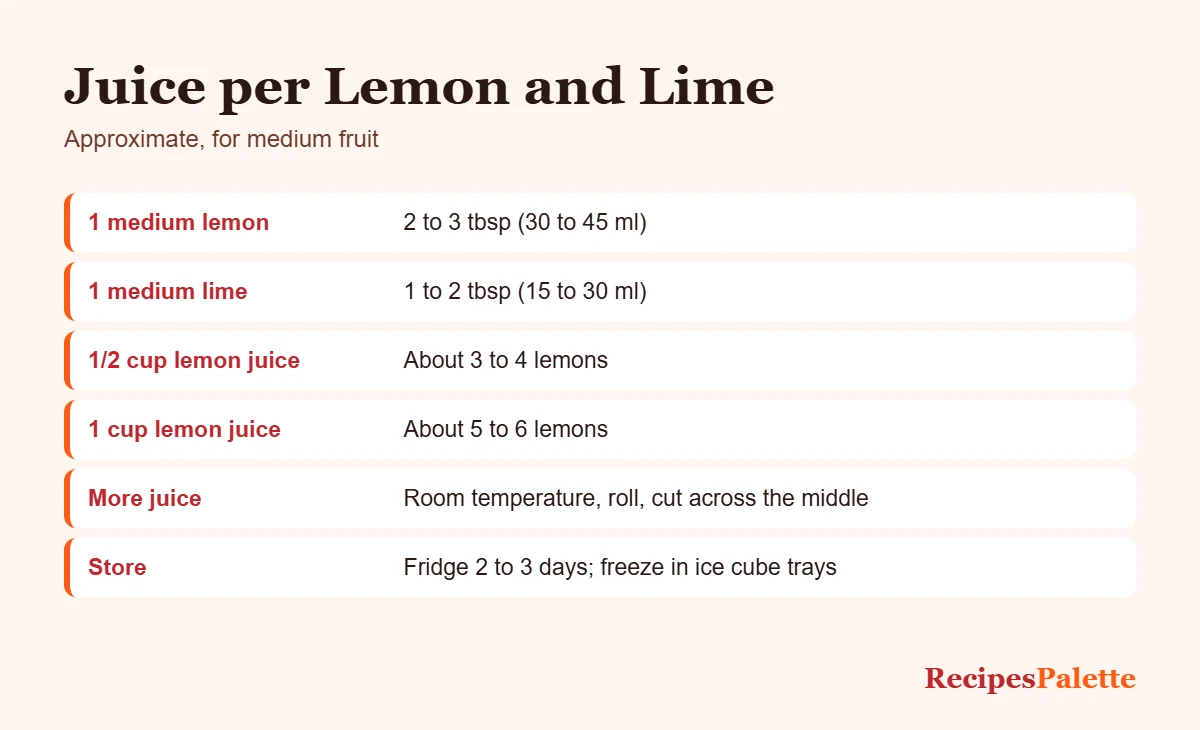
To juice a lemon, roll it firmly on the counter, cut it in half across the middle, and squeeze each half over a strainer or with a citrus squeezer. One medium lemon gives about 2 to 3 tablespoons (30 to 45 ml) of juice, and a lime gives about 1 to 2 tablespoons. Juicing room-temperature fruit, or warming it for 10 to 15 seconds in the microwave, gets noticeably more juice out.
Lemon and lime juice turn up in everything from dressings and marinades to drinks and baking, and fresh juice tastes far brighter than bottled. This guide covers six ways to juice lemons and limes, with and without tools, how much juice to expect, tips for getting every drop, and how to store fresh lemon juice.
How Much Juice Is in a Lemon or Lime?
| Fruit | Juice per fruit | For 1/4 cup | For 1 cup |
|---|---|---|---|
| Medium lemon | 2 to 3 tbsp (30 to 45 ml) | About 2 lemons | 5 to 6 lemons |
| Large lemon | 3 to 4 tbsp (45 to 60 ml) | 1 to 2 lemons | 4 to 5 lemons |
| Meyer lemon | 3 to 4 tbsp | 1 to 2 lemons | 4 to 5 lemons |
| Medium lime (Persian) | 1 to 2 tbsp (15 to 30 ml) | 2 to 4 limes | 8 to 12 limes |
| Key lime | About 2 tsp | About 6 key limes | About 20 to 25 key limes |
Amounts vary with size, ripeness and how fresh the fruit is. One medium lemon also gives about 1 tablespoon of zest, so zest first if your recipe needs both.
How to Choose Juicy Lemons and Limes
- Heavy for their size. Weight means juice.
- Thin, smooth, glossy skin. Thick, bumpy skin usually means more pith and less juice.
- Slight give when squeezed. Rock-hard fruit is often dry.
- Bright color. Lemons should be fully yellow. Limes can be green or slightly yellowish; a yellowish lime is riper and often juicier.
First: Prep for More Juice
- Bring to room temperature. Cold citrus gives less juice. Leave it out for an hour, or warm it in a bowl of warm water for a few minutes.
- Microwave briefly (optional). 10 to 15 seconds for a lemon, about 10 seconds for a lime. It should feel just slightly warm, not hot.
- Roll it. Press firmly with your palm and roll it on the counter for 10 to 20 seconds to break the juice cells inside.
- Cut across the middle, not from tip to tip. This opens every segment.
Method 1: Handheld Squeezer
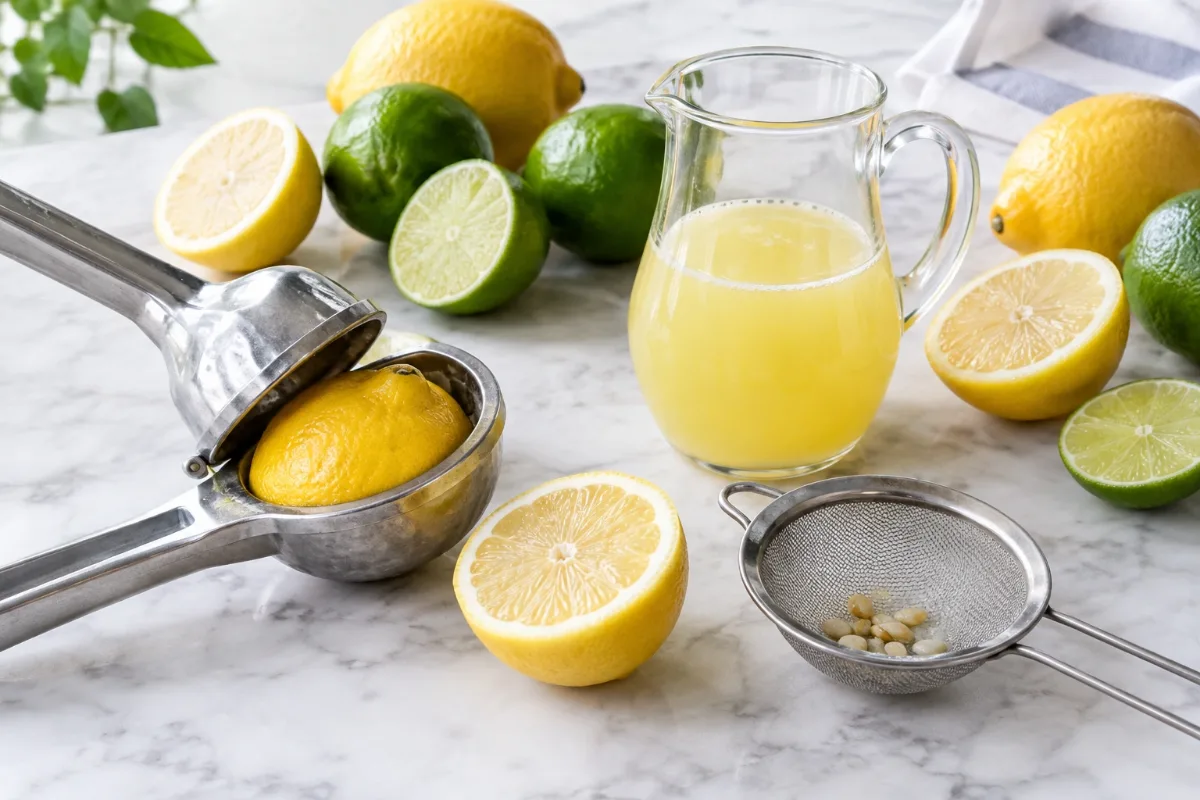
A hinged handheld squeezer is the fastest way to juice a few lemons or limes. Place the half cut side down, facing the holes, and squeeze. It catches the seeds and gets almost all the juice with little effort. Choose a size that matches your fruit: lemon, lime or a larger orange size.
Method 2: Reamer
Hold a half over a bowl and twist a wooden or plastic reamer into the flesh, turning the fruit as you go. Strain out the seeds. Reamers are cheap, compact and good for one or two lemons.
Method 3: Citrus Juicer
For a large batch, such as lemonade or a week’s supply, a countertop lever press or electric citrus juicer is much faster. Press the halves on the cone or in the cup and the juice collects in the base. See manual vs electric citrus juicer to choose one.
Method 4: With a Fork (No Tools)
- Hold the lemon half over a bowl or your hand to catch seeds.
- Push a fork into the flesh and twist it back and forth while squeezing the lemon around it.
- Move the fork around to reach all the segments.
This works surprisingly well and is the go-to method when you are cooking without gadgets.
Method 5: With Tongs
Place a lemon half between the arms of a pair of kitchen tongs, near the hinge, and squeeze the handles. The extra leverage gets more juice than your hands alone. Hold it over a strainer to catch seeds.
Method 6: Blender (for Large Batches)
Peel lemons fully, removing all the white pith, and remove the seeds. Blend the flesh for a few seconds and strain through a fine sieve. Do not blend unpeeled lemons; the peel and pith make the juice very bitter. This is useful when you need several cups of juice at once.
Lemons vs Limes: Any Difference When Juicing?
The methods are the same, but limes are smaller, firmer and have less juice. They benefit even more from warming and rolling. Limes usually have few or no seeds. Lemons tend to have more seeds, so always use a strainer. Meyer lemons are sweeter, less acidic and have thinner skins, so they juice easily by hand.
How to Juice a Big Batch Quickly
Making lemonade for a party, or juice for a week of cooking? A little setup saves a lot of time.
- Take the lemons out of the fridge the night before, or soak them in warm water for 10 minutes.
- Zest any you need for recipes first, then roll them all at once.
- Halve all the lemons before you start squeezing.
- Use a lever press or electric citrus juicer, and set a sieve over a large measuring jug.
- Pour the finished juice into small jars or ice cube trays so you can thaw only what you need.
A dozen medium lemons gives roughly 2 to 2 1/4 cups of juice, enough for a large pitcher of lemonade.
How to Store Fresh Lemon Juice
- Fridge: pour into a clean, sealed glass jar and refrigerate at 40°F (4°C) or colder. It keeps its best flavor for about 2 to 3 days and remains usable for up to about a week, though the taste fades.
- Freezer: freeze in ice cube trays (most trays hold about 1 to 2 tablespoons per cube), then transfer to a freezer bag. Frozen lemon juice keeps good flavor for several months.
- Whole lemons: store them in a sealed bag in the fridge, where they keep for about 3 to 4 weeks, much longer than on the counter.
See how long fresh juice lasts for general storage rules.
Fresh vs Bottled Lemon Juice
Bottled lemon juice is convenient and has consistent acidity, which is why home-canning guides often call for it. For drinks, dressings and cooking, fresh juice has a much brighter, more aromatic taste. Many cooks keep a bottle for canning and use fresh lemons for everything else.
Ways to Use Fresh Lemon and Lime Juice
- In juices: a squeeze brightens almost any fresh juice and slows browning. Try it in our green juice recipe, celery juice or homemade apple juice.
- Lemonade: 1 cup lemon juice, 1/2 to 3/4 cup simple syrup and 4 cups cold water.
- Limeade: the same ratio with lime juice.
- Dressings: 1 part lemon juice to 3 parts olive oil, plus salt, pepper and mustard.
- Marinades: lemon juice with garlic, herbs and olive oil for chicken or fish.
- Stop browning: toss cut apples, pears and avocados in a little lemon juice.
For more juice ideas, see our juice combinations.
Common Mistakes
- Juicing straight from the fridge. You lose a lot of juice.
- Squeezing the wrong way in a handheld squeezer. The cut side goes toward the holes, facing down.
- Forgetting to zest first. It is much harder to zest a squeezed lemon.
- Letting seeds fall in. Always squeeze over a strainer or through your fingers.
- Overheating in the microwave. Hot citrus can taste cooked. A few seconds is enough.
What to Do With the Squeezed Halves
- Rub them over a cutting board with salt to freshen it.
- Drop them into a pot of water with cinnamon to scent the kitchen.
- Put them in the garbage disposal to freshen it, then run cold water.
- Rub them on hands after handling fish, garlic or beets.
- Compost them.
Frequently Asked Questions
How much juice is in one lemon?
About 2 to 3 tablespoons (30 to 45 ml) for a medium lemon.
How many lemons do I need for 1/2 cup of juice?
About 3 to 4 medium lemons.
Does microwaving lemons really give more juice?
Warming them briefly helps the juice flow more easily, especially if they were cold. Rolling them helps too.
Can I juice a lemon without a juicer?
Yes. Use a fork, a pair of tongs or just your hands, and squeeze over a strainer to catch the seeds.
Can I freeze lemon juice?
Yes. Freeze it in ice cube trays and transfer the cubes to a freezer bag. Use within a few months.
Why is my lemon juice bitter?
Peel or pith got into the juice, often from pressing too hard or blending unpeeled lemons. Squeeze gently at the end.
Warm, roll, cut across the middle and squeeze over a strainer. With those four steps you will get every last drop from your lemons and limes, whatever tool you have.