
Homemade Tomato Juice From Fresh Tomatoes (Cooked or Raw)

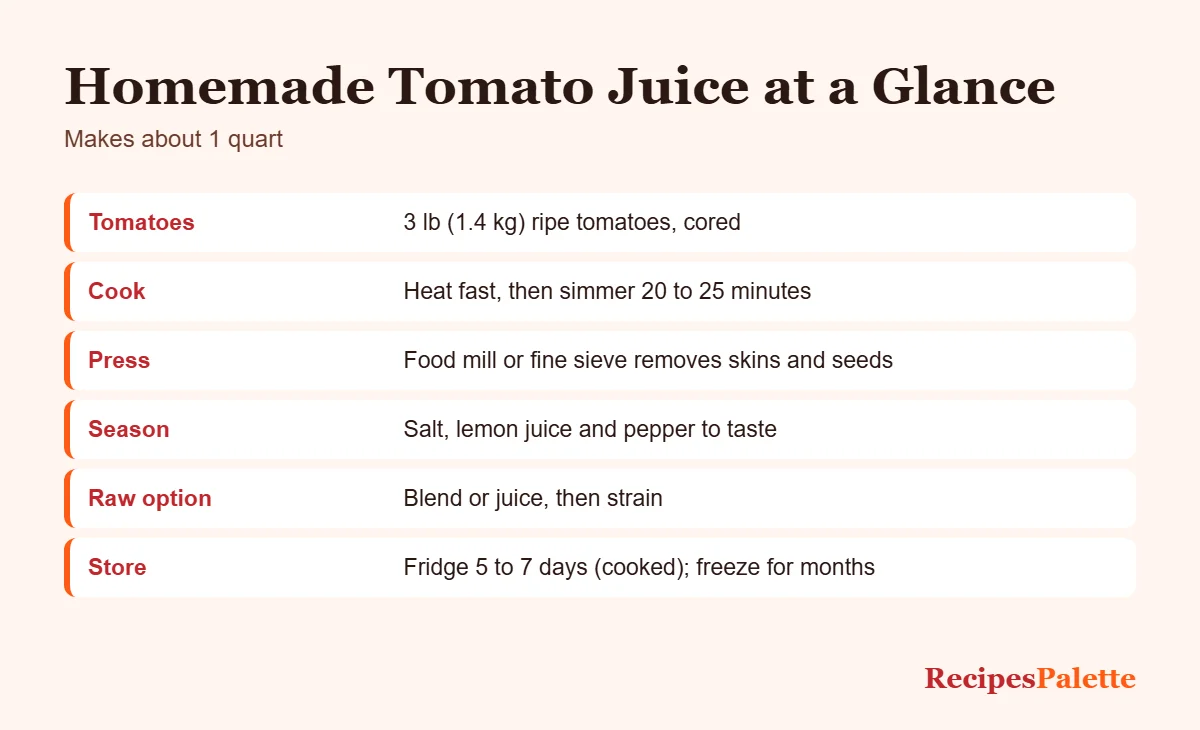
To make homemade tomato juice, core and chop about 3 pounds (1.4 kg) of ripe tomatoes, simmer them for 20 to 25 minutes until soft, then press them through a food mill or fine sieve to remove the skins and seeds. Season with salt and a little lemon juice, chill, and serve. You can also juice raw tomatoes in a juicer or blender for a fresher, lighter juice. Three pounds of tomatoes make about 1 quart (4 cups).
Homemade tomato juice tastes like a summer garden: fresh, savory and nothing like the salty canned kind. It is a great way to use a glut of ripe tomatoes. Below you will find the classic cooked method, a quick raw method, a spiced vegetable version, how to freeze it, and the key safety points if you want to can it.
Ingredients
For about 1 quart (4 cups / 950 ml):
- 3 pounds (1.4 kg) ripe tomatoes, about 9 to 10 medium
- 1/2 to 1 teaspoon salt, to taste
- 1 to 2 teaspoons lemon juice, to taste
- Optional: 1 celery stalk, a slice of onion, a pinch of sugar, black pepper, a dash of hot sauce or Worcestershire sauce
The Best Tomatoes for Juice
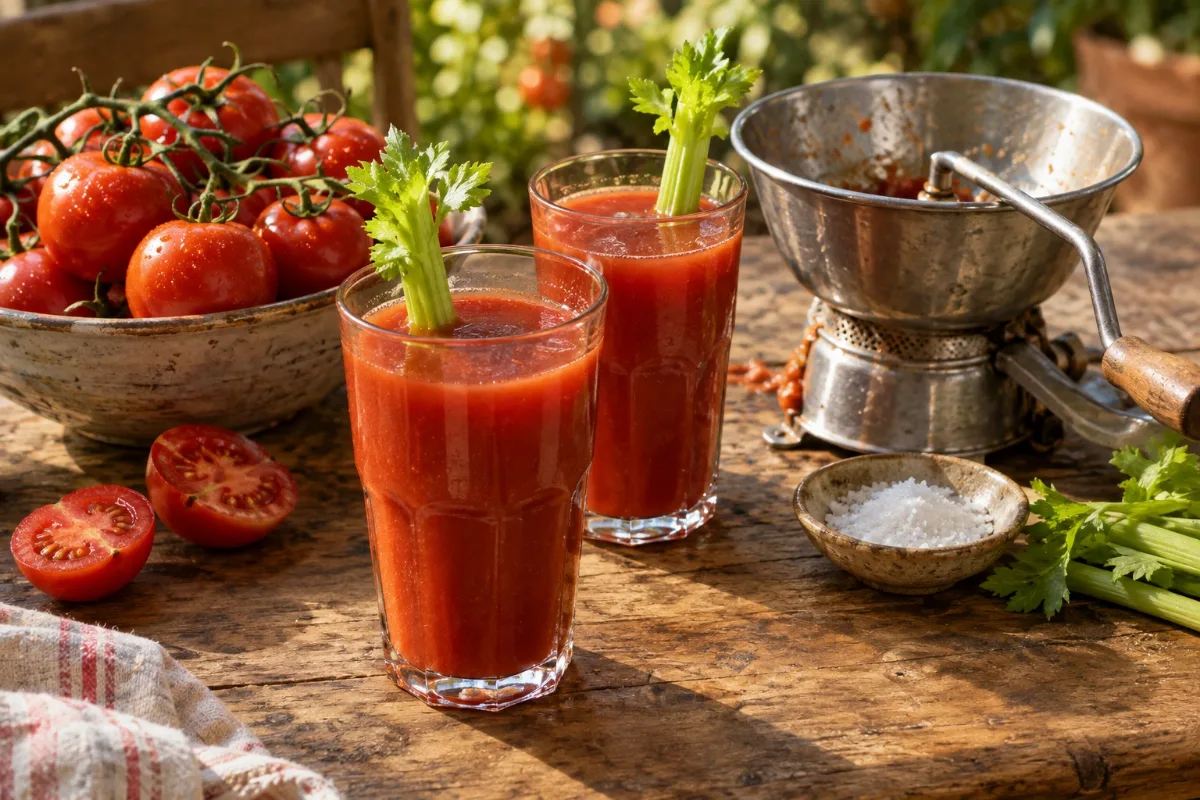
- Use fully ripe, juicy tomatoes. Deep red, slightly soft fruit gives the best color and flavor.
- Slicing and beefsteak tomatoes are very juicy and give a thin, fresh juice.
- Roma and paste tomatoes give a thicker, richer juice with less liquid.
- A mix of slicing and paste tomatoes gives a good balance of body and juiciness.
- Heirlooms work well and give interesting colors, though yellow tomatoes make a milder, sweeter juice.
Cut away bruises and damaged spots. Do not use moldy, rotten or split tomatoes with decay, especially if you plan to can the juice.
Method 1: Cooked Tomato Juice (Classic)
- Wash and core. Rinse the tomatoes, cut out the cores and any damaged spots.
- Chop them into quarters or chunks.
- Heat quickly. Put a few handfuls of chopped tomatoes in a large pot over medium-high heat and crush them as they heat. Keep adding the rest, stirring and crushing as you go, so they boil quickly. Heating them fast helps keep the juice from separating.
- Simmer gently for 20 to 25 minutes, stirring often, until very soft. Add celery and onion now if using.
- Press. Run the hot tomatoes through a food mill, or press them through a fine sieve with a ladle. This removes the skins and seeds.
- Season with salt, lemon juice, pepper and a pinch of sugar if the tomatoes are very acidic.
- Chill in the fridge and stir before serving.
A food mill is the easiest tool here. If you only have a sieve, it takes a little longer but works fine.
Method 2: Raw Tomato Juice (Blender or Juicer)
Raw tomato juice is lighter, fresher and brighter, a bit like gazpacho without the vegetables.
Blender
- Core and quarter the tomatoes.
- Blend on high for 30 to 60 seconds. Tomatoes have so much water that you do not need to add any.
- Strain through a fine sieve to remove skins and seeds.
- Season and serve cold.
Juicer
Cut tomatoes into chunks and feed them through a slow or centrifugal juicer. Slow juicers give a smoother, less foamy result. Raw juice tends to separate into a pale liquid and a red pulp layer; just stir it before drinking.
Our guides to juicer vs blender and making juice without a juicer explain the differences.
Spicy Vegetable Tomato Juice
For a homemade version of a classic spicy vegetable juice, simmer these with the tomatoes in Method 1:
- 2 celery stalks, chopped
- 1 small carrot, sliced
- 1/4 small onion
- 1/2 small green bell pepper
- 1 small clove garlic
- A handful of parsley or spinach
Press everything through a food mill, then season with salt, lemon juice, black pepper, a dash of Worcestershire sauce and hot sauce to taste. You can also juice the raw vegetables with fresh tomatoes; see our celery juice recipe for tips on juicing celery.
How Many Tomatoes Do You Need?
| Juice wanted | Fresh tomatoes | Notes |
|---|---|---|
| 1 cup | About 3/4 lb (350 g) | 2 to 3 medium tomatoes |
| 1 quart (4 cups) | About 3 lb (1.4 kg) | 9 to 10 medium tomatoes |
| 1 gallon | About 12 lb (5.4 kg) | A large garden harvest |
Juicy slicing tomatoes give more juice than paste tomatoes.
Equipment That Helps
- Food mill: the best tool for cooked tomato juice. It separates skins and seeds in minutes and gives a smooth, even juice.
- Fine mesh sieve: a good alternative. Press the cooked tomatoes through with the back of a ladle.
- Large heavy pot: stainless steel or enameled. Tomatoes are acidic, so avoid bare aluminum and cast iron, which can give a metallic taste.
- Immersion blender: handy if you want to blend the cooked tomatoes before straining for extra yield.
- Slow juicer: best for raw juice with less foam.
Seasoning Ideas
- Classic: salt, a squeeze of lemon and black pepper.
- Herby: stir in finely chopped basil or a sprig of dill before chilling, then strain it out.
- Spicy: hot sauce, a pinch of cayenne and a little horseradish.
- Smoky: a pinch of smoked paprika and a dash of Worcestershire sauce.
- Low-salt: leave out the salt and use lemon, celery and herbs for flavor.
How to Store Tomato Juice
- Fridge: keep cooked juice in a sealed glass jar at 40°F (4°C) or colder for about 5 to 7 days. Raw juice is best within 24 to 48 hours.
- Freezer: cool completely, then freeze in freezer-safe jars or containers with about 1 inch of headspace for several months. Thaw in the fridge and shake well, since it separates.
See how long fresh juice lasts for more storage advice.
Can You Can Homemade Tomato Juice?
Yes, but tomatoes are a borderline acid food, so safety steps matter.
- Always add acid. Tested guidelines from the USDA and the National Center for Home Food Preservation call for adding bottled lemon juice or citric acid to each jar, typically 1 tablespoon bottled lemon juice per pint or 2 tablespoons per quart.
- Follow a tested recipe for processing times in a water-bath or pressure canner. Times depend on jar size, method and your altitude.
- Do not add extra vegetables like onion, celery or peppers to tomato juice for water-bath canning unless the tested recipe includes them. They lower the acidity.
- Use only sound, ripe tomatoes with no decay.
For other canned juices, our homemade grape juice includes canning steps too. Read our juicing safety tips for general hygiene.
Common Tomato Juice Mistakes
- Heating the tomatoes slowly. Slow heating lets natural enzymes break down the pulp, so the juice separates more. Bring them to a boil quickly.
- Leaving the cores in. They are tough and pale and dull the color.
- Blending the seeds for too long in a raw juice. It can add bitterness. Strain them out.
- Over-salting early. Season at the end, once you can taste the finished juice.
- Using underripe tomatoes. The juice will be pale and sour.
Ways to Use Tomato Juice
- Drink it chilled over ice with a celery stick.
- Use it as a base for tomato soup, gazpacho or vegetable soup.
- Cook rice or grains in half tomato juice, half water.
- Add it to chili, stews and pasta sauce.
- Make a tomato and orange juice mix for a fresh brunch drink; see how to make fresh orange juice.
What to Do With the Skins and Seeds
The leftover skins and seeds can be dried in a low oven and ground into tomato powder for seasoning, simmered into vegetable stock, or composted. Our juice pulp recipes have more ideas.
Frequently Asked Questions
Do I need to peel tomatoes for juice?
No. A food mill or sieve removes the skins after cooking. For raw juice, strain them out.
Why does my tomato juice separate?
Natural enzymes break down the pulp, especially if tomatoes are heated slowly or juiced raw. Heat them quickly, and shake or stir before serving.
How many tomatoes make a quart of juice?
About 3 pounds, or 9 to 10 medium tomatoes.
Can I make tomato juice without a juicer?
Yes. Cook and press through a food mill or sieve, or blend raw tomatoes and strain.
Can I freeze tomato juice?
Yes. Leave headspace in the container and use within several months.
Can I use canned tomatoes?
Yes. Blend canned whole tomatoes with their juice, strain, season and chill. It will taste less fresh but is a good off-season option.
Pick the ripest tomatoes you can find, heat them fast, press out the skins and seeds, and season to taste. One batch of homemade tomato juice will change how you think about the canned stuff.