
What Is a Good Quality Dish Rack? A Practical Buying Guide

A dish rack looks simple until you use a bad one every day. Wobbly frames, puddled countertops, cramped plate slots, and awkward drain trays become irritating fast.
When I judge a rack, I care less about decorative extras and more about how it behaves during an ordinary sink full of dishes. Here is how I separate a genuinely good dish rack from one that only looks good online.
What Makes a Dish Rack Good Quality?
A quality dish rack combines stability, drainage, capacity, durability, and easy cleaning. If one of those basics is poor, even an expensive rack can become frustrating.
A good rack should also suit your particular kitchen. A large family may need maximum capacity, while an apartment kitchen benefits more from compact dimensions or a fold-flat design.
- Strong construction: Plates and bowls should not cause the frame to flex or lean.
- Smart spacing: Dividers should support plates without packing them tightly together.
- Proper airflow: Dishes need space around them so moisture can escape.
- Controlled drainage: A tray, slope, or spout should send runoff where you want it.
- Useful accessories: Cup holders and utensil compartments should add function rather than clutter.
A Simple Definition of a Quality Dish Rack
A quality dish rack is a drying system designed to hold washed kitchenware securely while allowing water to drain and air to circulate. It should accomplish that job repeatedly without damaging dishes or making the countertop harder to maintain.
That definition matters because a rack does more than organize plates. It also controls where all the water left on those plates goes.
Which Dish Rack Material Is Best?
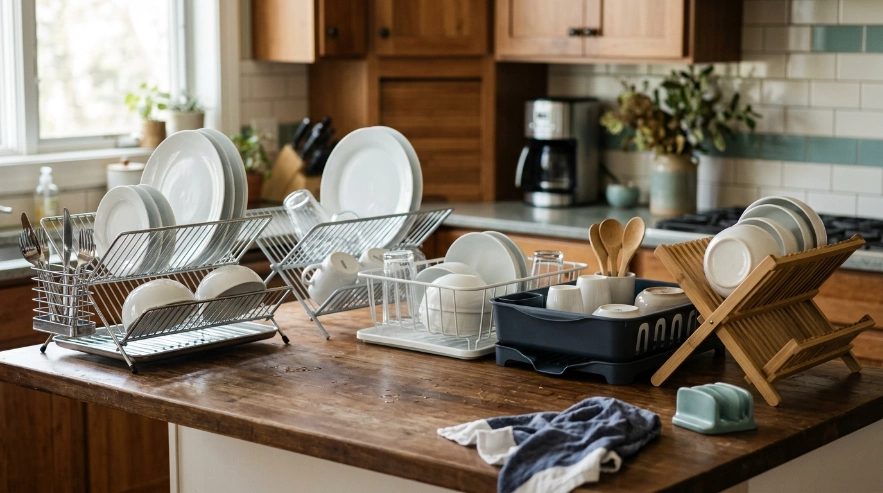
For most kitchens, stainless steel or aluminum is my first choice because both materials can provide a rigid frame without excessive bulk. High-quality plastic can also work well, especially in removable trays and compact racks.
No material is completely maintenance-free. Even corrosion-resistant metal benefits from regular cleaning and drying.
| Material | Main Advantage | Main Drawback | Best For |
|---|---|---|---|
| Stainless steel | Strong and attractive | Needs proper cleaning to maintain its finish | Heavy daily use |
| Aluminum | Lightweight and corrosion resistant | Quality varies by frame design | Everyday countertop use |
| Coated steel | Strong and often affordable | Damaged coating can expose the metal | Budget-conscious buyers |
| Plastic | Light and easy to shape | May flex under heavy cookware | Small loads and removable trays |
| Bamboo | Warm appearance and foldable designs | Requires thorough drying | Light dishes and dry kitchens |
How Important Is Drainage in a Dish Rack?
Drainage is one of the first things I inspect because standing water creates extra cleaning work. A good rack directs runoff toward the sink instead of letting it sit underneath clean dishes.
Look for a sloped drain board, open channels, or an adjustable spout. The exact design matters less than whether water can leave the rack efficiently.
- Check whether the drain tray slopes toward the outlet.
- Make sure the spout can reach your sink from the intended position.
- Avoid deep channels that are difficult to wipe clean.
- Look for a tray you can remove without dismantling the whole rack.
Simplehuman, for example, uses a pivoting drainage spout on its Steel Frame Dishrack. OXO uses an adjustable drain board on its Good Grips Aluminum Dish Rack.
How Big Should a Good Dish Rack Be?
The right size depends on your normal washing load, not the largest holiday meal you prepare once a year. Buying too large wastes counter space, while buying too small forces you to stack dishes dangerously.
Measure your available countertop before shopping. Remember to include enough room for any drain spout extending toward the sink.
Match Capacity to Your Household
- One person: A compact or foldable rack is usually enough.
- Two people: A medium rack with plate slots and an utensil cup often works best.
- Three to four people: Look for a full-size rack with strong plate support and separate glass space.
- Large households: Consider a large or two-level rack if you regularly hand-wash full dinner loads.
As a specific example, OXO lists its Aluminum Dish Rack at approximately 17.9 × 14.9 × 6.6 inches. That gives you a useful reference point when measuring a standard countertop space.
Good organization also saves time after cooking. If kitchen efficiency is a priority, my guide on saving time while cooking daily meals covers more ways to reduce cleanup and unnecessary movement.
How Can You Tell If a Dish Rack Is Stable?
A stable dish rack should not rock when you press gently on opposite corners. Its feet should grip the countertop, and the plate section should remain balanced when only one side is loaded.
This is especially important if you wash cast iron, heavy glass bowls, or large dinner plates. Lightweight construction is useful only when it does not sacrifice support.
My Quick Stability Check
- Place the empty rack on a dry, flat counter.
- Press each corner gently and check for rocking.
- Load several dinner plates on one side.
- Add two bowls and a heavy mug.
- Check whether the feet shift or the frame twists.
I prefer racks with wide contact points or nonslip feet. A narrow, tall rack can hold plenty of dishes, but a poorly designed base makes that extra capacity much less useful.
What Features Are Actually Worth Paying For?
Useful features solve daily problems. Features that only add moving parts can make a dish rack harder to clean.
I would prioritize drainage and stability before spending more for specialty accessories.
- Removable utensil holder: Easier to empty and clean.
- Adjustable drain spout: Useful when the rack sits beside rather than directly over the sink.
- Glass holders: Helpful if you frequently wash cups or stemware.
- Knife compartment: Keeps sharp blades separate from ordinary cutlery.
- Fold-flat frame: Excellent when counter space is limited.
- Expandable body: Lets you increase capacity only when needed.
What Are the Signs of a Poor-Quality Dish Rack?
A bad rack often reveals itself through small design problems rather than one dramatic failure. Watch for weak joints, uneven feet, trapped water, narrow slots, and components that are difficult to remove.
These problems create the same type of unnecessary friction as other common kitchen mistakes. Small inconveniences become much more annoying when you repeat them every day.
- The rack rocks on a flat countertop.
- Water remains trapped in the drain board.
- Large plates lean into one another.
- Cups slide off exterior holders.
- The utensil cup tips when loaded.
- Parts cannot be removed for cleaning.
- Sharp wire ends or unfinished edges are exposed.
- The coating begins peeling around joints.
How Should You Clean a Dish Rack?
A dish rack still needs routine cleaning even though it holds washed dishes. Water, soap residue, food particles, and minerals can collect around trays, corners, and drain openings.
FoodSafety.gov recommends washing dishes, utensils, and kitchen surfaces with hot, soapy water after use. The four basic food-safety steps are a useful reference for maintaining a cleaner kitchen.
- Remove dishes and detachable accessories.
- Empty any water from the drain tray.
- Wash removable parts with warm water and mild dish soap.
- Use a soft brush around joints and drainage channels.
- Rinse away soap residue.
- Dry the rack before putting it back into regular use.
Avoid assuming every plastic component is dishwasher safe. Follow the manufacturer’s instructions because high dishwasher heat can damage some rack parts.
The FDA’s safe food-handling guidance also recommends washing dishes, utensils, cutting boards, and counters with hot, soapy water during food preparation. CDC guidance likewise emphasizes keeping kitchen utensils and surfaces clean.
For broader sanitation guidance, the NSF kitchen cleaning guidance is another helpful resource. The main lesson is simple: easy-to-clean equipment is easier to keep clean consistently.
Good Quality Dish Rack Comparison
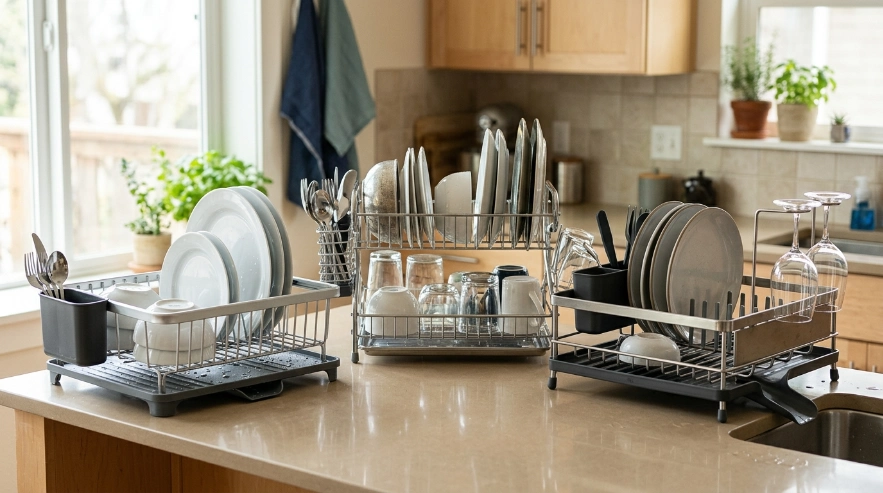
These three models illustrate different approaches to a quality rack. I would choose between them according to kitchen size, capacity needs, and budget rather than assuming one design suits everyone.
| Dish Rack | Key Construction | Drainage | Best For |
|---|---|---|---|
| OXO Good Grips Aluminum Dish Rack | Aluminum and plastic; 17.9 × 14.9 × 6.6 in. | Adjustable drain board | Balanced everyday use |
| KitchenAid Full Size Dish Rack | Large full-size format; about 20 in. wide | Removable drain board | Larger dish loads |
| simplehuman Steel Frame Dishrack | Steel-frame premium design | Pivoting drain spout | Premium drainage and stemware |
Which Dish Rack Would I Choose?
For most kitchens, I would begin with a solid mid-size aluminum or stainless-steel design with direct drainage. It gives you durability without turning the dish rack into the biggest object on your counter.
If you’re ready to pick one, these are the three styles I would consider first:
🏆 Best Overall Balance
OXO Good Grips Aluminum Dish Rack
★★★★½
The aluminum frame, adjustable drain board, removable utensil cup, and 17.9 × 14.9-inch footprint create a useful everyday package. I like it for buyers who want practical capacity without moving into an oversized two-tier design.
🍽️ Best for Large Loads
KitchenAid Full Size Dish Rack
★★★★☆
This full-size design is roughly 20 inches wide and provides more room for plates, bowls, glasses, and utensils. I would look here first when daily capacity matters more than preserving every inch of countertop.
✨ Best Premium Pick
simplehuman Steel Frame Dishrack
★★★★½
The pivoting drain spout, steel frame, silicone-capped plate supports, and integrated stemware area make this the feature-rich choice. Simplehuman also lists a five-year warranty for the current Steel Frame Dishrack.
Frequently Asked Questions
Is stainless steel the best material for a dish rack?
Stainless steel is one of the best options because it can provide excellent strength, rigidity, and a clean appearance. Aluminum is also a strong choice because it is lightweight and naturally resistant to corrosion.
How much should I spend on a good dish rack?
You do not need the most expensive rack to get good performance. Focus first on frame stability, drainage, usable capacity, and cleaning access, then decide whether premium features such as stemware holders or adjustable components justify paying more.
Are two-tier dish racks better?
Two-tier racks provide more drying space within a smaller countertop footprint. However, they need a stable base and enough vertical clearance, so a well-designed single-level rack may be better if you frequently wash heavy cookware.
Should a dish rack drain directly into the sink?
Direct drainage is usually the most convenient setup because it reduces standing water on the counter and drain board. Look for a sloped tray or adjustable spout that reaches your sink without forcing you to position the rack awkwardly.
How often should I clean my dish rack?
Clean it whenever you notice residue, standing water, mineral deposits, or food particles. A quick regular wash is easier than waiting for buildup to form around the tray, utensil holder, joints, and drainage channels.
Final Takeaway: Choose Function Before Looks
So, what is a good quality dish rack? It is one that stays stable, drains efficiently, holds your real-world dish load, and can be cleaned without turning into another kitchen project.
Measure your counter, think about what you wash most often, and examine drainage before buying. Get those basics right, and even a simple dish rack can make daily cleanup noticeably easier.
