
What Else Can You Use a Dish Rack For? 15 Smart Ideas

Quick Answer
A dish rack can do much more than dry plates. Its slots, open frame, and utensil compartments make it useful for organizing lids, cutting boards, kids’ dishes, mail, books, craft supplies, bathroom products, and other awkward items. The best setup depends on the rack’s shape, so it helps to understand the different types of dish racks before repurposing one.
Easy ways to reuse one
- Container lids: File lids vertically so sizes stay visible and easy to grab.
- Cutting boards: Stand thin boards upright instead of stacking them across the counter.
- Kids’ dishes: Separate small plates, cups, bottles, and utensils in one compact station.
- Mail and papers: Turn a dry rack into a simple desktop file sorter.
- Craft supplies: Hold paper, coloring books, brushes, scissors, and small tools.
- Bathroom storage: Use a clean, moisture-resistant rack for towels and daily grooming items.
One rule before you start
- Once a rack has held chemicals, garage tools, or dirty craft materials, don’t return it to food-contact use.
I like kitchen tools that earn their storage space twice. A basic dish rack is surprisingly good at that because its dividers already solve one common problem: keeping flat or narrow objects upright.
What Else Can You Use a Dish Rack For?
You can use a dish rack as a vertical organizer anywhere its slots match the objects you’re trying to control. The most useful alternatives include kitchen storage, office sorting, kids’ organization, craft storage, and bathroom organization.
Simple definition: Repurposing a dish rack means using its plate slots, open base, side rails, or utensil cup to separate and support items other than wet dinnerware.
The trick is to look at the rack as a set of dividers rather than a dish-specific appliance. Anything thin enough to fit between those dividers becomes a possible candidate.
I use one quick test when evaluating an idea: the item should sit securely without forcing the wires apart or making the rack tip. If it wobbles, leans dangerously, or traps moisture, I choose another organizer.
Which Dish Rack Design Is Best for Repurposing?
Rigid racks are best for vertical storage, while roll-up and folding models are better for temporary work surfaces. Size matters just as much as material.
Here are three real examples that show how differently dish racks can behave:
| Rack | Verified Size | Design | Best Alternative Use |
|---|---|---|---|
| OXO Good Grips Foldaway | 19.4 × 15.5 × 5.125 in. open | Stainless steel, configurable plate rack | Lids, boards, trays, mixed kitchen storage |
| OXO Good Grips Dish Rack | 13.75 × 10.5 × 3.5 in. | Compact rigid rack | Small lids, mail, kids’ dishes, craft paper |
| Surpahs Roll-Up Rack | 20.5 × 13.1 in. | Silicone-wrapped steel rods | Temporary sink platform, produce rinsing, cloth drying |
A plate-style rack gives you actual vertical dividers. A roll-up model behaves more like a ventilated platform, so it works better across a sink than as a file organizer.
How Can You Reuse a Dish Rack in the Kitchen?
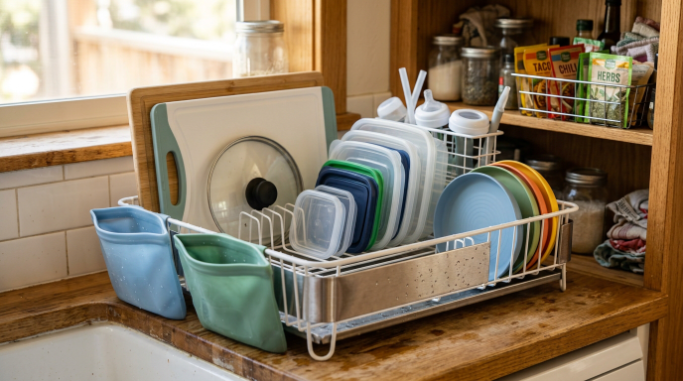
The kitchen is still the easiest place to repurpose an extra dish rack. Most kitchen clutter includes flat objects, lids, boards, and small pieces that benefit from separation.
If you want to keep using the rack around dishes, these dish rack organization techniques also show why upright storage works so well.
- 1. Food-storage container lids: Stand lids vertically from smallest to largest so you can see every size without lifting a pile.
- 2. Cutting boards: Use wide plate slots to separate thin cutting boards and prevent them from becoming one leaning stack.
- 3. Pot and pan lids: A sturdy metal rack can separate lightweight lids, provided their weight doesn’t make the rack unstable.
- 4. Baking sheets and cooling racks: Store smaller trays vertically inside a cabinet when the rack and shelf have enough clearance.
- 5. Kids’ plates and cups: Small plastic dishes often fit awkwardly in adult-sized stacks, while individual slots keep them controlled.
- 6. Reusable food bags: Drape washed reusable bags over clean dividers so their openings stay apart while drying.
- 7. Bottle parts: Use open sections to separate clean bottle lids, collars, and reusable straw components as they dry.
- 8. Pantry packets: A completely dry rack can hold seasoning envelopes, drink packets, or snack pouches upright on a shelf.
For wet uses, protect the counter and keep drainage under control. This guide to what to put under a dish rack covers trays and mats that work beneath a standard rack.
Can you use a dish rack for fresh produce?
Yes, but I treat it as a short-term washing or staging area rather than long-term produce storage. A clean roll-up rack can hold rinsed fruits or vegetables over the sink while excess water drains.
Keep any food-contact rack separate from organizers used for office supplies, cleaning bottles, or garage tools. That simple boundary avoids bringing unrelated dirt and residues back into your food-prep area.
How Can You Use a Dish Rack Outside the Kitchen?
A dry dish rack works surprisingly well wherever you need narrow vertical compartments. Old plastic-coated and metal racks are especially useful for papers, books, and lightweight supplies.
- 9. Mail organizer: Give incoming mail, bills, school papers, and documents separate slots instead of making one countertop pile.
- 10. Home-office files: Stand frequently used folders, notebooks, and envelopes upright beside your desk.
- 11. Coloring books: Children’s activity books are easier to browse when their covers face sideways instead of lying in a stack.
- 12. Craft paper: Separate cardstock, sticker sheets, stencils, and small cutting mats between the rack’s dividers.
- 13. Brushes and scissors: Use the old utensil caddy to collect paintbrushes, markers, scissors, rulers, and other narrow craft tools.
- 14. Bathroom supplies: A moisture-resistant rack can organize folded washcloths, hairbrushes, combs, and bottles on a dry surface.
- 15. Garage or garden gear: Retire a worn kitchen rack to dry gardening gloves or separate lightweight hand tools that fit securely.
One of my favorite features is the utensil cup because it doesn’t have to stay an utensil cup. In another room, it becomes a ready-made holder for pens, brushes, rulers, or combs.
Can a dish rack be used as a book holder?
Yes, especially for children’s books, thin cookbooks, magazines, and coloring books. The dividers keep covers visible and make it easier to remove one book without disturbing everything else.
A heavy hardcover collection is different. Dish racks aren’t designed as structural bookends, so keep the load light and stop if the frame begins spreading or tipping.
Can you use a dish rack as a drying station in the bathroom?
A rust-resistant rack can create airflow around washcloths and washable grooming accessories. Keep electrical items such as hair dryers, straighteners, and charging devices away from wet racks and sinks.
If the bathroom stays humid, choose a material that tolerates moisture and inspect it for rust or coating damage. Don’t assume a rack that handled kitchen water will tolerate every bathroom product.
What Should You Not Put in a Repurposed Dish Rack?
A dish rack is useful, but it isn’t a universal storage system. Avoid anything too heavy, chemically messy, electrically sensitive, or unstable for its frame.
- Heavy cookware: Don’t use a lightweight rack as permanent storage for cast iron or other heavy pans.
- Unprotected electronics: Phones, tablets, chargers, and small appliances don’t belong near a wet drying setup.
- Loose sharp tools: Knives, blades, and pointed garage tools need purpose-built holders that prevent accidental contact.
- Leaking chemicals: Household cleaners can damage coatings and contaminate a rack you might later mistake for food-safe equipment.
- Raw-meat packaging: Don’t turn a clean dish rack into a holding zone for materials that can spread kitchen contamination.
The USDA’s food-safety guidance emphasizes cleaning surfaces and preventing cross-contamination. I apply the same principle when deciding whether a repurposed rack should ever return to kitchen duty.
How Do You Prepare an Old Dish Rack for a New Use?
Start by cleaning the rack thoroughly and checking every joint, foot, coating, and tray. A rack that has become rusty, cracked, sharp, or unstable isn’t worth repurposing around fragile or food-contact items.
- Empty it completely: Remove trays, utensil cups, rubber feet, and detachable parts.
- Wash away residue: Follow the manufacturer’s cleaning instructions when you still have them.
- Inspect the coating: Look for peeling plastic, exposed sharp wire, deep rust, or broken welds.
- Dry everything: Moisture hidden in joints can create odors or corrosion during storage.
- Assign one purpose: Once moved to a garage, craft area, or chemical-storage zone, keep it there.
If you’re choosing a household cleaning product, the EPA’s Safer Choice product directory provides a current list of products that meet its program criteria. Always follow the rack manufacturer’s material-specific cleaning directions too.
If your old rack isn’t worth saving, building a size-specific replacement is another option. This DIY dish rack guide explains a simple wooden peg-style design.
When Is Repurposing Better Than Buying Another Organizer?
Repurposing makes sense when the rack already fits the items and remains stable in its new location. Buying a dedicated organizer makes more sense when weight, safety, moisture, or precise fit matters.
| Situation | Repurpose the Rack? | Why |
|---|---|---|
| Container lids | Yes | Lightweight and naturally suited to vertical slots |
| Mail and notebooks | Yes | Dry, lightweight items need simple separation |
| Heavy cast-iron pans | Usually no | Weight can overwhelm a light drying frame |
| Knives or sharp tools | No | A purpose-built holder offers safer blade control |
As of 2026, folding, compact, and over-sink racks also make it easier to buy one product for several kitchen jobs. If your current rack no longer fits your needs, this 2026 dish rack buying guide compares practical alternatives.
Dish Racks I’d Choose for Flexible Use
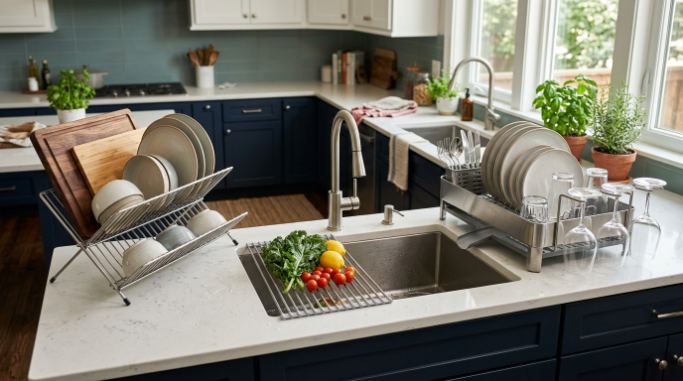
If you want a rack that can handle normal dishes and still adapt to other jobs, these are the styles I would consider first:
🏆 Best All-Around
OXO Good Grips Foldaway Dish Rack
★★★★☆ 4.7/5 — Editor Fit Rating
The plate rack folds down, and the verified open size is 19.4 × 15.5 × 5.125 inches. I like its configurable layout when you need room for dishes one day and larger flat items the next.
↔️ Best for Multipurpose Sink Use
Surpahs Over-the-Sink Roll-Up Dish Drying Rack
★★★★☆ 4.6/5 — Editor Fit Rating
The large model measures 20.5 × 13.1 inches and rolls up when you’re finished. I would choose it for draining produce, drying reusable items, or temporarily creating a ventilated platform over the sink.
✨ Best Premium Organizer
simplehuman Steel Frame Dishrack
★★★★☆ 4.8/5 — Editor Fit Rating
Its standard model includes a swivel drainage spout, silicone-capped plate holders, an utensil caddy, and space for up to four large wine glasses. I prefer this type when drainage and organized everyday use matter more than compact storage.
Frequently Asked Questions
Can you use a dish rack for storage instead of drying?
Yes. A dry dish rack works well for lightweight items that benefit from vertical separation, including food-container lids, cutting boards, kids’ plates, mail, craft paper, and thin books. Make sure the rack is stable and appropriate for the item’s weight.
What can I do with an old dish rack?
Move a clean old rack to a pantry, office, craft room, bathroom, or garage. It can become a lid holder, file sorter, book organizer, washcloth rack, or lightweight tool station, but keep racks exposed to chemicals or dirty tools away from future food use.
Can I use a dish rack to organize pot lids?
Yes, if the rack is sturdy and the lids fit without forcing the dividers apart. Lightweight saucepan lids usually work better than heavy cast-iron or oversized glass lids, which may make a small rack unstable.
Can a dish rack hold books?
A dish rack can hold thin books, children’s books, magazines, cookbooks, and coloring books when the rack is completely dry. Avoid loading it with many heavy hardcovers because dish-rack dividers aren’t designed as structural shelving.
Is it safe to reuse a dish rack for food after using it in the garage?
I wouldn’t do it. Once a rack has held automotive products, chemicals, garden treatments, dirty tools, or unknown residues, keep it dedicated to non-food storage rather than trying to restore it for kitchen food-contact use.
Final Takeaway
A dish rack is basically a ready-made set of vertical dividers, which is why it works in far more places than the sink. Start with lids, boards, papers, kids’ supplies, or another lightweight item that already matches the rack’s shape.
Before buying another organizer, look at the rack you already own and ask what else could stand safely between those slots. One small change may clear an entire drawer, shelf, or countertop.