
Juicing for Beginners: Tools, Produce and 5 Easy First Recipes

Juicing for beginners comes down to five things: pick the right tool, start with sweet and mild produce, use a simple ratio of about 2 parts vegetables to 1 part fruit, wash everything well, and drink the juice fresh. You do not need an expensive machine or a complicated plan. One good recipe, a clean cutting board and 15 minutes are enough to make your first glass.
This guide covers what equipment to use, which fruits and vegetables are easiest to start with, how to build a juice that tastes good, five simple first recipes, and the common mistakes that put people off juicing.
Step 1: Choose Your Juicing Tool
You have three options, and you may already own one of them.
- A blender and strainer. The cheapest way to start. Blend produce with a little water, then strain it through a nut milk bag. Our guide on how to make juice without a juicer walks through it.
- A centrifugal juicer. Fast, affordable and good with hard produce like carrots and apples. Louder, and less efficient with leafy greens.
- A masticating (slow or cold press) juicer. Slower and more expensive, but better with greens, wheatgrass and herbs, and usually gives more juice from the same produce.
If you are not sure juicing will become a habit, start with the blender. If you already know you want daily juice, read our comparison of juicer vs blender before you buy.

Step 2: Start With Beginner-Friendly Produce
The fastest way to give up on juicing is to start with a glass of straight kale. Begin with produce that is sweet, mild and juicy, then add stronger flavors as you go.
Best fruits for beginners
- Apples, especially green apples: sweet, tart and good with almost everything
- Oranges: bright and familiar
- Pineapple: very juicy and covers the taste of greens well
- Pears: mild and smooth
- Watermelon: almost all juice, very refreshing
Best vegetables for beginners
- Carrots: naturally sweet and easy to juice
- Cucumber: mild and very watery, a great base
- Celery: fresh and slightly salty, good in small amounts at first
- Spinach: the mildest leafy green
- Romaine lettuce: gives a lot of juice with very little taste
Add later, in small amounts
- Ginger: a 1/2-inch piece is plenty for one glass
- Lemon and lime: brighten any green juice
- Beets: earthy and very sweet, start with half a small beet
- Kale, parsley, mint and cilantro: strong and grassy
Step 3: Use a Simple Ratio
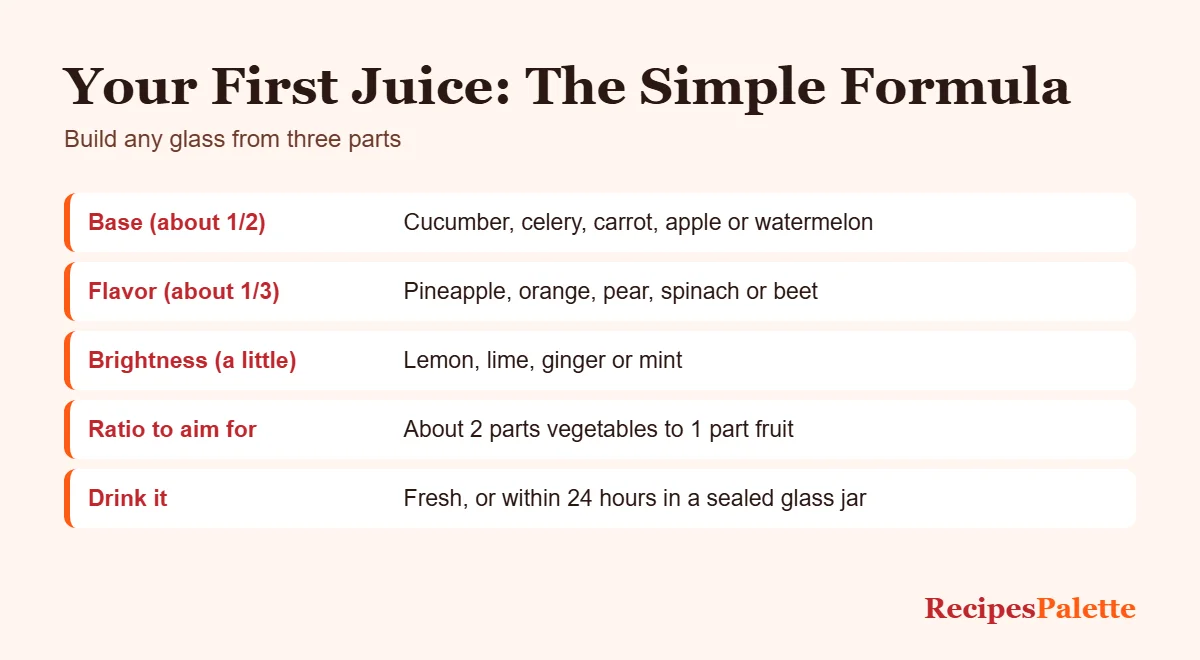
A good beginner juice has three parts: a juicy base, a flavor, and a little brightness.
- Base (about half the glass): cucumber, celery, carrot, watermelon or apple.
- Flavor (about a third): pineapple, orange, pear, spinach or beet.
- Brightness (a small amount): lemon, lime, ginger or mint.
As you get used to the taste of vegetables, move toward about 2 parts vegetables to 1 part fruit. Juice made mostly from fruit tastes great but is very sweet, so many people balance it with cucumber or celery.
Step 4: Prep Your Produce the Right Way
- Wash everything. Rinse under cool running water and scrub firm produce like carrots, beets and apples with a vegetable brush. Juice is raw, so this step matters.
- Peel only when needed. Remove thick or bitter peels: pineapple, citrus (most of the white pith is bitter), mango and melon rind. Carrots, cucumbers, apples and pears can usually stay unpeeled if well washed.
- Remove pits and hard seeds. Take out peach and mango pits, and core apples if your juicer manual recommends it.
- Cut to fit your machine. Check the size of the feed chute. Smaller pieces are easier on the motor.
- Chill produce first if you like cold juice. It saves adding ice, which waters it down.
Step 5: Juice in the Right Order
A few small habits make juicing easier and give you more juice.
- Soft before hard. Juice soft fruit and leafy greens first, then push hard produce like carrots or apples through. The hard pieces help clear the screen.
- Wrap greens. Roll a handful of spinach or kale into a tight bundle, or wrap it around a carrot, before feeding it in.
- Go slowly with a slow juicer. Feed pieces one at a time and let the auger pull them in.
- Stir before serving. Different juices separate in the jug. A quick stir mixes the flavors.
5 Easy Juice Recipes for Beginners
Each recipe makes about one 10 to 12-ounce glass. Use a juicer, or blend and strain.
1. Classic carrot apple
4 medium carrots, 1 large apple, 1/2-inch piece of ginger (optional). Sweet, simple and a great first juice.
2. Easy green juice
1 cucumber, 2 celery stalks, 1 green apple, 1 handful of spinach, 1/2 lemon (peeled). Fresh and mild, with no strong grassy taste.
3. Pineapple cucumber mint
1 1/2 cups pineapple, 1 cucumber, 5 to 6 mint leaves. Tastes like a tropical cooler.
4. Orange carrot
3 oranges (peeled), 3 carrots. Bright, sweet and very kid-friendly.
5. Beet apple lemon
1 small beet, 2 apples, 1/2 lemon (peeled), 1 carrot. Earthy and sweet, with a deep red color. Start with a small beet; it is strong.
How to Store Fresh Juice
Fresh, homemade juice is not pasteurized, so it should be treated like other fresh, perishable food.
- Drink it right away for the best taste.
- If you need to store it, pour it into a glass jar or bottle, fill it to the top, seal it and refrigerate at 40°F (4°C) or below.
- Most homemade juice tastes best within 24 hours. Juice from a slow juicer often keeps its flavor a little longer than juice from a fast centrifugal machine.
- Freeze extra juice in ice cube trays for longer storage.
People who are pregnant, older adults, young children and anyone with a weakened immune system may want to choose pasteurized juice instead. Our juicing safety tips cover this in more detail.
How to Clean Your Juicer (Quickly)
Cleanup is the reason many new juicers end up in a cupboard. A simple routine keeps it under 5 minutes.
- Empty the pulp container right after juicing.
- Take the machine apart and rinse every part under running water before the pulp dries.
- Scrub the mesh screen with the brush that came with the juicer, or a soft toothbrush, holding it up to the light to check the holes are clear.
- Wash with warm soapy water, rinse and air dry.
- Soak the screen in warm water with a splash of vinegar every couple of weeks if it looks cloudy.
Common Beginner Mistakes
- Starting with too many greens. Ease in with mild greens like spinach and romaine.
- Using too much ginger or lemon. A little goes a long way.
- Juicing only fruit. It tastes good but is very sweet. Add cucumber or celery to balance it.
- Buying produce you will not use. Fresh produce wilts fast. Plan two or three recipes for the week and buy for those.
- Letting the juicer sit dirty. Dried pulp is much harder to remove.
- Making big batches days ahead. Fresh juice loses flavor and color quickly.
- Peeling everything. Most well-washed produce can be juiced with the skin on. Peel only citrus, pineapple, mango and melons.
A Simple Weekly Juicing Plan
You do not need to juice every day. A realistic beginner routine:
- Shopping: buy carrots, apples, cucumbers, celery, lemons, a bag of spinach and one fruit you like (pineapple or oranges).
- Prep: wash and dry everything when you get home, so it is ready to use.
- Juice 2 or 3 mornings a week: rotate between carrot apple, easy green juice and one fruit juice.
- Use the pulp: stir carrot pulp into muffins, soups or veggie burgers.
Fresh juice works best as part of a meal or alongside one, not instead of real food. For more on that, see can juicing replace meals.
Frequently Asked Questions
What is the best juice for beginners?
Carrot apple juice is the easiest place to start. It is naturally sweet, uses cheap produce and works in any juicer or blender.
Do I need an expensive juicer to start juicing?
No. A blender and a nut milk bag make good juice. Buy a juicer once you know you will use it regularly.
Should I peel fruits and vegetables before juicing?
Peel citrus, pineapple, mango, kiwi and melons. Most other produce, such as carrots, cucumbers, apples and beets, can be juiced with the skin on after a good scrub.
How much produce do I need for one glass of juice?
About 1 to 1 1/2 pounds (450 to 680 g) of mixed produce makes one 8 to 12-ounce glass, depending on how watery it is.
What time of day should I drink fresh juice?
Whenever suits you. Many people enjoy it with breakfast, but there is no special time. Just drink it fresh.
Can I make juice the night before?
You can, but it will taste less fresh and may separate or darken. Store it in a full, sealed glass jar in the fridge and stir before drinking.
Start with one recipe you know you will enjoy, keep cleanup quick, and build from there. Within a couple of weeks, you will know which flavors you love and whether a juicer has earned its place on your counter.