
How to Use and Care for Ceramic Pans (Dishwasher, Metal Utensils, Scratches)

Ceramic pans are popular for their slick, light-colored nonstick surface. Many are labeled dishwasher safe, but most makers recommend hand washing to help the coating last longer. With the right heat, utensils and cleaning habits, a ceramic pan can stay nonstick for much longer than one that is treated like stainless steel.
This guide explains what ceramic cookware is, how to cook on it, whether it can go in the dishwasher, which utensils are safe, and how to prevent scratches.
What Is Ceramic Cookware?
Most “ceramic” pans are not solid ceramic. They are metal pans, usually aluminum or sometimes stainless steel, coated with a thin ceramic-style nonstick layer. The coating is often made with a sol-gel process, which forms a glass-like silica-based finish. Brands often market these coatings as made without PTFE and PFAS.
There is also solid ceramic or stoneware cookware, such as some baking dishes and clay pots. Care for those is different. This guide focuses on ceramic-coated nonstick pans.
To compare ceramic coatings with other pan materials, see our guide to pan materials compared and our look at the safest cookware options.
How to Cook on Ceramic Pans
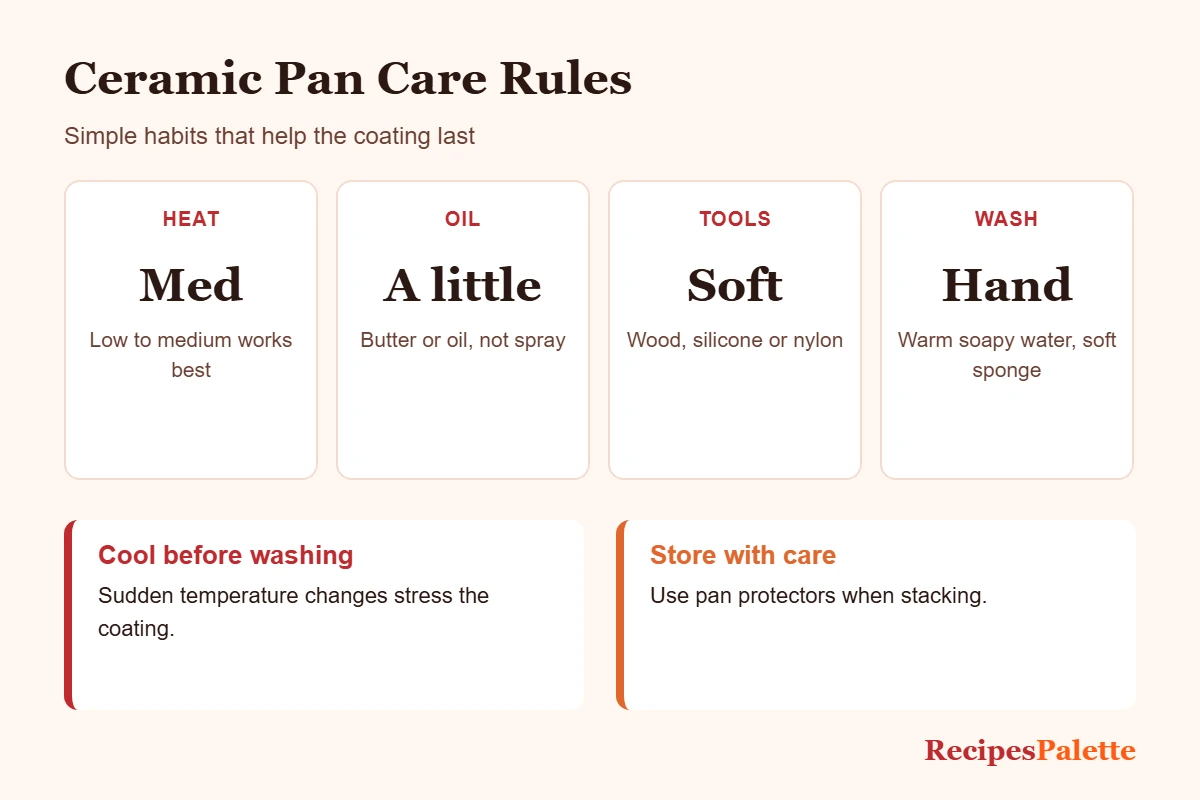
Use low to medium heat
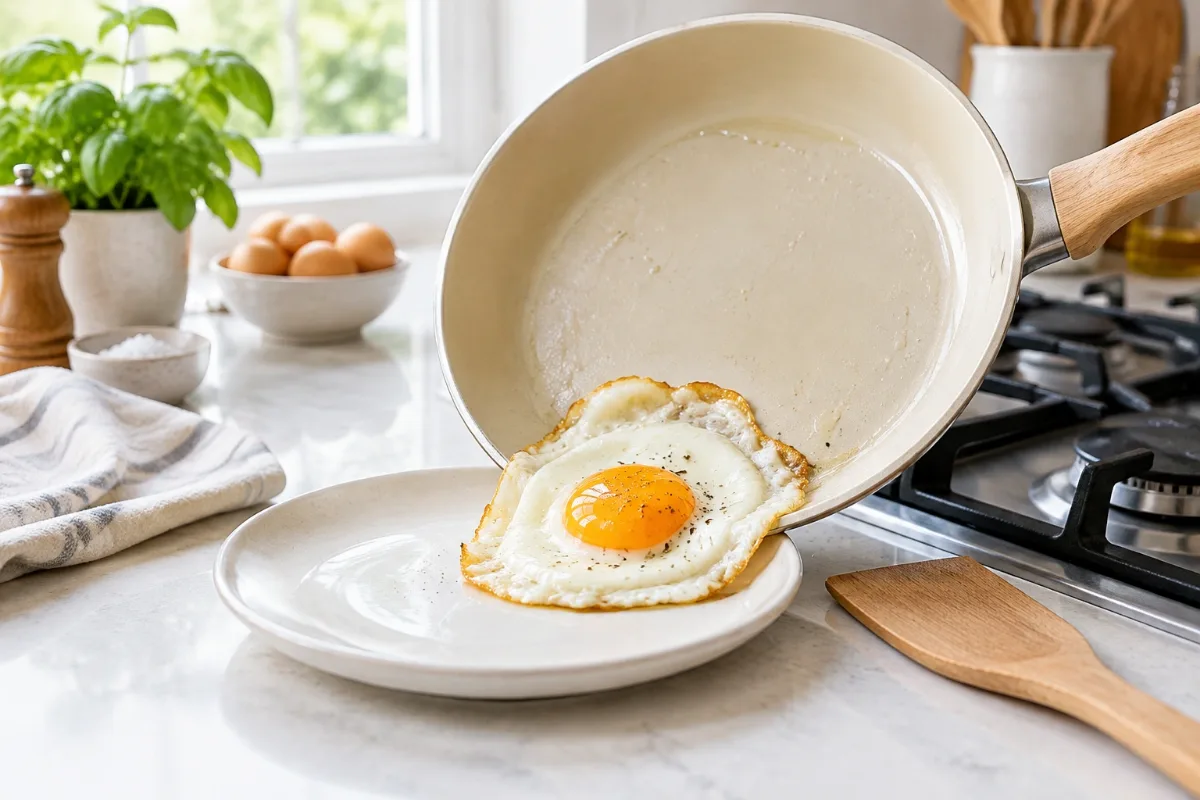
Ceramic coatings work best at moderate heat. High heat can break down the nonstick properties over time and cause food to stick sooner. Most foods, including eggs, pancakes and vegetables, cook well on medium or medium-low. Many ceramic pans are oven safe, but check the temperature limit for your pan and lid.
Preheat briefly
Warm the pan for a minute or two on medium before adding food. Avoid leaving an empty pan on high heat.
Add a little fat
A small amount of oil or butter improves browning and release. Avoid aerosol cooking sprays. They contain additives that can build up as a sticky film that is hard to remove and reduces nonstick performance.
Choose oils with care at higher heat
Oils heated past their smoke point can leave a gummy residue. For searing, use an oil suited to higher heat, such as avocado or refined canola oil.
Are Ceramic Pans Dishwasher Safe?
Some ceramic pans are labeled dishwasher safe, but hand washing is gentler. Dishwasher detergents are abrasive and alkaline, and the high heat and long cycles can wear down the coating and dull the outside finish faster. Handles and outside coatings can also discolor.
The safest approach:
- Let the pan cool to warm or room temperature.
- Wash with warm water, mild dish soap and a soft sponge or cloth.
- Rinse and dry fully with a towel.
If the care guide for your brand says dishwasher safe and you prefer to use it, place the pan so it does not knock against other items.
Can You Use Metal Utensils on Ceramic Pans?
Some brands say their coatings are metal-utensil safe, but metal spatulas, whisks and forks can still scratch or chip ceramic coatings over time. The best choices are:
- Wooden spoons and spatulas
- Silicone spatulas and turners
- Nylon utensils for lower-heat cooking
Avoid cutting food in the pan with a knife or pizza cutter.
Do Ceramic Pans Scratch?
Yes, ceramic coatings can scratch. Common causes include:
- Metal utensils and sharp tools
- Abrasive sponges, steel wool and scouring powders
- Stacking pans without protection
- Gritty food or salt being scraped across the surface
Light surface marks may only be cosmetic, but deep scratches, chips and peeling mean the coating is wearing out. Once the coating starts to flake or food sticks everywhere, it is time to replace the pan.
How to Clean Stuck-On Food and Stains
- Soak: Fill the cooled pan with warm soapy water for 15 to 30 minutes.
- Baking soda paste: For stains or residue, make a paste of baking soda and water, rub gently with a soft sponge, and rinse.
- Simmer water: For burnt-on bits, simmer a little water in the pan for a few minutes, let it cool, then wipe clean.
- Remove sticky film: A soft sponge with a little diluted white vinegar can help lift oil buildup. Rinse well afterward.
Have a GreenPan? See our guide to cleaning a GreenPan frying pan.
Can You Use Ceramic Cookware on Gas, Electric and Induction?
- Gas: Yes. Keep flames under the base of the pan rather than licking up the sides, which can discolor the outside.
- Electric coil and glass-top: Yes. Lift pans rather than sliding them to avoid scratching the stove and the pan base.
- Induction: Only if the pan has a magnetic base. Many aluminum ceramic pans have a steel plate on the bottom for induction, but not all do. Check the label or try the magnet test described in our guide to what cookware works on induction.
How to Store Ceramic Pans
Stacking pans directly inside each other is a common cause of scratches. Hang them, store them on a rack, or place a pan protector, paper towel or soft cloth between pans when stacking.
How to Make Ceramic Pans Last Longer
- Cook on low to medium heat.
- Use a little oil or butter, not aerosol spray.
- Use wooden or silicone utensils.
- Let the pan cool before washing; never plunge a hot pan into cold water.
- Hand wash with a soft sponge.
- Store pans with protectors between them.
Before You Use a New Ceramic Pan
- Remove all labels and packaging, including stickers on the base.
- Wash the pan in warm, soapy water to remove dust from manufacturing and shipping. Rinse and dry.
- Some makers suggest wiping a thin layer of oil on the cooking surface before the first use. Follow the instructions in the box.
- Start with simple foods like eggs or pancakes to get a feel for how quickly the pan heats.
Best and Worst Foods for Ceramic Pans
| Great for | Use with care |
|---|---|
| Eggs, omelets and frittatas | Very high-heat searing of steak |
| Pancakes, crepes and French toast | Long-simmered acidic sauces in light pans (may stain) |
| Delicate fish fillets | Sugary glazes that can burn and stick |
| Sautéed vegetables | Cooking with metal whisks or forks |
| Grilled cheese and quesadillas | Stir-frying at maximum heat |
How to Restore a Sticky Ceramic Pan
If food has started sticking, it may be a buildup of residue rather than a worn coating. Try these steps:
- Make a paste of baking soda and a little water.
- Spread it over the cooking surface and let it sit for 10 to 15 minutes.
- Rub gently with a soft sponge in small circles.
- Rinse well and dry.
- Wipe a very thin layer of oil on the surface, heat on low for a minute, let cool and wipe away any excess.
If food still sticks across the whole surface after cleaning, or the coating is visibly chipped, the pan has reached the end of its nonstick life.
Ceramic vs PTFE Nonstick
| Feature | Ceramic nonstick | PTFE nonstick |
|---|---|---|
| Coating base | Silica (sol-gel) | Fluoropolymer |
| Initial slickness | Very slick | Very slick |
| Typical lifespan | Often shorter | Often longer with care |
| Heat | Low to medium recommended | Low to medium recommended |
| Care | Hand wash, soft tools | Hand wash, soft tools |
Both types benefit from gentle heat and soft utensils. Many cooks choose ceramic because it is made without PTFE. For a closer look at one ceramic brand, read is GreenPan non-toxic?.
Signs It Is Time to Replace a Ceramic Pan
- The coating is chipped, flaking or peeling
- Food sticks everywhere, even after cleaning
- The base is badly warped and wobbles on the stove
- Deep scratches cover much of the surface
Frequently Asked Questions
Why is my ceramic pan suddenly sticking?
Often because of high heat, a buildup of oil residue or cooking spray, or wear on the coating. Try a gentle baking soda clean. If sticking continues across the whole surface, the coating may be worn out.
Do ceramic pans need seasoning?
Some brands suggest rubbing a little oil on the surface before first use or from time to time. It is not seasoning in the cast iron sense, but it can help release.
Can ceramic pans go in the oven?
Many can, but limits vary. Check the oven-safe temperature for the pan, the handle and any lid.
Are ceramic pans dishwasher safe if the label says so?
They can go in the dishwasher, but hand washing usually keeps the coating in better shape for longer.
Can I use olive oil in a ceramic pan?
Yes, at low to medium heat. For higher heat, choose an oil with a higher smoke point to avoid sticky residue.
Why is my ceramic pan discolored?
High heat, burnt oil and cooking spray residue can stain both the inside and outside. A baking soda paste usually helps.
Can you put a ceramic pan in cold water?
Let it cool first. Sudden temperature changes can stress the coating and may warp the pan.
How long do ceramic pans last?
It depends on use and care. Gentle heat, soft tools and hand washing all help a ceramic coating last longer.
The Bottom Line
Ceramic pans perform best with low to medium heat, a little oil, soft utensils and gentle hand washing. Even dishwasher-safe models last longer when washed by hand. Avoid metal tools, aerosol sprays and stacking without protection, and replace the pan once the coating chips or loses its nonstick surface.