Where Is Made In Cookware Made?

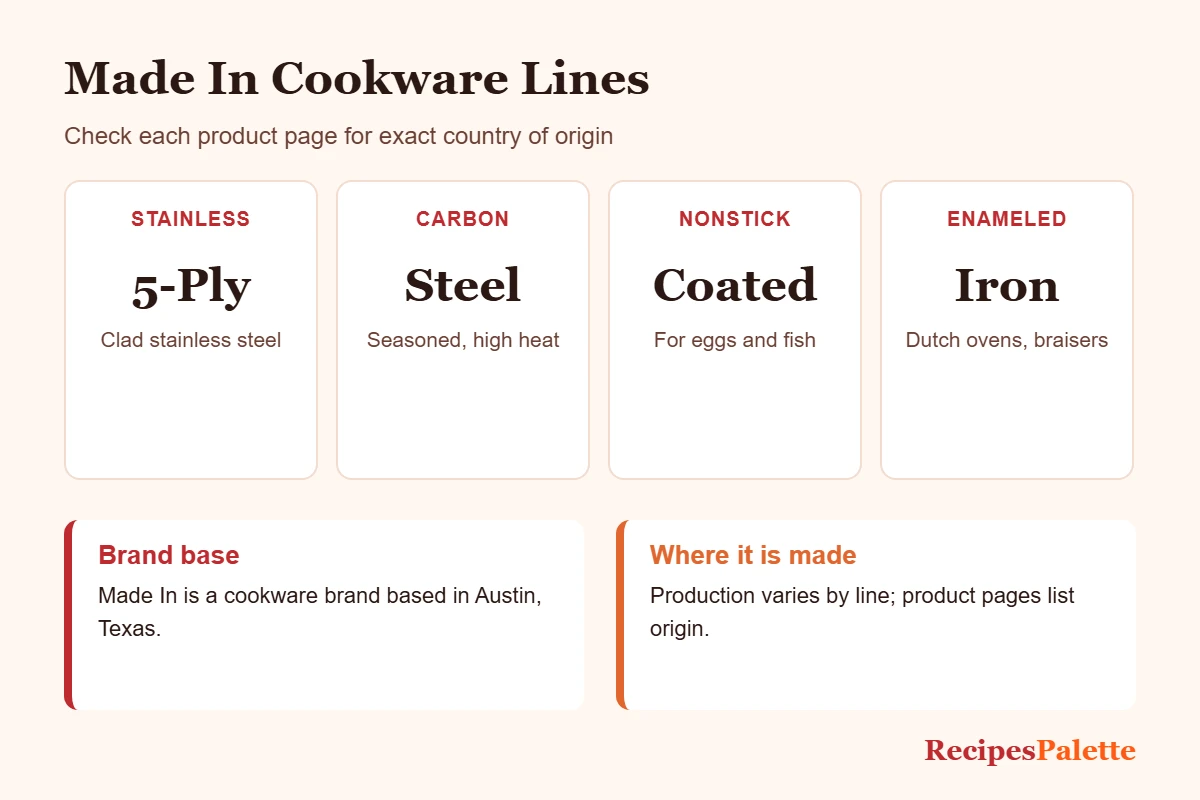
Made In is a cookware brand based in Austin, Texas. It does not make everything in one place. Instead, it works with manufacturers in several countries, and where a product is made depends on the product line. Made In has said its pieces come from places including the USA, Italy and France, and each product page usually lists the country of origin.
Here is an overview of Made In’s main cookware lines, what they are made of, whether they are considered non-toxic, and how to care for them. Because sourcing can change, always check the current product page before you buy.
About Made In
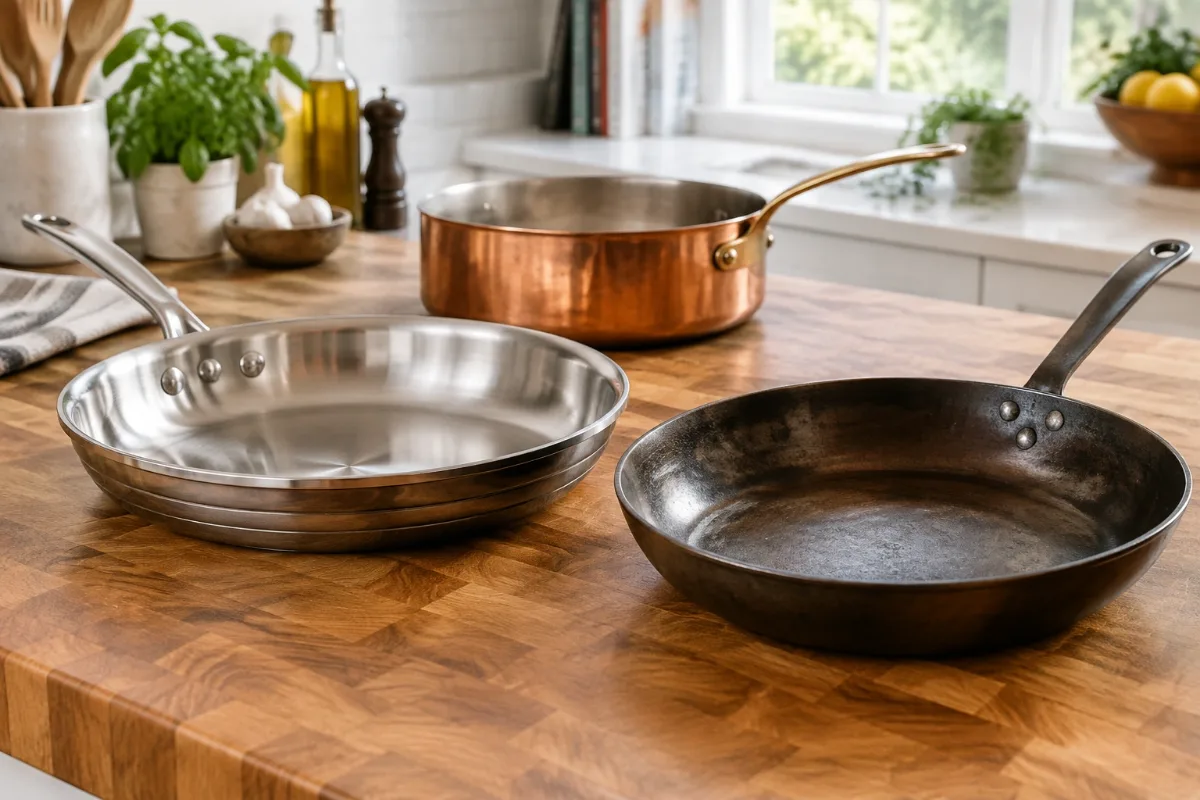
Made In was founded in 2016 and began selling cookware online in 2017. It sells directly to customers and is known for restaurant-style cookware, and its pans are used in a number of professional kitchens. The brand sells stainless clad, carbon steel, nonstick, enameled cast iron, copper and bakeware, along with knives and kitchen tools.
Where Each Line Is Made
The list below gives a general picture based on the brand’s public information. Production locations can change, so treat this as a guide and confirm on the product page.
| Product line | Commonly listed origin | Notes |
|---|---|---|
| Stainless clad | USA and Italy | 5-ply construction with an aluminum core |
| Nonstick | USA (some pieces) | Stainless clad body with a nonstick coating |
| Carbon steel | France | Needs seasoning, takes very high heat |
| Enameled cast iron | France | Dutch ovens and braisers |
| Copper | France | Copper exterior with stainless lining |
| Knives | France | Forged knives |
Made In Stainless Clad Cookware
Made In’s best-known line is its 5-ply stainless clad cookware. It uses layers of stainless steel and aluminum bonded together. The aluminum spreads heat evenly, while the stainless steel cooking surface is durable, non-reactive and works on induction.
Stainless clad pans are great for searing, pan sauces and everyday cooking, and can go in the oven at high temperatures. They do need some technique to avoid sticking: preheat the pan, add oil, and let food release naturally. Our guide on what to look for in stainless steel cookware explains clad construction and steel grades in more detail.
Made In Carbon Steel
Carbon steel combines some of the best traits of cast iron and stainless steel. It is lighter than cast iron, handles very high heat, and becomes naturally nonstick once seasoned. It is a favorite in restaurant kitchens, as we explain in what pans professional chefs use.
Carbon steel needs care: season it before first use, avoid long-simmering acidic foods, dry it right after washing, and wipe on a thin layer of oil to prevent rust.
Made In Nonstick
Made In’s nonstick pans use a stainless clad body with a nonstick coating, which gives them a sturdier feel than many lightweight nonstick pans. As with all nonstick, cook at low to medium heat, avoid metal utensils and hand wash to help the coating last.
Made In Enameled Cast Iron
Made In’s enameled cast iron Dutch ovens are designed for braises, stews, soups and bread. Enamel does not need seasoning and resists acidic foods. Read our Made In 5.5-quart Dutch oven review for a closer look.
Is Made In Cookware Non-Toxic?
Most of Made In’s lines use materials that are widely regarded as safe for cooking:
- Stainless steel: Durable and non-reactive; one of the most widely used cookware materials.
- Carbon steel and cast iron: Bare metal with a seasoning or enamel layer, with no synthetic nonstick coating.
- Copper with stainless lining: The stainless lining keeps copper from touching food.
- Nonstick: Uses a coating. If you prefer to avoid nonstick coatings, choose the stainless, carbon steel or enameled lines.
For a broader comparison, read our guide to the safest cookware materials.
Is Made In Cookware Good?
Made In is popular with home cooks who want restaurant-style cookware without buying a large set. Common positives include sturdy construction, even heating from the 5-ply stainless, and a wide range of materials. Common drawbacks include a higher price than many store brands and the learning curve that comes with stainless and carbon steel.
| Pros | Cons |
|---|---|
| Restaurant-style construction | Priced above many store brands |
| Wide range of materials | Stainless and carbon steel need technique |
| Induction compatible stainless | Origin varies by product line |
| Pieces sold individually | Carbon steel needs seasoning and drying |
How to Care for Made In Cookware
- Stainless clad: Preheat before adding oil, let cool before washing, and remove rainbow heat tint with a stainless steel cleanser. Many pieces are dishwasher safe, but hand washing keeps the finish brighter.
- Carbon steel: Hand wash, dry on the stove, and oil lightly. Do not soak or put in the dishwasher.
- Nonstick: Low to medium heat, soft utensils, hand wash.
- Enameled cast iron: Avoid sudden temperature changes, use wooden or silicone tools, and hand wash.
How to Check Where a Pan Is Made
Country of origin can differ between products from the same brand, and it can change as companies switch suppliers. To find out where a specific pan is made:
- Read the product page. Many brands, including Made In, list the country of origin in the product details.
- Check the packaging. Imported goods sold in the US generally carry a country-of-origin label.
- Look at the pan. Some pans are stamped on the base with the country where they were made.
- Ask customer service. If the details are unclear, contact the company before you buy.
Why Cookware Brands Use Several Factories
It is common for cookware brands to work with specialist manufacturers. Different countries have long traditions in certain materials:
- Clad stainless: Produced in the USA, Italy and parts of Asia, among other places.
- Carbon steel and copper: France has a long history of making these pans for professional kitchens.
- Enameled cast iron: France is well known for enameled cast iron Dutch ovens.
Working with specialists lets a brand offer many materials without running every factory itself. What matters most for the buyer is the build quality and how the pan is made, not only the country.
Made In vs Other Premium Brands
| Feature | Made In | Typical premium clad brands |
|---|---|---|
| Stainless construction | 5-ply clad | 3-ply or 5-ply clad |
| Materials offered | Stainless, carbon steel, nonstick, enameled cast iron, copper | Often focused on stainless and nonstick |
| Where sold | Mainly direct online | Department stores and online |
| Origin | Varies by line (USA, Italy, France and others) | Varies by brand and line |
For another premium brand’s oven limits, see is All-Clad oven safe?.
Which Made In Pieces to Start With
- A 10- or 12-inch stainless clad frying pan for searing and everyday cooking
- A carbon steel frying pan if you want a high-heat, naturally nonstick pan
- A stainless saucepan for grains, sauces and boiling
- A nonstick frying pan for eggs and fish
These pieces cover most cooking. Add a Dutch oven or stockpot later if needed. Our list of pans chefs use gives more ideas for building a kit.
Frequently Asked Questions
Is Made In cookware made in the USA?
Some lines, such as parts of the stainless clad and nonstick range, have been listed as made in the USA. Others are made in Italy or France. Check each product page.
Is Made In cookware oven safe?
Stainless clad, carbon steel and enameled cast iron pieces are designed for high oven temperatures. Nonstick has a lower limit. Check the care guide for each piece.
Does Made In stainless work on induction?
Yes. Its stainless clad cookware is designed to work on induction cooktops.
Where is Made In based?
The company is based in Austin, Texas.
Is Made In carbon steel pre-seasoned?
Many carbon steel pans come with a light seasoning or protective coating. Follow the instructions in the box before first use.
Is Made In dishwasher safe?
Some stainless pieces are listed as dishwasher safe, but hand washing is recommended for carbon steel, nonstick and enameled cast iron.
Is Made In worth the money?
It can be for cooks who want restaurant-style stainless or carbon steel. Compare thickness, construction and warranty with other brands.
Does Made In sell sets?
Yes, along with individual pieces. Buying individual pieces lets you choose the best material for each job.
The Bottom Line
Made In is an Austin-based brand that makes its cookware with partners in several countries, including the USA, Italy and France, depending on the line. Its stainless clad, carbon steel and enameled cast iron pans use widely trusted materials. Check each product page for the exact country of origin and care instructions.