
Homemade Grape Juice: Stovetop, Blender and Canning Methods

To make homemade grape juice, wash and stem fresh grapes, simmer them with a little water until they burst, mash them, then strain the juice through a cheesecloth-lined sieve or jelly bag. About 3 pounds (1.4 kg) of grapes make roughly 1 quart (1 liter) of juice. Chill it and drink it within a week, freeze it, or can it in a water bath for the pantry. For a quick glass, you can also blend and strain fresh grapes with no cooking at all.
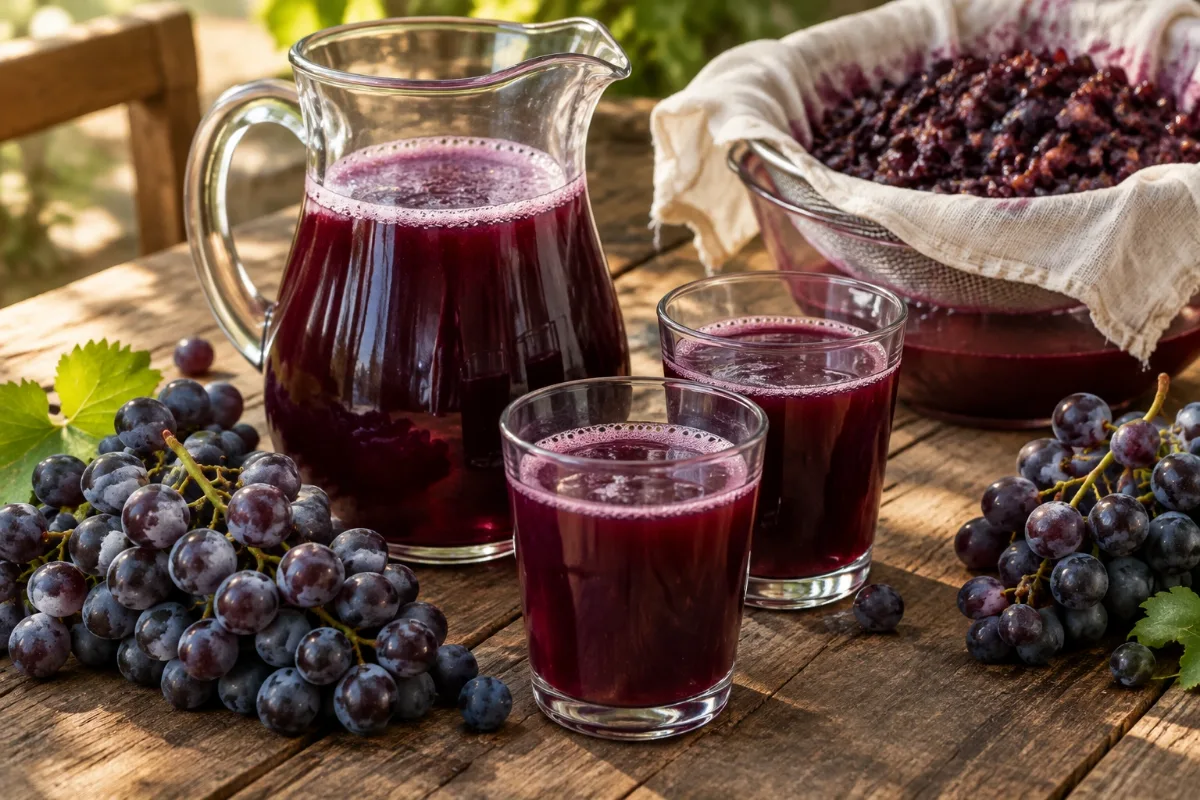
Homemade grape juice tastes deeper and fruitier than most store-bought bottles, and you control exactly how sweet it is. Concord grapes give the classic purple “grape juice” flavor, but any sweet, juicy grape works. This guide covers the stovetop method, the quick blender method, sweetening, storing, freezing and canning.
Best Grapes for Juice
- Concord grapes: the classic choice. Deep purple, very aromatic and tangy-sweet. They are in season in late summer and early fall.
- Other slip-skin grapes (Niagara, Catawba, muscadines): Niagara gives a pale green-gold juice; muscadines are rich and musky.
- Red or black seedless table grapes: easy to find all year. The juice is milder and sweeter than Concord.
- Green seedless grapes: light and crisp, great in mixed juices.
Use ripe, firm grapes and remove any moldy, shriveled or split ones. One bad grape can give the whole batch an off taste.
What You Need
- 3 pounds (about 1.4 kg) grapes, stemmed
- 1 cup (240 ml) water
- Sugar or honey to taste (optional)
- A large pot and a potato masher
- A fine sieve lined with 2 to 4 layers of damp cheesecloth, or a jelly bag
- A large bowl or jug, and clean glass jars or bottles
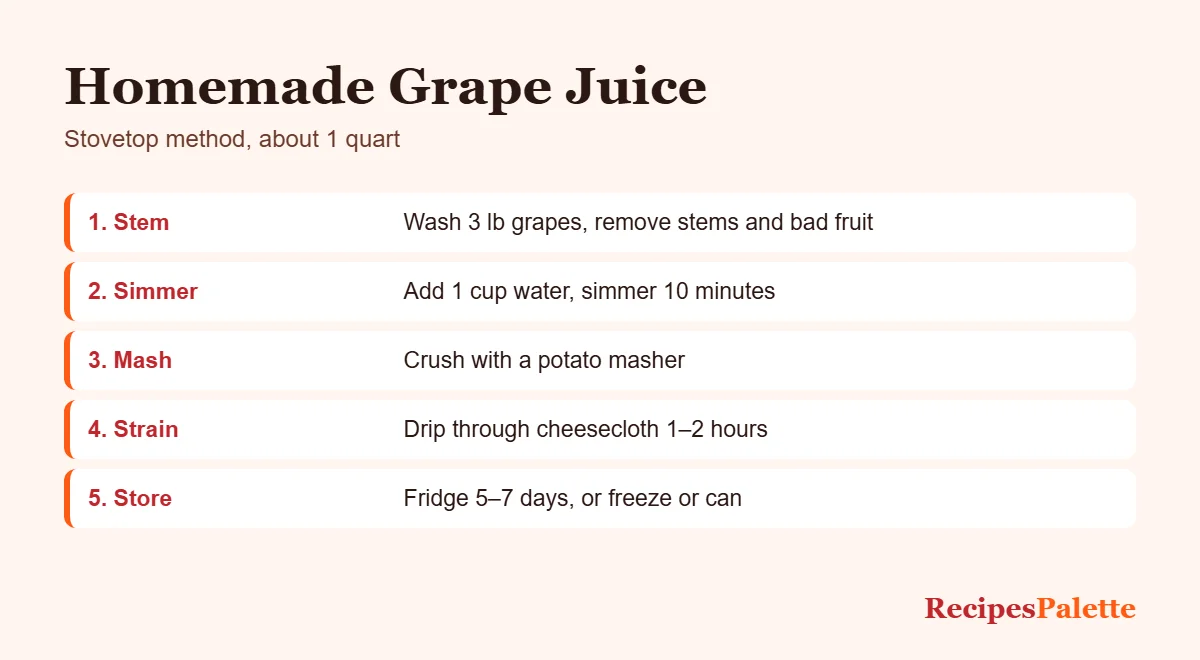
Method 1: Stovetop Grape Juice (Classic)
- Wash and stem. Rinse the grapes well in cool water and pull them off the stems. Discard any damaged fruit.
- Add to the pot. Put the grapes in a large pot with 1 cup of water. The water stops the bottom from scorching before the grapes release their juice.
- Heat gently. Bring to a simmer over medium heat, then lower the heat. Simmer for about 10 minutes, until the skins split and the grapes are soft. Do not boil hard; it can make the juice taste cooked.
- Mash. Crush the grapes with a potato masher to release all the juice and color from the skins.
- Strain. Pour the mash into the cloth-lined sieve or jelly bag set over a bowl. Let it drip for 1 to 2 hours, or overnight in the fridge for the clearest juice. Do not squeeze too hard if you want clear juice; squeezing gives more juice but makes it cloudier.
- Let it settle (optional). With Concord grapes, tartrate crystals can form. For the clearest juice, chill it for 24 to 48 hours, then carefully pour it off the sediment and strain again.
- Sweeten to taste. Most ripe grapes need no sugar. If your juice is tart, stir in sugar or honey a spoonful at a time while it is still warm.
- Chill and serve, or store, freeze or can it.
Method 2: Quick Blender Grape Juice (No Cooking)
This method gives a fresher, lighter juice in about 5 minutes.
- Blend 4 cups of seedless grapes with 1/4 cup cold water until smooth.
- Strain through a nut milk bag or fine sieve, pressing the pulp.
- Add a squeeze of lemon if it tastes flat.
- Serve over ice right away, or chill and drink within 24 hours.
Raw grape juice is unpasteurized and does not keep as long as cooked juice. If you use seeded grapes, pulse gently so you do not crush the seeds, which can make the juice bitter. For more on blending and straining, see how to make juice without a juicer.
Method 3: Using a Juicer
A slow (masticating) juicer handles grapes well. Feed stemmed grapes in by the handful. Centrifugal juicers work too, but the yield is lower and the juice foams. Strain the juice through a fine sieve to remove skins. Our guide to masticating vs centrifugal juicers explains which works best for soft fruit.
How Much Juice Will You Get?
| Grapes | Approximate juice |
|---|---|
| 1 pound (450 g) | About 1 1/4 cups (300 ml) |
| 3 pounds (1.4 kg) | About 1 quart (1 liter) |
| 10 pounds (4.5 kg) | About 3 quarts (3 liters) |
Yield depends on the grape variety, how ripe it is, and how much you press the pulp.
How Sweet Should It Be?
Ripe Concord grapes usually make juice that is sweet enough on its own, with a pleasant tang. Taste before adding anything. If you do sweeten it:
- Start with 1 to 2 tablespoons of sugar per quart and adjust.
- Honey or maple syrup add their own flavors; use a light honey.
- For a less sweet drink, mix grape juice half and half with sparkling water.
How to Store Homemade Grape Juice
- Fridge: cooked grape juice keeps for about 5 to 7 days in clean, sealed glass jars at 40°F (4°C) or colder. Raw blender juice is best within 24 hours.
- Freezer: pour into freezer-safe containers, leaving 1 inch of headspace, and freeze for up to about 8 to 12 months for best quality. Thaw in the fridge.
- Canning: for shelf-stable juice, use a tested water-bath canning method (see below).
For general storage advice and signs of spoilage, see how long fresh juice lasts.
How to Can Grape Juice
Canning lets you store grape juice in the pantry for up to a year. Always follow tested home-canning instructions, such as those from the USDA and the National Center for Home Food Preservation, and adjust processing time for your altitude.
- Prepare clean canning jars, new lids and bands, and a water-bath canner.
- Heat the strained, settled juice in a pot until it is hot, about 190°F (88°C), but not boiling.
- Fill hot jars with hot juice, leaving 1/4 inch of headspace.
- Wipe the rims, put on lids and bands, and process in a boiling water bath. Tested guidelines list 5 minutes for pints or quarts and 10 minutes for half-gallons at altitudes up to 1,000 feet, with longer times above that.
- Let jars cool undisturbed for 12 to 24 hours, then check the seals. Refrigerate any that did not seal and use them first.
Ways to Use Homemade Grape Juice
- Drink it chilled, or mix with sparkling water for a homemade grape soda.
- Freeze it into ice pops or ice cubes.
- Use it to make grape jelly or a simple grape sorbet.
- Add a splash to smoothies or mix with apple juice.
- Simmer it down into a syrup for pancakes or yogurt.
Grape Juice Combinations to Try
- Grape + apple: softer and less tart than grape alone.
- Grape + lemon + mint: fresh and bright.
- Green grape + cucumber + lime: light and cooling.
- Grape + pomegranate: deep red, tangy and rich.
Find more pairings in our list of the best juice combinations.
Common Grape Juice Mistakes
- Boiling hard. A rolling boil gives a cooked, jammy taste. Keep the pot at a gentle simmer.
- Crushing the seeds. Mashing too hard or blending too long breaks the seeds and adds bitterness. Mash gently and pulse briefly.
- Squeezing the bag hard while hot. It pushes fine sediment into the juice and makes it cloudy. Let it drip, then press lightly once cool.
- Skipping the rest in the fridge. Letting juice settle overnight and pouring it off the sediment gives a clearer, smoother result.
- Using underripe grapes. They make thin, sour juice that needs a lot of sugar. Taste a few grapes before you buy.
Frequently Asked Questions
Do you need to cook grapes to make grape juice?
No. You can blend and strain raw grapes for a quick, fresh juice. Cooking extracts more color and flavor from the skins, gives a higher yield and makes juice that keeps longer.
Can I make grape juice with seedless grapes?
Yes. Red, black or green seedless grapes all make good juice. It will be milder and sweeter than Concord juice.
Why is my grape juice cloudy?
Squeezing the pulp, or not letting the juice settle, makes it cloudy. Let it drip without pressing and chill it for a day before pouring it off the sediment.
What are the crystals in my grape juice?
They are harmless tartrate crystals that form naturally in Concord grape juice. Let the juice settle in the fridge and pour it off carefully, or strain it again.
How many grapes do I need for 1 cup of juice?
About 3/4 to 1 pound (340 to 450 g) of grapes for 1 cup (240 ml) of juice.
Can you freeze homemade grape juice?
Yes. Freeze it in freezer-safe containers with 1 inch of space at the top. Thaw it in the fridge and shake it before drinking.
When grapes are in season, make a big batch and freeze or can some. A glass of homemade grape juice in the middle of winter tastes like late summer.