
How to Care for Staub Dutch Oven

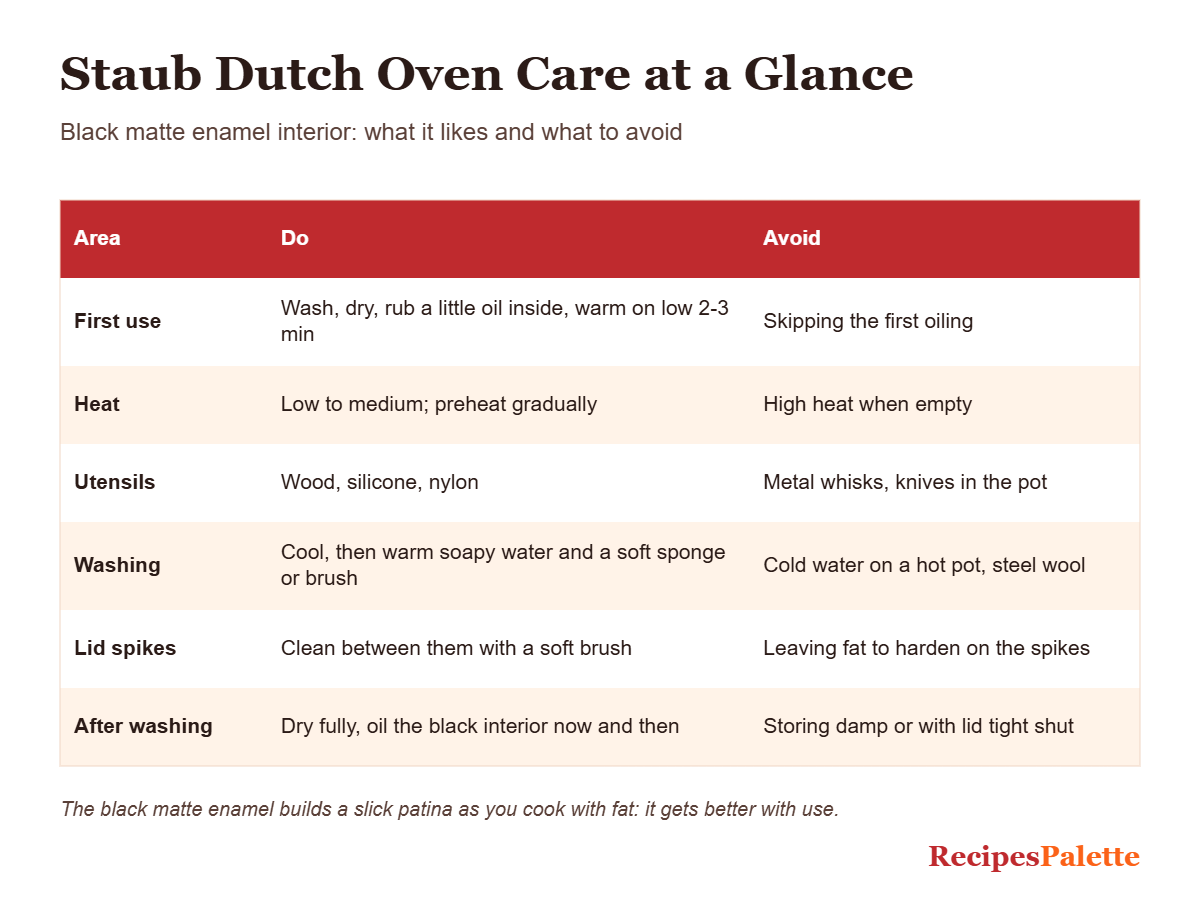
To care for a Staub Dutch oven, heat it gradually on low to medium heat with oil or food inside, use wooden or silicone utensils, let it cool before washing it in warm soapy water with a soft sponge, dry it completely, and now and then rub a thin layer of oil over the black enamel interior. Avoid steel wool, sudden temperature changes and heating it empty. Clean between the self-basting spikes under the lid with a soft brush so fat does not build up there.
What Makes a Staub Different
Staub cocottes are French enameled cast iron Dutch ovens. Two features set them apart from most other brands:
- Black matte enamel interior: instead of a smooth cream interior, Staub uses a slightly textured black enamel. It browns food well, hides stains, and develops a slick patina as fats cook into it.
- Self-basting lid spikes: small spikes (Staub calls them “chistera” or basting spikes) under the heavy lid collect condensation and drip it evenly back onto the food.
Like all enameled cast iron, it never rusts on the cooking surface and never needs full seasoning. Care is mostly about protecting the enamel.
Before First Use
- Wash the pot and lid with warm soapy water, rinse and dry.
- Rub a teaspoon of vegetable oil over the black interior with a paper towel.
- Warm it on low heat for 2 to 3 minutes, let it cool, and wipe away any excess oil.
How to Cook With It
- Heat gradually. Start on low and step up to medium. Cast iron holds heat very well, so you seldom need high heat.
- Add fat first. Never heat the pot empty on high.
- Brown with confidence. The black enamel is excellent for searing meat before braising. Wait for food to release before turning it.
- Use soft utensils. Wood, silicone and nylon protect the enamel.
- Oven use: Staub cocottes with metal knobs are oven safe to high temperatures, which makes them great for bread and slow braises. Check the limit for your knob.

How to Clean a Staub Dutch Oven
- Let it cool before it touches water. Thermal shock can crack enamel.
- Wash with warm soapy water and a soft sponge or nylon brush.
- Clean the lid spikes with a soft bottle brush or toothbrush.
- Soak stuck-on food in warm water for 15 to 30 minutes, then wipe away.
- Dry thoroughly, including the rim and lid edge.
Staub cocottes are dishwasher safe, but the dishwasher can dull the outside finish and strip the patina inside. Hand washing is better.
Removing Burnt Food and Residue
- Baking soda simmer: fill with water, add 2 tablespoons of baking soda, simmer for 10 minutes, cool and scrub gently.
- Baking soda paste: for sticky residue, spread a paste on the area, leave 15 minutes and scrub with a nylon pad.
- Grey film or dullness: wash, dry and wipe the interior with a little oil to restore the sheen.
Keeping the Black Interior Slick
Every few uses, after the pot is clean and dry, rub a few drops of oil over the interior and warm it briefly. Cooking with fat also builds up the natural patina. Over time, the surface becomes noticeably more non-stick.
Storage
- Make sure it is completely dry.
- Store the lid upside down on the pot, or with a paper towel between them, so air can circulate.
- Protect the enamel if you stack other cookware on or in it.
- Keep it low: a dropped Staub can chip.
Frequently Asked Questions
Do I need to season a Staub Dutch oven?
No full seasoning is needed, but oiling the black enamel before first use and now and then afterwards keeps it working at its best.
Can I use metal utensils in Staub?
The black enamel is tough, but metal can still leave marks. Wooden and silicone tools are safer.
Why does my Staub look grey or dull inside?
Mineral deposits or a worn patina. Wash it, dry it, and wipe on a thin layer of oil. A wipe with diluted vinegar removes hard water marks.
Staub or Le Creuset: which needs more care?
Both need similar care. Staub’s black interior hides stains better and benefits from occasional oiling; Le Creuset’s pale interior shows stains but makes it easier to see browning.
Final Thoughts
A Staub Dutch oven is built to last generations. Heat it gently, cook with fat, use soft utensils, let it cool before washing, and give the black interior a little oil now and then. Keep the lid spikes clean, and it will keep producing tender, self-basted braises for decades.
For more care guides, see caring for a Le Creuset Dutch oven and cleaning a discolored Dutch oven.
🎥 Related Video: How to Use and Care for a Staub Cocotte Cast Iron Casserole
📺 Everten, Love to Cook
Made in France, the Staub Cocotte or cast iron casserole ie one of the best cookware pieces you can ask for in your kitchen.