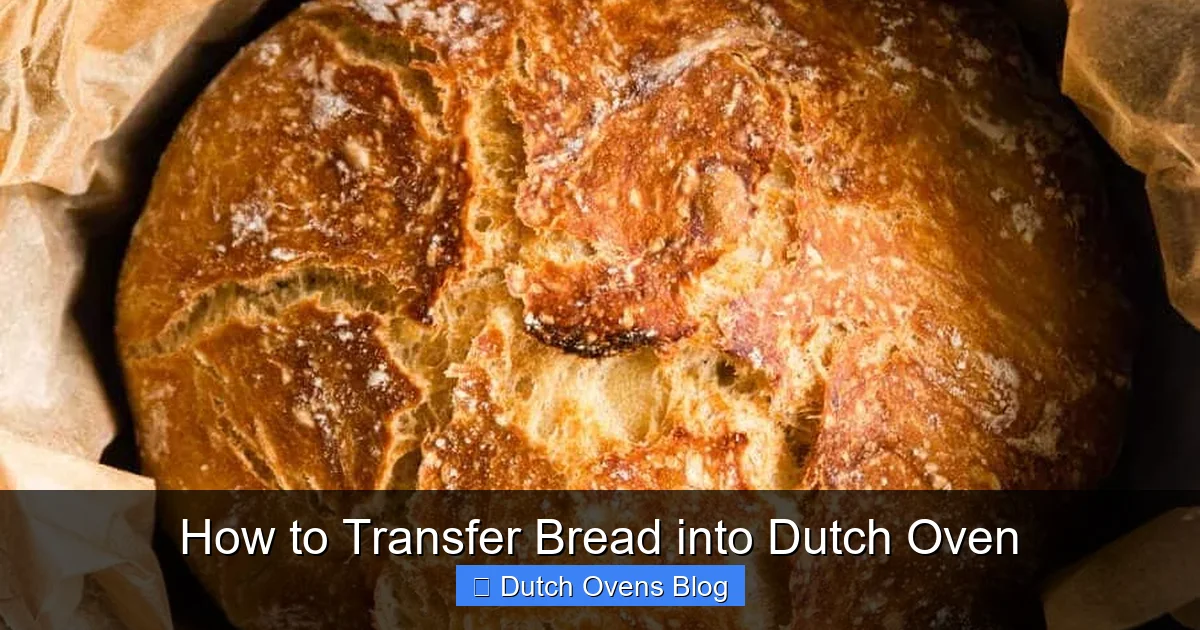
How to Transfer Bread into Dutch Oven

Transferring bread into a Dutch oven is a key skill for baking perfect crusty loaves at home. This guide covers everything you need to know, from preparing your dough to safely placing it into a hot Dutch oven, ensuring your bread bakes evenly and develops a beautiful crust.
Key Takeaways
- Prepare your workspace: A clean, floured surface helps prevent sticking when handling dough.
- Use parchment paper or a banneton: These tools make transferring dough easier and safer.
- Preheat your Dutch oven: A hot Dutch oven creates steam and heat that improve crust and rise.
- Handle dough gently: Avoid deflating your dough when transferring it to preserve its structure.
- Use proper tools: A bench scraper, oven mitts, and parchment paper can simplify the process.
- Practice safety: Hot cast iron can cause burns, so always use oven mitts and work carefully.
- Troubleshoot common issues: Learn how to fix dough sticking or collapsing during transfer.
How to Transfer Bread into Dutch Oven
Baking bread in a Dutch oven is a fantastic way to get that perfect crust and soft interior. But one of the trickiest parts is moving the raw dough into the hot Dutch oven safely and without ruining its shape. In this guide, you will learn how to transfer bread into a Dutch oven step-by-step, with practical tips to ensure your bread turns out beautifully every time.
What You’ll Learn
- How to prepare your dough and tools for transfer
- Techniques for moving dough without deflating it
- Safety tips when working with a hot Dutch oven
- Common problems and how to solve them
Step 1: Prepare Your Dough and Workspace
Flour Your Surface and Tools
Before transferring your bread dough, make sure your work surface is lightly floured. This prevents the dough from sticking to the countertop or your tools. Also, flour your hands or use a dough scraper to gently lift the dough.
Visual guide about How to Transfer Bread into Dutch Oven
Image source: realandvibrant.com
Use a Proofing Basket or Parchment Paper
Many bakers use a banneton (proofing basket) or a bowl lined with a tea towel to shape and proof their dough. When it’s time to transfer, you can either invert the banneton over parchment paper or directly place the parchment underneath the dough. This makes moving the dough much easier and safer, reducing the risk of tearing.
Step 2: Preheat Your Dutch Oven
Preheat the Dutch Oven in the Oven
Place your Dutch oven (lid included) inside your kitchen oven and preheat it to the temperature recommended by your bread recipe, usually around 450°F (230°C). The Dutch oven needs to be very hot to create steam and help your bread rise and develop a crisp crust.
Safety First
When removing the Dutch oven from the oven later, always use heavy oven mitts or silicone gloves. Cast iron retains heat for a long time and can cause serious burns.
Step 3: Transfer the Dough into the Dutch Oven
Method 1: Using Parchment Paper
- Prepare your dough on a sheet of parchment paper large enough to fit inside the Dutch oven.
- When the Dutch oven is hot, carefully remove it from the oven and place it on a heatproof surface.
- Lift the edges of the parchment paper and gently lower the dough into the Dutch oven.
- Remove the lid and place it back on after the dough is inside.
Method 2: Without Parchment Paper (Using a Bench Scraper)
- Lightly flour a bench scraper or flat spatula and gently slide it under the dough.
- Lift the dough carefully, supporting it fully to keep it from collapsing.
- Quickly place the dough into the hot Dutch oven and cover it with the lid.
Important Tips
- Work quickly to prevent heat loss in the Dutch oven.
- Avoid touching or pressing the dough too much to preserve its airy structure.
- If you’re nervous about handling hot cookware, practice with an empty Dutch oven first to get comfortable.
Step 4: Bake Your Bread
Follow your recipe’s baking instructions, usually baking covered for the first 20-30 minutes, then uncovering the Dutch oven to brown the crust for another 15-20 minutes. The Dutch oven traps steam, which is essential for a crispy crust and good oven spring.
Practical Tips for Success
- Flour generously: This reduces sticking and makes transfers smoother.
- Use parchment paper: It’s a lifesaver for beginners and helps keep the Dutch oven clean.
- Don’t rush: Prepare everything beforehand so you can move quickly when transferring.
- Keep your tools ready: Have bench scrapers, oven mitts, and a heatproof surface nearby.
- Practice makes perfect: The more you bake bread this way, the easier it becomes.
Troubleshooting Common Issues
Dough Sticks to the Surface or Tools
If your dough sticks, add more flour to your surface and tools. You can also use a light dusting of rice flour, which tends to stick less than wheat flour.
Dough Collapses or Deflates During Transfer
This usually happens if you handle the dough roughly. Be as gentle as possible and support the dough fully when lifting. Using parchment paper can help because you don’t need to touch the dough directly.
Burns from Hot Dutch Oven
Always wear thick oven mitts. Use a sturdy surface to set down the hot Dutch oven immediately when removing it from the oven. Never leave the lid unattended or try to move the Dutch oven with bare hands.
Conclusion
Mastering how to transfer bread into a Dutch oven is a crucial skill for home bakers aiming for bakery-quality bread. By preparing your dough properly, using parchment paper or a banneton, preheating your Dutch oven, and handling everything with care, you’ll bake delicious loaves with a perfect crust every time. Remember, practice and patience are key. Soon, transferring bread into your Dutch oven will feel natural and effortless!
🎥 Related Video: Transferring your loaf from banneton to oven
📺 Veg Patch Kitchen Cookery School
I show you how to transfer your dough from the banneton to the oven. How to tell that it is fully proofed, how to transfer to a peel …