
Mango Juice Recipe: Thick or Thin, Ready in 10 Minutes

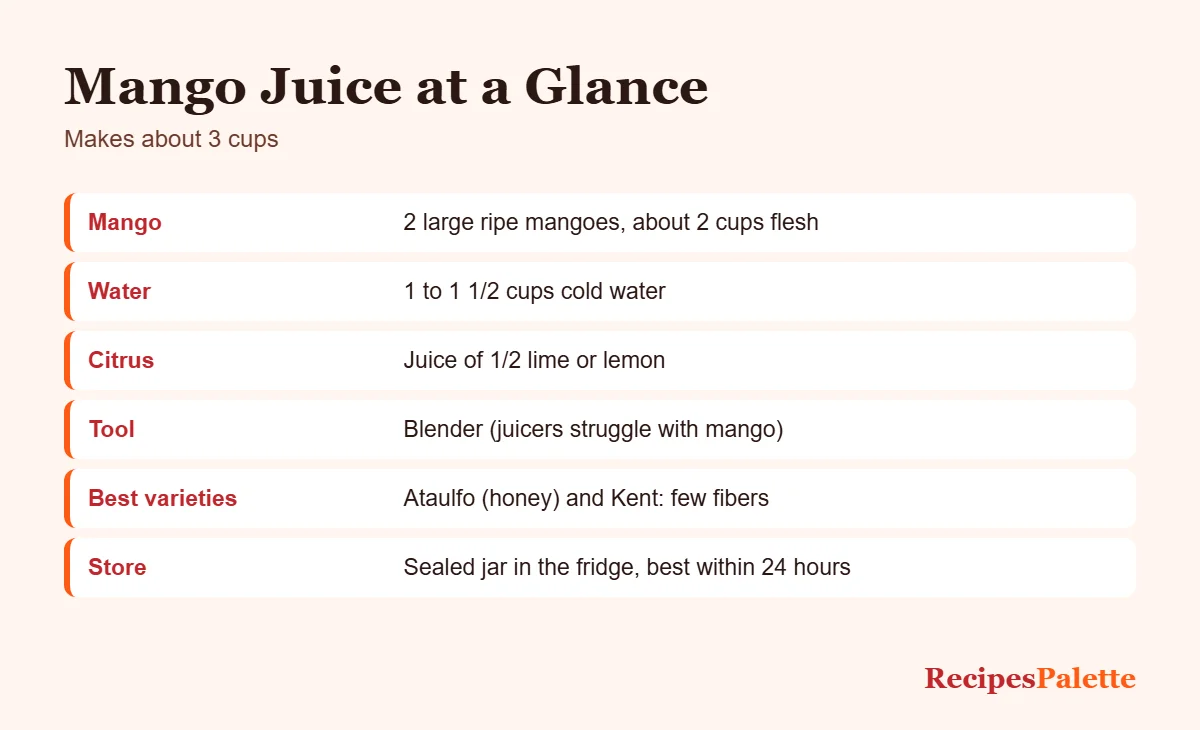
To make mango juice, peel and cube 2 large ripe mangoes (about 2 cups of flesh), blend them with 1 to 1 1/2 cups of cold water and a squeeze of lime until smooth, then strain if you want it thin. This makes about 3 cups (24 oz) of thick, sweet juice in 10 minutes. A blender works much better than a juicer for mango. Add a little honey only if your mangoes are not fully ripe.
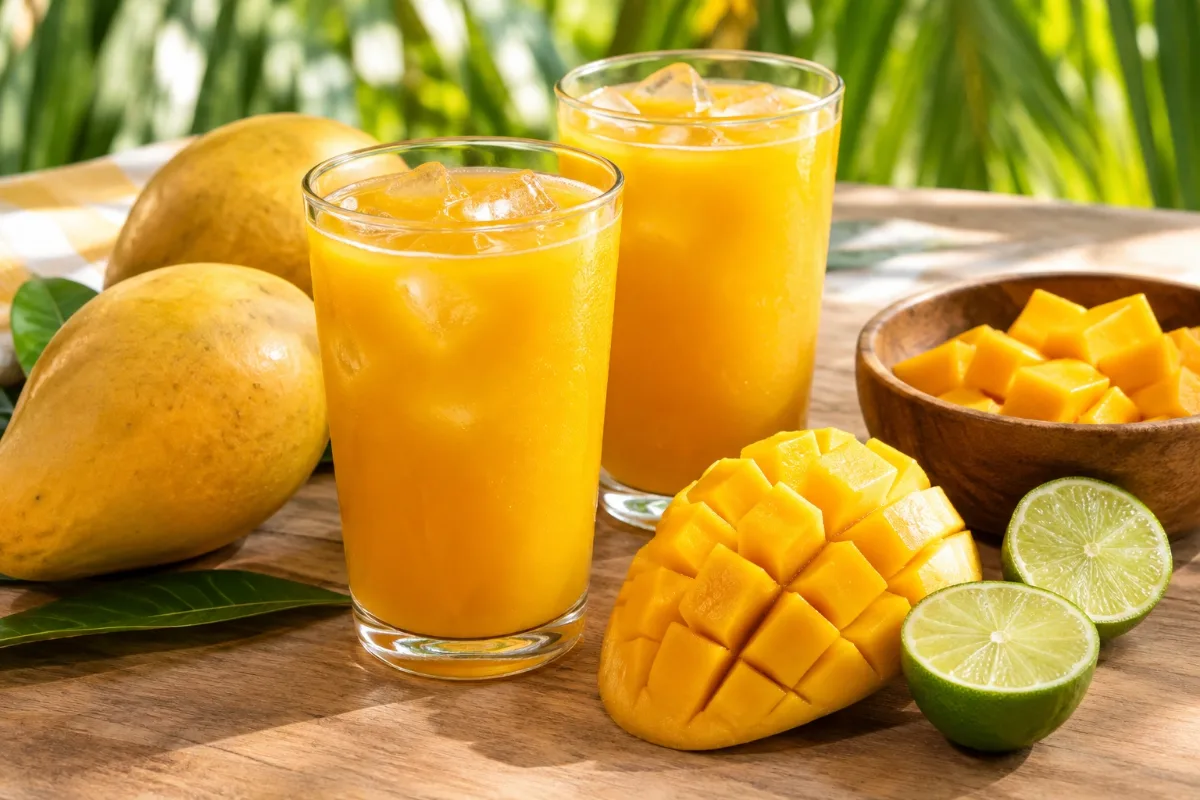
Mango juice is rich, golden and naturally sweet. Unlike watery fruits, mango is soft and creamy, so it needs a little water and a blender rather than a juicer. Below you will find how to choose and cut mangoes, the basic recipe, thick and thin versions, six flavor combinations, and how to store and freeze it.
Ingredients
For about 3 cups (24 oz / 700 ml):
- 2 large ripe mangoes, about 2 cups (330 g) cubed flesh
- 1 to 1 1/2 cups (240 to 360 ml) cold water
- Juice of 1/2 lime or lemon
- Optional: 1 to 2 teaspoons honey or sugar, only if needed
- Optional: a pinch of ground cardamom, a few mint leaves or a small piece of ginger
- Ice to serve
Frozen mango chunks also work well. Thaw them for 10 to 15 minutes first, or use them straight from frozen for a thick, slushy drink.
The Best Mangoes for Juice
| Variety | Typical US season | Flavor and texture | For juice |
|---|---|---|---|
| Ataulfo (honey mango) | About March to July | Very sweet, buttery, almost no fibers | Excellent |
| Kent | About January to March and June to August | Sweet, juicy, few fibers | Excellent |
| Keitt | About August to September | Sweet-tart, firm, stays green when ripe | Very good |
| Haden | About April to May | Rich and aromatic, some fibers | Good; strain well |
| Tommy Atkins | About March to July and October to January | Mild, firm, more fibrous | Fair; strain well |
Fiber-free varieties like Ataulfo and Kent make the smoothest juice. Fibrous mangoes still taste good but need straining.
How to Tell If a Mango Is Ripe
- Squeeze gently. A ripe mango gives slightly, like a ripe peach or avocado.
- Smell the stem end. It should smell sweet and fruity.
- Do not rely on color. Some varieties stay green when ripe. Red skin does not always mean ripe.
- Wrinkled skin on Ataulfo mangoes is a sign of peak sweetness, not spoilage.
Hard mangoes ripen on the counter in a few days. Put them in a paper bag to speed things up. Once ripe, move them to the fridge for up to about 5 days.
How to Cut a Mango
- Wash the mango. Stand it on its stem end on a cutting board.
- Slice down on each side of the flat seed in the middle, cutting off the two “cheeks”.
- Score each cheek in a grid without cutting through the skin.
- Push the skin up to turn the cheek inside out, then slice the cubes off the skin into a bowl.
- Cut or scrape the remaining flesh from around the seed. This part is often the sweetest.
For juice, you can also simply scoop the flesh out of each cheek with a large spoon. There is no need for neat cubes.
How to Make Mango Juice in a Blender
- Add the mango flesh, 1 cup of cold water and the lime juice to the blender.
- Blend on high for 45 to 60 seconds until completely smooth.
- Check the thickness. Add more water a little at a time until you like it.
- Taste. Add honey only if your mangoes were not very sweet.
- Strain (optional). For a thin, smooth juice, pour it through a fine sieve. For a thick, nectar-style drink, skip straining.
- Pour over ice and serve.
Can You Make Mango Juice in a Juicer?
Not very well. Mango flesh is soft and creamy, so most juicers turn it into a thick purée that clogs the screen and leaves a lot in the pulp. If you want to add mango to juicer drinks, juice your other produce first, such as orange, carrot or pineapple, then blend that juice with fresh mango. Our juicer vs blender guide explains which fruits suit each tool.
Thick vs Thin Mango Juice
- Thick (nectar-style): 2 cups mango to 1 cup water, unstrained. Rich, filling and great with breakfast.
- Medium: 2 cups mango to 1 1/2 cups water, lightly strained. Good everyday juice.
- Thin and light: 2 cups mango to 2 cups water, strained. Refreshing over lots of ice.
Mango Juice Variations
1. Mango orange
Blend 2 cups mango with 1 cup fresh orange juice instead of water. Sunny and bright. See how to make fresh orange juice.
2. Mango pineapple
Use 1 cup mango and 1 cup pineapple chunks with 1 cup water. Very tropical. Our pineapple juice recipe covers cutting a pineapple.
3. Mango ginger lime
Add a 1/2-inch piece of ginger and extra lime. Sweet with a kick.
4. Mango mint
Blend with 8 to 10 mint leaves and a squeeze of lime. Cool and fresh.
5. Mango cardamom
Add a pinch of ground cardamom. Fragrant and warming, inspired by South Asian mango drinks.
6. Mango carrot
Blend 1 1/2 cups mango with 1 cup fresh carrot juice. Golden and smooth. See carrot ginger juice.
Find more pairings in our juice combinations list.
Mango Juice vs Mango Smoothie vs Mango Lassi
Mango juice is mango blended with water or juice, sometimes strained. A mango smoothie usually adds banana, yogurt or milk and ice, so it is thicker and creamier. A mango lassi is a South Asian drink of mango blended with yogurt, a little milk or water, sugar and often cardamom. If you love mango juice, both are easy next steps.
Serving Ideas
- Mango cooler: half mango juice, half sparkling water, a squeeze of lime and plenty of ice.
- Chili-lime rim: dip the glass rim in lime juice, then in a mix of chili powder and salt, for a sweet and spicy drink.
- Mango slushy: blend frozen mango chunks with a splash of water and lime until thick.
- Breakfast pairing: serve thick mango juice with toast, eggs or a bowl of yogurt and granola.
- Party punch: mix mango, pineapple and orange juice in a big pitcher and float lime slices on top.
How to Store Mango Juice
- Fridge: sealed glass jar, filled near the top, at 40°F (4°C) or colder. Best within 24 hours; it can keep reasonable flavor for up to 2 days. Shake before serving, since it settles.
- Freezer: freeze in freezer-safe containers with 1 inch of headspace, or in ice cube trays, for a few months.
- Ice pops: mango juice makes excellent ice pops. Pour into molds and freeze.
See how long fresh juice lasts and our juicing safety tips.
Tips and Common Mistakes
- Use fully ripe mangoes. Underripe mango juice is sour and starchy.
- Add water gradually. It is easy to make it too thin.
- Always add a little citrus. Lime or lemon balances the sweetness.
- Strain fibrous varieties. Tommy Atkins and Haden can leave strings.
- Wash the skin before cutting. Your knife carries anything on the skin into the flesh.
- Mind the sap. Mango skin contains a natural compound related to the one in poison ivy. If your skin is sensitive, wear gloves to peel mangoes.
What to Do With Leftover Pulp
If you strain your juice, the mango pulp is thick and sweet. Stir it into yogurt or oatmeal, blend it into smoothies, swirl it into pancake batter or freeze it into ice pops. More ideas are in our juice pulp recipes.
Frequently Asked Questions
How many mangoes make a glass of juice?
One large ripe mango makes about one 12-ounce glass of medium-thick juice when blended with water.
Do I need to add sugar to mango juice?
Usually not. Ripe mangoes are very sweet. Add a little honey only if the fruit is underripe.
Can I use frozen mango?
Yes. Frozen mango makes great juice and is available all year. Thaw it a little first for a smoother result.
Should I strain mango juice?
It is up to you. Strain it for a thin, smooth juice, or leave it unstrained for a thick nectar.
Can I use canned mango pulp?
Yes. Canned mango pulp, often sold as Alphonso or Kesar pulp, blends into juice quickly. It is usually sweetened, so taste before adding sugar.
Why does my mango juice taste bitter?
Usually because some skin or the area right under the skin went into the blender, or the mango was underripe.
Choose soft, fragrant mangoes, blend with cold water and a squeeze of lime, and decide whether you like it thick or thin. It is sunshine in a glass, any time of year.