
How to Juice Wheatgrass at Home (Juicer, Hand-Crank or Blender)

To juice wheatgrass, rinse a large handful (about 1 to 1 1/2 ounces / 30 to 40 g) of fresh wheatgrass, cut it into 1 to 2-inch pieces and feed it slowly through a slow (masticating) juicer or a manual wheatgrass juicer. That makes about one 1-ounce (30 ml) shot. No juicer? Blend the cut grass with 1/2 cup of water and strain it through a nut milk bag. Drink wheatgrass juice fresh, within about 15 to 30 minutes.
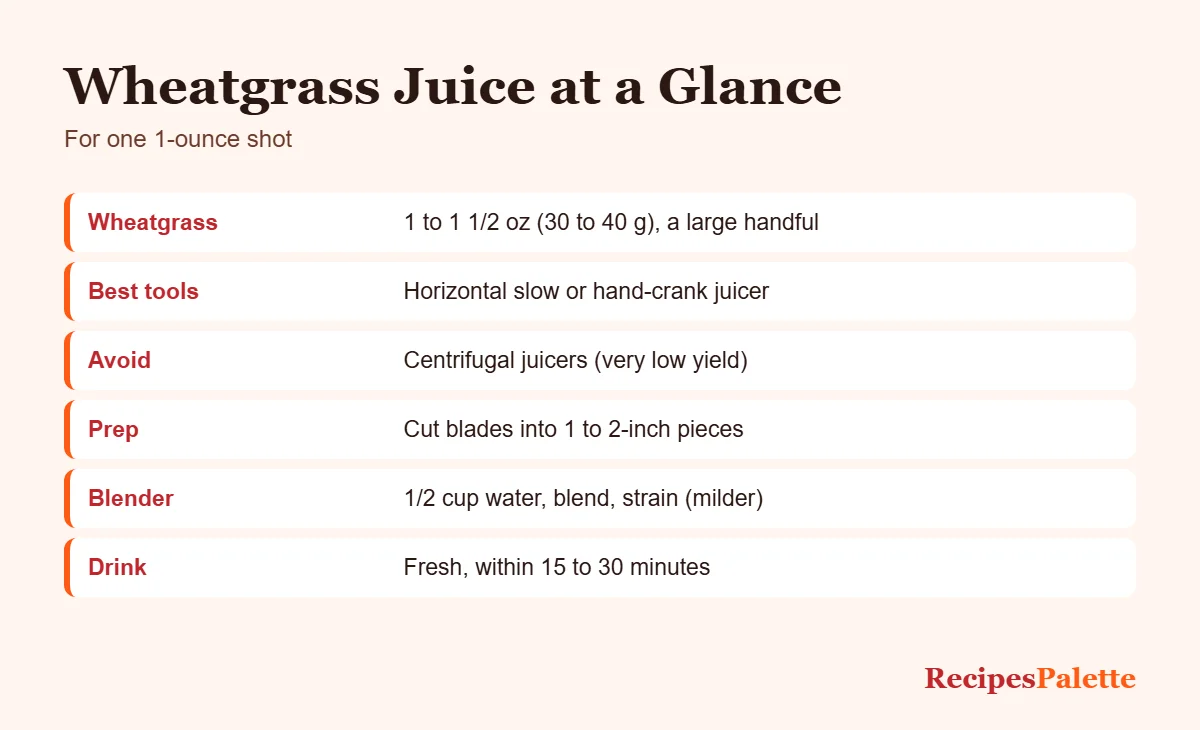
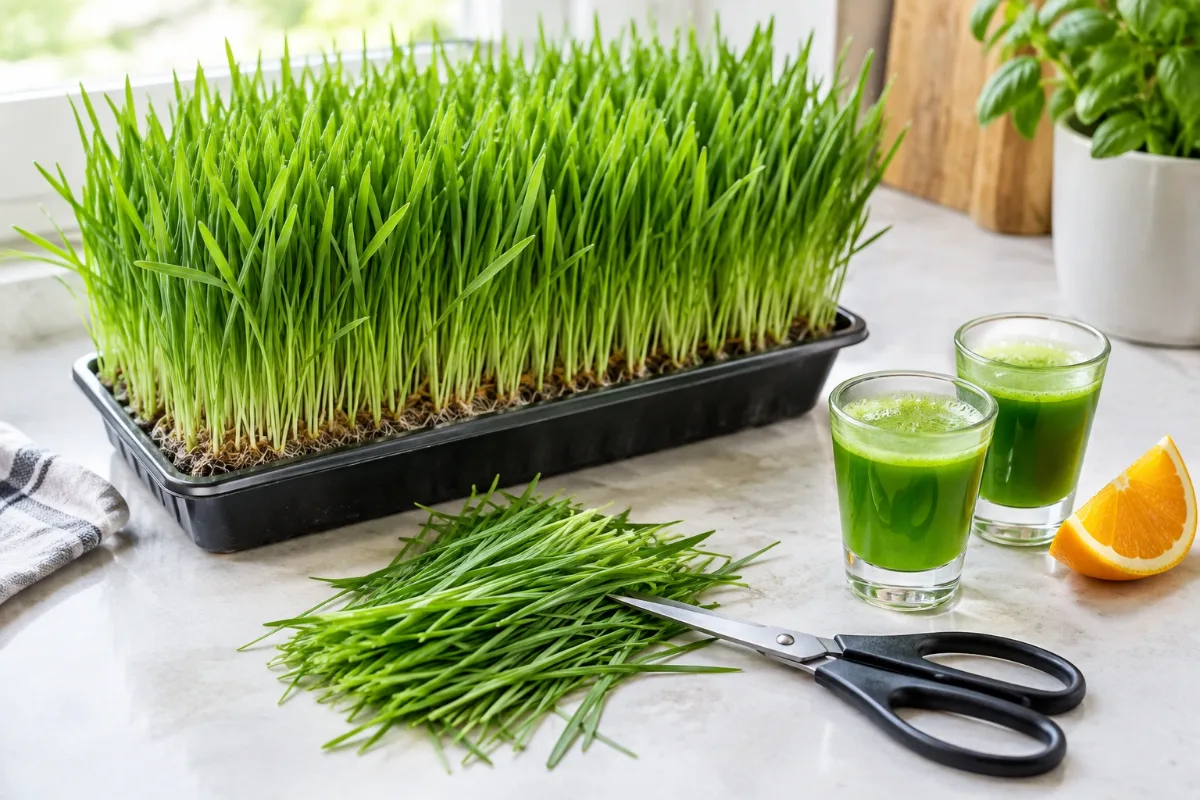
Wheatgrass juice is a bright green, intensely grassy shot that juice bars serve by the ounce. It is easy to make at home once you have the right tool, because wheatgrass is very fibrous and does not juice like other produce. This guide covers the best juicers for wheatgrass, the step-by-step method, the blender method, how to grow your own, and how to make the taste easier to enjoy.
What You Need
- Fresh wheatgrass, cut from a tray or bought in a bag; about 1 to 1 1/2 oz (a large handful) per 1-ounce shot
- A slow juicer (horizontal is best), a manual wheatgrass juicer, or a blender plus nut milk bag
- Kitchen scissors
- A small glass
- Optional: an orange or apple wedge to chase the shot
Which Juicer Is Best for Wheatgrass?
| Tool | How well it juices wheatgrass | Notes |
|---|---|---|
| Horizontal slow juicer | Excellent | Designed for leafy greens; very dry pulp |
| Manual wheatgrass juicer (hand-crank) | Excellent | Cheap, compact, quiet; slower for large amounts |
| Twin-gear juicer | Excellent | Expensive; best for daily, large batches |
| Vertical slow juicer | Fair to good | Cut grass short; feed small amounts |
| Centrifugal juicer | Poor | Grass spins straight into the pulp |
| Blender plus strainer | Good | Adds water, so the shot is milder |
If wheatgrass is a regular part of your routine, a horizontal slow juicer or a simple hand-crank wheatgrass juicer is worth it. See the best juicer for celery, greens and ginger and masticating vs centrifugal juicer for more detail.
How to Juice Wheatgrass in a Slow Juicer
- Cut. Snip the wheatgrass just above the roots or seeds with clean scissors. Use only the green blades.
- Rinse it in a bowl of cold water, then shake off the water.
- Cut into short pieces. Chop the blades into 1 to 2-inch lengths. Long blades can wrap around the auger, especially in vertical juicers.
- Feed slowly. Add a small handful at a time and let the auger pull it in. Do not pack the chute.
- Re-juice the pulp once if it still looks wet. Wheatgrass often gives a second splash of juice.
- Drink straight away.
How to Use a Manual Wheatgrass Juicer
Hand-crank juicers clamp to the counter and use a slow auger, much like a horizontal electric juicer.
- Clamp the juicer firmly to a sturdy counter or table.
- Place a small glass under the spout and a bowl under the pulp outlet.
- Feed a small handful of cut grass into the hopper.
- Turn the handle steadily while pushing the grass down gently.
- Run the pulp through a second time for extra juice.
They take a few minutes per shot and need a little effort, but they are quiet and give excellent yields.
How to Make Wheatgrass Juice in a Blender
- Cut and rinse the wheatgrass, then chop it into 1-inch pieces.
- Add it to a high-speed blender with 1/2 cup (120 ml) cold water.
- Blend on high for 60 to 90 seconds.
- Strain through a nut milk bag and squeeze hard.
- Drink immediately.
Blender wheatgrass is diluted, so you get a larger, milder drink rather than a strong shot. Some people find that easier to drink. See how to make juice without a juicer for straining tips.
How to Grow Wheatgrass at Home
Growing wheatgrass is cheap and easy and gives you fresh grass every week.
- Soak about 1 cup of hard wheat berries in cool water for 8 to 12 hours.
- Sprout: drain, rinse and leave in a jar or sieve for 12 to 24 hours, rinsing twice, until tiny roots appear.
- Plant: spread the sprouted seeds in a single dense layer over 1 to 2 inches of moist potting soil in a shallow tray.
- Cover with another tray or damp paper for 2 to 3 days to keep them moist and dark.
- Uncover and water lightly once or twice a day. Keep the tray in bright, indirect light with good air flow.
- Harvest in about 7 to 10 days, when the grass is 6 to 7 inches tall, by cutting just above the soil.
One standard 10 x 20-inch tray gives roughly 8 to 12 ounces of grass. Watch for mold on the soil or seeds; good air flow and not overwatering prevent it. Do not use any grass that looks or smells moldy.
How Wheatgrass Juice Tastes (and How to Make It Easier)
Wheatgrass juice tastes intensely green, sweet and grassy, a bit like freshly cut lawn. Many people love it; many others find it hard to swallow. To make it easier:
- Chase it with a wedge of orange, apple or lemon.
- Mix it into a glass of fresh juice. It blends well into apple, pineapple or orange juice. Try it with our pineapple juice recipe.
- Add it to green juice. An ounce of wheatgrass disappears into our green juice recipe.
- Add lemon and a little ginger to a blender version.
- Start small. Half an ounce is a gentle first taste.
Wheatgrass Juice Combinations
- Wheatgrass apple: 1 oz wheatgrass juice with 4 oz fresh apple juice. See how to make apple juice.
- Wheatgrass orange: 1 oz wheatgrass with 4 oz fresh orange juice.
- Wheatgrass ginger lemon: a wheatgrass shot with a splash of ginger juice and lemon. See our ginger shot recipe.
- Wheatgrass cucumber mint: mixed into fresh cucumber juice for a cooling green drink.
Storing Wheatgrass and Wheatgrass Juice
- Juice: it is best fresh, within 15 to 30 minutes. It changes color and flavor quickly.
- Freezer: to save time, freeze fresh juice in small ice cube trays (about 1 oz each) and thaw one cube in the fridge before drinking. The flavor is a little flatter.
- Cut grass: keep it in a sealed bag or container in the fridge for up to about a week.
- Growing trays: cut only what you need; uncut grass keeps growing for a few days.
See how long fresh juice lasts and our juicing safety tips.
A Few Things to Know
- Gluten: wheatgrass blades are usually considered gluten-free because gluten is in the seed, not the grass. But cross-contact with seeds is possible, so people with celiac disease should check with their doctor and buy products certified gluten-free.
- Raw and unpasteurized: like all fresh juice, it is not recommended for young children, pregnant people or anyone with a weakened immune system unless their doctor says it is okay.
- Start small if you are new to it; some people find the taste strong.
Common Wheatgrass Juicing Mistakes
- Using a centrifugal juicer. You will get almost nothing.
- Feeding long blades. They wrap around the auger.
- Packing the chute. Feed small handfuls.
- Including seeds or roots. Cut above them.
- Making it ahead. It is at its best within minutes.
- Not cleaning the screen right away. Wheatgrass fibers dry hard. See how to clean a juicer.
Frequently Asked Questions
How much wheatgrass do I need for one shot?
About 1 to 1 1/2 ounces (30 to 40 g) of fresh grass, a large handful, for a 1-ounce shot.
Can I juice wheatgrass without a juicer?
Yes. Blend it with a little water and strain through a nut milk bag. The result is milder and less concentrated.
Can a centrifugal juicer juice wheatgrass?
Not well. The fast blade cannot press the thin blades, so most of the grass ends up in the pulp.
Can I use wheatgrass powder instead?
Powder is convenient and keeps for months. Mix it with water or juice. It tastes different from fresh juice and is less vibrant.
How long does wheatgrass juice last?
Drink it within 15 to 30 minutes for the best taste. Freeze extra in small cubes.
When is wheatgrass ready to harvest?
Usually 7 to 10 days after planting, when it is about 6 to 7 inches tall and before the blade splits into a second blade.
Cut the grass short, feed it slowly through a slow or hand-crank juicer, and drink it fresh with an orange wedge on the side. Once you have a growing tray going, fresh wheatgrass costs very little.