
How to Arrange Dishes on Shelves for Easy, Safe Storage

Quick Answer
Arrange dishes by frequency of use, weight, size, and type. Keep everyday plates and bowls at easy-reaching height, heavier pieces on lower shelves, and occasional or lightweight dishes higher up; if cabinet space is tight, a kitchen shelf organizer can help divide vertical space.
A simple shelf arrangement
- Sort first: Separate dinner plates, side plates, bowls, cups, serving dishes, and special-occasion pieces.
- Prioritize access: Put dishes you use every day between roughly waist and eye level.
- Keep weight low: Store heavy stoneware, large bowls, and serving pieces on sturdy lower shelves.
- Control stack height: Build short, stable stacks instead of one tall pile.
- Use vertical space: Add shelf inserts or plate racks when there is unused room above a stack.
- Protect fragile pieces: Separate fine china or delicate dishes and avoid squeezing them into tight stacks.
Before you finish
- Check that every stack feels stable and that no plate extends dangerously beyond the shelf edge.
I used to think dish organization meant making every cabinet look perfectly symmetrical. After reorganizing several crowded kitchen cabinets, I learned that convenience matters much more than appearance.
The best arrangement is the one that lets you grab a plate without lifting three other things first. Here is the practical system I use in 2026 for open shelves, cabinets, and dish racks.
What Does Arranging Dishes on Shelves Really Mean?
Arranging dishes on shelves means grouping dinnerware by type and placing each group according to how often, how safely, and how easily you need to access it. Good organization should reduce unnecessary lifting, stacking, and searching.
Simple definition: Dish shelf organization is a storage system that gives plates, bowls, cups, and serving pieces a predictable, accessible place.
I start by removing everything from the cabinet. This takes a few extra minutes, but it makes poor use of shelf space obvious.
Then I group similar pieces together before putting anything back.
- Dinner plates: Keep one everyday set together.
- Side and dessert plates: Give smaller plates a separate stack.
- Bowls: Nest matching bowls without forcing them together.
- Mugs and cups: Store handles where they are easy to grab.
- Serving dishes: Reserve lower or less-used areas for bulky pieces.
- Special dishes: Separate delicate or seasonal dinnerware from everyday pieces.
What Is the Best Way to Arrange Dishes on Shelves?
The best method is to place everyday dishes in your easiest reach zone and organize outward from there. The dishes you touch most should require the fewest movements.
I normally put dinner plates and cereal bowls on the main shelf. Mugs often sit beside them or on the shelf directly above.
Use frequency before appearance
A beautiful arrangement becomes frustrating when your morning bowl sits behind a serving platter. I always organize according to real kitchen habits first.
This matches the basic kitchen-organization principle of keeping frequently used items accessible, which is also emphasized in IKEA’s kitchen cabinet organization guidance.
- Daily: Everyday plates, bowls, glasses, and mugs.
- Weekly: Pasta bowls, larger serving bowls, and specialty cups.
- Occasional: Platters, holiday dishes, cake stands, and formal dinnerware.
Give each category a fixed home
Once you choose a place for something, keep returning it there. A fixed location removes the daily question of where a clean dish belongs.
This also makes unloading the dishwasher faster. Anyone in the household can understand the system after using it a few times.
Which Dishes Should Go on the Lower, Middle, and Upper Shelves?
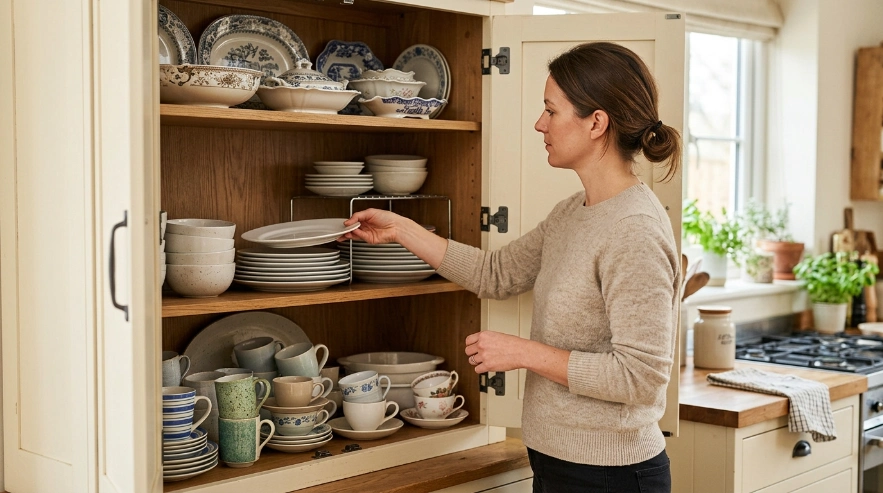
Put heavy and bulky dishes lower, everyday dinnerware in the middle, and lightweight or rarely used pieces higher. This creates a safer and more convenient cabinet.
The U.S. Consumer Product Safety Commission recommends placing heavier items on lower shelves or in lower drawers as a general stability precaution. I apply the same common-sense idea to heavy dinnerware.
| Shelf Area | Best Items | Main Reason |
|---|---|---|
| Lower shelf | Heavy stoneware, large bowls, platters | Less awkward lifting and better stability |
| Middle shelf | Dinner plates, side plates, everyday bowls | Fastest and easiest daily access |
| Upper shelf | Lightweight cups and occasional pieces | Keeps low-demand items out of prime space |
| Shelf insert | Small plates, saucers, shallow bowls | Uses empty vertical space |
One mistake I avoid is putting a heavy serving platter above my head. Even if it technically fits, retrieving it is awkward.
Large pieces usually work better lower down or in a vertical organizer.
How High Should You Stack Plates on a Shelf?
Plate stacks should stay low enough that you can remove a plate without destabilizing the pile. There is no universal maximum because plate thickness and weight vary.
With heavy stoneware, I personally prefer stacks of roughly eight to ten plates. That is a practical working limit, not a formal safety standard.
Split tall stacks
If twelve or sixteen plates create an awkward pile, divide them into two groups. A shelf riser can place the second group above the first without adding weight to the stack.
That same vertical-space idea can help with cookware. For example, a dedicated frying pan rack separates pieces that would otherwise become one inconvenient pile.
Do not overload an adjustable shelf
Dishes become surprisingly heavy when stacked together. Check the cabinet or shelving manufacturer’s load instructions if you have a large stoneware collection.
Also inspect adjustable shelf pins. I replace bent, loose, or poorly seated supports instead of trusting them under heavy dishes.
Should Plates Be Stored Horizontally or Vertically?
Horizontal stacking works best for most everyday plates, while vertical storage is useful for platters, cutting boards, lids, and plates that are awkward to unstack. Neither method is automatically better.
- Horizontal stacks: Simple, compact, and convenient for matching everyday plates.
- Vertical racks: Let you remove one item without lifting the pieces above it.
- Shelf inserts: Divide tall cabinet space into two usable levels.
- Undershelf baskets: Can create room for small dishes when compatible with the cabinet.
The Container Store also suggests shelf-dividing and undershelf solutions when organizing upper kitchen cabinets. I find them most helpful in cabinets with a large empty gap above short stacks.
If your kitchen also struggles with heavy cookware, these cast iron skillet storage rack ideas show another way vertical dividers can reduce lifting.
How Do You Arrange Dishes on Open Shelves?
Open shelves need a simpler arrangement because both accessibility and appearance matter. Keep daily dishes in compact groups and leave some empty space around them.
I avoid lining an open shelf from edge to edge. A little breathing room makes dishes easier to lift and makes the shelf look intentional.
Build small visual groups
- Stack matching plates together.
- Nest matching bowls beside them.
- Group mugs in a short row.
- Use one attractive serving piece as an accent.
- Move rarely used items into closed storage.
Keep heavy pieces away from narrow or questionable wall shelves. Wall-mounted shelving should be installed according to its rated capacity and mounting instructions.
For freestanding storage, avoid making the top unnecessarily heavy. The CPSC’s furniture stability guidance recommends keeping heavier loads lower.
How Do You Keep Stored Dishes Clean and Dry?
Store dishes only after they are clean and completely dry, especially when plates or bowls nest tightly. Trapped moisture can leave an unpleasant cabinet environment.
The CDC’s household cleaning guidance recommends allowing cleaned items to air-dry thoroughly before storing or using them.
My simple storage routine
- Wash or run dishes through the dishwasher.
- Let water drain away completely.
- Allow damp pieces to finish air-drying.
- Wipe cabinet shelves when dust or spills appear.
- Return each dish to its assigned group.
I also avoid putting a damp bowl deep inside another bowl. Even a small amount of trapped water can create odors.
On open shelves, I keep only items we use regularly. Frequent use means the dishes are washed and rotated instead of sitting exposed for months.
How Do You Arrange Dishes in a Small Kitchen?
In a small kitchen, reduce wasted vertical space before trying to squeeze more dishes onto each shelf. Shelf inserts and adjustable racks usually help more than taller stacks.
I first measure the shelf width, depth, and usable height. Buying an organizer before measuring is one of the easiest ways to waste cabinet space.
Use the empty space above dishes
A stack of side plates may occupy only half the cabinet height. A freestanding shelf insert can turn the unused area above that stack into another level.
This works especially well when dinner plates, saucers, and bowls need separate zones.
Reduce duplicates you never use
More organizers cannot fix a cabinet containing twice as many dishes as the household needs. I move sentimental and seasonal pieces elsewhere before buying more storage hardware.
Keep enough daily dinnerware for your routine plus a reasonable guest buffer. The exact number depends on your household and washing habits.
What Mistakes Should You Avoid When Organizing Dish Shelves?
The biggest mistakes are creating unstable stacks, wasting vertical space, and storing frequently used dishes somewhere inconvenient. Most are easy to correct.
- Stacks that are too tall: Divide them or add a shelf riser.
- Heavy dishes overhead: Move them to a lower, stronger shelf.
- Mixed categories: Keep plates, bowls, and serving pieces in separate zones.
- Wet dishes: Let them dry before nesting or stacking.
- Overcrowded shelves: Leave enough room to grip and remove dishes safely.
- Ignoring shelf strength: Respect the manufacturer’s stated load capacity.
- Buying organizers blindly: Measure the cabinet before ordering anything.
My favorite test is simple. I try to remove one dinner plate and one cereal bowl with one hand each.
If I have to move another stack first, I change the layout.
Dish Racks I Would Consider for Better Organization
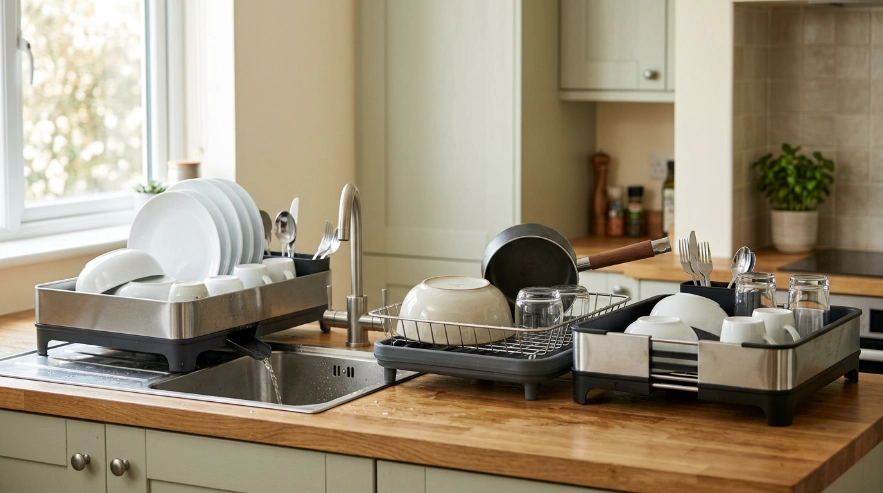
If you need a drying rack as part of your dish-storage system, these are three designs I would consider based on capacity, flexibility, and counter-space needs.
🏆 Best for Larger Loads
simplehuman Steel Frame Dishrack
★★★★★ My fit score: 4.8/5
Its steel-frame design includes dedicated dish storage and a drainage system with a movable spout. I would choose it for a household that regularly hand-washes larger batches and has enough counter space.
💡 Best Foldaway Option
OXO Good Grips Foldaway Dish Rack
★★★★☆ My fit score: 4.6/5
The plate section can fold down to create room for larger bowls and cookware, while other parts fold for storage. I like this approach when a permanent rack would consume too much counter space.
↔️ Best Expandable Design
Joseph Joseph Extend Steel Dish Rack
★★★★★ My fit score: 4.7/5
Its sliding two-part draining area expands when additional space is needed and contracts afterward. I would consider it when dishwashing volume changes from day to day.
Frequently Asked Questions
Should plates go on the top or bottom shelf?
Everyday plates are usually best on a middle or lower-middle shelf where they are easy to reach. Heavy plates should stay lower when possible, while lightweight and rarely used dishes can use higher shelves.
Is it better to stack plates or use a plate rack?
Stacking is simple and space-efficient for matching everyday plates. A vertical plate rack is better when you want independent access to individual pieces or need to store platters, lids, or differently sized dishes.
How can I organize dishes without buying organizers?
Start by grouping dishes by type, moving rarely used pieces elsewhere, and assigning your most accessible shelf to everyday items. Shorter stacks and better category placement can improve a cabinet before you spend anything on organizers.
Can I store dishes while they are still slightly wet?
It is better to let dishes dry thoroughly before storing them, particularly when bowls or plates will be nested tightly. Air-drying helps prevent moisture from remaining trapped between pieces or inside the cabinet.
How do I arrange dishes in deep cabinets?
Keep frequently used dishes near the front and reserve the back for less-used pieces. Shelf risers, vertical racks, or removable bins can help prevent useful items from disappearing behind large stacks.
Final Takeaway
Learning how to arrange dishes on shelves is less about creating a perfect-looking cabinet and more about reducing unnecessary work. Put everyday dishes within easy reach, heavy pieces lower, and occasional items outside your prime storage zone.
Start with the dishes you already own before buying organizers. Once every plate and bowl has a logical home, your cabinet becomes easier to use, unload, clean, and maintain.
