What Is the Best Material for a Dish Rack?

Quick Answer
The best material for a dish rack is quality stainless steel, preferably grade 304. It offers an excellent mix of strength, corrosion resistance, easy cleaning, and long service life. The Nickel Institute explains why stainless steel resists corrosion, which helps explain why it works so well beside a wet kitchen sink.
Best dish rack materials at a glance
- Best overall: Grade 304 stainless steel is strong, durable, and highly resistant to everyday moisture.
- Best lightweight choice: Aluminum resists rust and is much easier to move around the sink.
- Best budget choice: Plastic cannot rust and is inexpensive, but it usually has less strength.
- Best natural look: Bamboo looks warm and attractive but needs careful drying.
- Use caution with: Coated steel can work well until scratches expose the metal underneath.
My simple buying rule
- Choose stainless steel for daily use, aluminum when weight matters, and plastic when price matters most.
A dish rack spends most of its life wet, which makes material choice more important than it first appears. I pay more attention to the frame material than fancy cup holders or extra tiers.
A good rack should stay stable, drain well, clean easily, and resist corrosion. In this guide, I’ll compare the common materials and explain which one makes the most sense for different kitchens.
What Is the Best Material for a Dish Rack?
Grade 304 stainless steel is my best overall choice for most dish racks. It combines excellent strength with good corrosion resistance and easy maintenance.
Stainless steel gets its corrosion resistance mainly from chromium. That chromium forms a thin protective surface layer when exposed to oxygen.
Popular grade 304 typically contains about 18% chromium and 8% nickel. That is why you may also see it described as 18/8 stainless steel.
- Strong frame: It handles plates, bowls, glasses, and heavier cookware better than most plastic racks.
- Good moisture resistance: Quality stainless steel tolerates daily exposure to wet dishes.
- Easy cleaning: Its smooth surface is usually simple to wipe or wash.
- Long-term value: A well-made stainless rack can outlast cheaper coated-wire designs.
- Clean appearance: Stainless steel suits most modern kitchens without looking bulky.
I would still check the product description before buying. A rack described only as “metal” or “steel” may not use stainless steel at all.
You can learn more about stainless grades from worldstainless.
How Do Dish Rack Materials Compare?
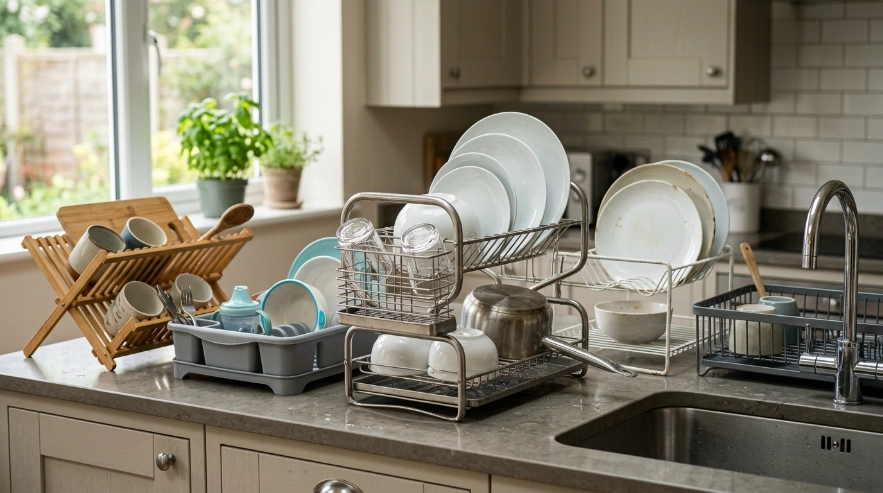
The best material changes slightly depending on your priorities. Strength, weight, price, appearance, and moisture resistance all matter.
| Material | Rust / Corrosion Resistance | Strength | Care Level | Best Use |
|---|---|---|---|---|
| 304 stainless steel | High; about 18% chromium and 8% nickel | High | Low | Daily household use |
| Aluminum | High; naturally forms a protective oxide layer | Medium | Low | Small kitchens and over-sink racks |
| Plastic | Cannot rust | Low to medium | Low | Budget and lightweight use |
| Coated steel | Good while coating remains intact | High | Medium | Lower-cost metal racks |
| Bamboo | No metal rust, but moisture can damage wood | Medium | High | Dry kitchens and natural decor |
The table shows why I usually come back to stainless steel. It has few major weaknesses for normal countertop use.
Is Aluminum Better Than Stainless Steel for a Dish Rack?
Aluminum is better when low weight and rust resistance matter most. Stainless steel is usually better when strength and load capacity are your main concerns.
Aluminum does not rust in the same way ordinary iron or carbon steel does. It naturally develops an oxide layer that helps protect the surface.
The Aluminum Association also notes that corrosion resistance varies with the alloy. Construction quality still matters.
- Choose aluminum if you move the rack often or want an over-sink design.
- Choose stainless steel for heavier plates, cookware, or larger daily loads.
- Check the joints because screws, connectors, and accessories may use different materials.
- Look at the feet because rubber or silicone feet help prevent sliding and counter scratches.
I particularly like aluminum for racks that sit partly inside the sink. The lower weight makes repositioning much easier.
Are Plastic Dish Racks Good?
Plastic dish racks are a practical budget option and they cannot rust. Their main weakness is lower long-term strength compared with a quality metal frame.
Plastic also works well for removable drip trays and utensil holders. Those parts benefit from being light and easy to rinse.
The trouble starts when thin plastic supports carry heavy cookware every day. Repeated loading can eventually cause bending, cracking, or loose joints.
- Good for: Apartments, dorms, light dish loads, and secondary racks.
- Less ideal for: Cast iron pans, heavy stoneware, or large family loads.
- Watch for: Cracks, rough scratches, trapped water, and warped components.
- Best setup: Stainless or aluminum frame with a removable plastic drain tray.
That hybrid construction is often more practical than an all-metal rack. You get strength where it matters and easier cleaning underneath.
Is Bamboo a Good Material for a Dish Rack?
Bamboo can make an attractive dish rack, but it needs more care around constant moisture. I would choose it for appearance rather than minimum maintenance.
Bamboo does not develop orange iron rust. However, wood-based materials can absorb moisture if water sits on them for long periods.
- Keep the rack where air can circulate freely.
- Do not leave standing water underneath it.
- Wipe wet surfaces when the dishes are put away.
- Check joints and corners for dark spots or swelling.
- Follow the manufacturer’s cleaning instructions.
A bamboo rack makes more sense in a dry, airy kitchen than beside a sink that stays damp all day.
Why Do Some Metal Dish Racks Rust?
A metal rack often rusts because the base metal is ordinary steel and its protective coating becomes damaged. A small chip can expose the steel to water.
This commonly happens at welds, bends, feet, or areas where dishes repeatedly scrape the frame.
Stainless steel can also develop spots under harsh conditions. “Stainless” means corrosion resistant, not completely immune to every chemical or environment.
- Unknown steel grade: A vague “metal” description tells you little about corrosion resistance.
- Damaged coating: Scratches can expose carbon steel underneath.
- Standing water: Poor drainage keeps joints wet much longer.
- Harsh cleaners: Some chemicals can damage finishes or protective surfaces.
- Mixed materials: Cheap screws or connectors may corrode before the main frame.
My buying rule is simple: I would rather pay for better base material than depend entirely on a painted coating.
What Should You Look for Besides Material?
Material matters, but drainage and construction can make an equally large difference in everyday use. A premium metal frame is frustrating if water collects underneath it.
I check the drainage system before decorative features. Water should move toward the sink instead of pooling on the counter.
- Drain spout: A directional spout helps move water straight into the sink.
- Removable tray: You can wash away residue without lifting the whole rack.
- Non-slip feet: Silicone or rubber feet improve stability.
- Plate spacing: Enough room between dishes improves airflow.
- Utensil holder: Removable sections are easier to clean.
- Strong joints: Welds and fasteners should feel solid before loading.
A slightly smaller rack with good drainage often works better than a huge two-tier rack that constantly leaves puddles.
How Do You Keep a Dish Rack Clean?
Wash the rack regularly, remove trapped food residue, and let every part dry. That routine matters regardless of material.
The FDA recommends keeping dishes, utensils, and kitchen surfaces clean with proper washing practices. Its food safety in your kitchen guidance is a useful reference.
- Empty the rack. Remove dishes, utensils, trays, and detachable holders.
- Wash removable pieces. Use warm water and dish soap unless the manufacturer says otherwise.
- Clean corners. Pay attention to joints, grooves, feet, and drain channels.
- Rinse well. Remove leftover soap and loosened residue.
- Dry the rack. Allow good airflow before loading it again.
I avoid assuming every removable plastic piece is dishwasher safe. Heat can deform some plastics, so I check the maker’s instructions first.
Which Dish Rack Material Should You Choose for Your Kitchen?
Match the material to the way you use your kitchen. There is no need to pay for features that do not solve your daily problem.
- Busy family kitchen: Choose a sturdy stainless steel rack.
- Small apartment: Consider aluminum or a compact stainless model.
- Over-sink setup: Lightweight aluminum is particularly useful.
- Tight budget: A good plastic rack can work well.
- Natural kitchen decor: Bamboo can look excellent if you keep it dry.
- Heavy cookware: Avoid thin plastic frames and weak coated wire.
As of 2026, I still consider 304 stainless steel the safest all-around material choice for a typical countertop rack.
Dish Racks I Would Consider
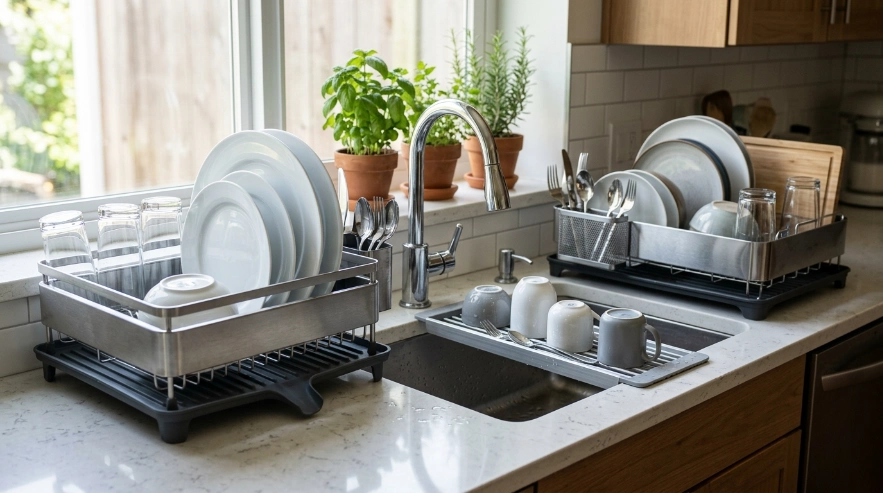
If you’re ready to choose one, these models show three useful approaches to dish-rack materials and design.
🏆 Best Overall
simplehuman Steel Frame Dishrack
★★★★★ My fit rating: 4.8/5
It combines a steel frame with a drainage system, removable components, and silicone-capped plate supports. I like this style for a permanent countertop setup where stability and drainage matter more than low weight.
💧 Best Lightweight
OXO Good Grips Over-the-Sink Aluminum Dish Rack
★★★★☆ My fit rating: 4.6/5
The aluminum construction keeps this rack light while avoiding conventional iron rust. Its extendable arms make the design especially appealing when I want dishes to drain directly over the sink.
📏 Best Expandable
Kitsure Expandable Stainless Steel Dish Drying Rack
★★★★☆ My fit rating: 4.5/5
This stainless steel design expands when extra drying space is needed and includes an auto-drain setup. I would consider it when counter capacity changes from small weekday loads to larger family meals.
Frequently Asked Questions
What type of dish rack does not rust?
Plastic does not rust, while aluminum does not develop iron rust like ordinary steel. Quality stainless steel is also highly resistant to corrosion. For a strong everyday rack, I would choose grade 304 stainless steel or a well-made aluminum model.
Is stainless steel or plastic better for a dish rack?
Stainless steel is usually better for durability, stability, and heavy dishes. Plastic is better when you want something inexpensive, light, and completely free from metal rust. A stainless frame with a removable plastic drain tray offers a useful balance.
Is 304 stainless steel good for a dish rack?
Yes. Grade 304 is a strong choice because it contains substantial chromium and nickel and offers good corrosion resistance in normal household environments. It is commonly used in kitchen-related applications where durability, cleanability, and moisture resistance matter.
Can a stainless steel dish rack still rust?
Yes, stainless steel can develop corrosion or surface staining under harsh conditions. Salt, chloride cleaners, standing water, contamination from ordinary steel, or poor-quality material can contribute. Regular cleaning and good drainage help keep the surface in better condition.
Is aluminum a good material for a dish drying rack?
Yes. Aluminum is light and naturally corrosion resistant, which makes it especially useful for over-sink and movable dish racks. Stainless steel usually feels stronger under heavy loads, while aluminum wins when easier handling is the bigger priority.
Final Takeaway
For most homes, 304 stainless steel is the best material for a dish rack. It gives you a strong frame, good corrosion resistance, easy cleaning, and excellent everyday versatility.
Aluminum is my second choice, especially for lighter over-sink designs. Plastic remains useful on a budget, while bamboo works best when you are willing to keep it dry and maintained.
Before buying, check the actual material instead of relying on words like “metal” or “rust resistant.” A clearly identified material, good drainage, removable trays, and strong joints usually matter more than extra accessories.