
What Is a Good Dish Rack That Doesn’t Rust?

Quick Answer
A good dish rack that doesn’t rust is usually made from rustproof anodized aluminum or high-quality 304 stainless steel, with aluminum offering the clearest protection against traditional iron rust. Good drainage matters just as much, so choose a rack that sends water toward the sink and supports the same clean, dry habits covered in these practical kitchen safety tips.
What I would look for
- Rustproof material: Anodized aluminum cannot develop ordinary iron rust.
- Quality stainless: Type 304 stainless steel provides strong corrosion resistance for wet kitchen use.
- Direct drainage: A sloped tray or drain spout prevents standing water around the frame.
- Protected joints: Look closely at welds, screws, corners, and coated connection points.
- Easy cleaning: Removable trays and utensil holders make mineral buildup easier to remove.
My simple rule
- If eliminating rust is your highest priority, I would start with a well-built aluminum rack. If you prefer the feel and appearance of steel, choose genuine 304 stainless and keep it clean and dry.
If you’ve already replaced one dish rack because orange spots appeared around the welds, I understand the frustration. A rack lives beside water every day, so vague claims such as “metal” or “rust-resistant finish” aren’t enough.
I pay most attention to the frame material, joints, drainage, and places where water can sit. Those details usually tell me more than the rack’s color or number of accessories.
What is a rust-resistant dish rack?
A rust-resistant dish rack is a drying rack made from materials that resist corrosion during repeated exposure to water. The best designs also remove water quickly instead of letting it collect around joints and feet.
Simple definition: A good rust-resistant dish rack combines corrosion-resistant materials with fast drainage, airflow, and easy-to-clean surfaces.
The word rust specifically refers to corrosion products that form on iron-containing materials. Aluminum does not form iron rust, although aluminum can still oxidize or corrode under certain conditions.
Stainless steel contains iron, but chromium helps create a protective surface layer that greatly improves corrosion resistance. That is why stainless steel appears throughout kitchens and food-processing equipment.
Which dish rack material is least likely to rust?
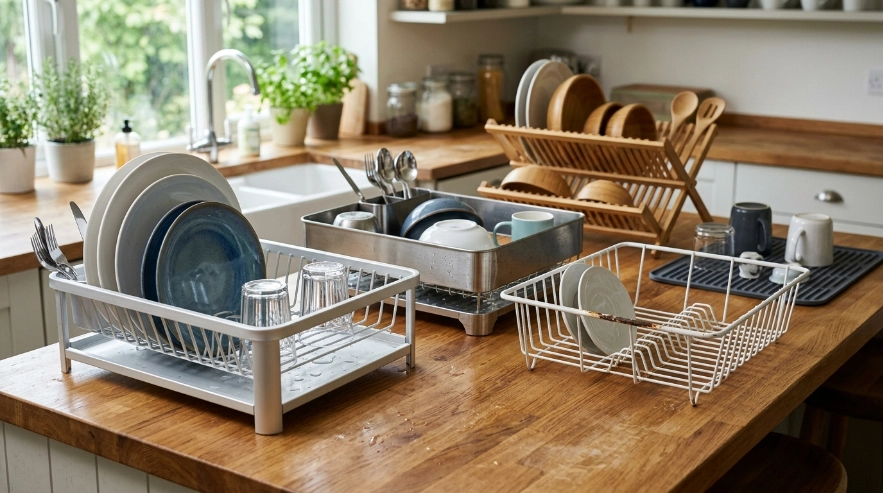
For a normal home kitchen, I would put anodized aluminum and quality 304 stainless steel at the top of the list. Plastic and silicone cannot rust either, but they provide a different level of stiffness, appearance, and load support.
The material name alone isn’t enough. Coated ordinary steel can look excellent when new but become vulnerable after the coating chips or wears through.
| Material | Rust/Corrosion Performance | Main Advantage | Main Tradeoff |
|---|---|---|---|
| Anodized aluminum | Cannot form ordinary iron rust; generally excellent for wet environments | Lightweight and low maintenance | Can still oxidize or discolor if abused |
| 304 stainless steel | High corrosion resistance | Strong, attractive, and durable | Not absolutely immune to corrosion |
| Coated carbon steel | Good while coating stays intact | Usually affordable | Chips can expose rust-prone steel |
| Plastic or silicone | Does not rust | Light and easy to wash | May flex, stain, or age differently than metal |
| Bamboo | Does not rust | Warm natural appearance | Needs thorough drying to limit swelling or mildew |
Why I like anodized aluminum for a wet sink area
Aluminum contains no iron, so it does not produce the familiar reddish-brown iron rust that ruins many cheap wire racks. That makes it an appealing choice when your main goal is minimizing rust problems.
OXO, for example, describes its Over-the-Sink Aluminum Dish Rack as rustproof aluminum. Its design also drains dishes directly over the sink.
- Best for: People who prioritize rust prevention.
- Weight: Usually lighter than comparable steel racks.
- Maintenance: Wipe away mineral deposits and avoid unnecessarily harsh cleaners.
Why 304 stainless steel is still an excellent choice
Type 304 is one of the most common stainless steels used around food. The Nickel Institute describes Type 304 as a common food-and-beverage alloy.
Worldstainless lists a typical 304 composition around 18% chromium and 8% nickel. These alloying elements help give the material its durability and corrosion resistance.
Type 316 provides even greater resistance in chloride-heavy environments, but it is less common in household dish racks. For most kitchens, a genuine 304 rack is a practical premium choice.
The same moisture principle applies to other iron-containing cookware. If you use cast iron, my guide on caring for a Lodge Dutch oven shows why drying wet metal thoroughly matters.
Is stainless steel completely rustproof?
No stainless steel should be treated as magically immune to every form of corrosion. Good stainless steel resists corrosion extremely well, but chemicals, salts, damaged surfaces, and long-term deposits can still cause problems.
This is why I prefer the term corrosion-resistant for stainless steel rather than promising that every stainless rack will remain spotless forever.
Why does a stainless steel dish rack sometimes show rust spots?
Orange marks do not automatically prove the entire rack is low-quality stainless steel. They may appear around screws, welds, damaged coatings, contaminated surfaces, or parts made from a different metal.
- Mixed materials: Screws or brackets may not match the main frame.
- Damaged coating: A coated steel component can rust after scratching.
- Standing water: Poor drainage keeps vulnerable areas wet.
- Harsh chemicals: Bleach, strong acids, and abrasive cleaners can damage some surfaces.
- Mineral buildup: Hard-water deposits can trap moisture and make the rack look stained.
Simplehuman specifically advises against harsh abrasives, bleach, salts, and acids on its stainless components. Its Steel Frame Dishrack is designed with a swivel drain spout and is described as resisting rust and fingerprints.
What features matter besides rust resistance?
The best material can still disappoint when the rack holds puddles under your dishes. I would judge drainage, capacity, stability, and cleaning access alongside corrosion resistance.
A rack should make cleanup easier, not become another item you constantly scrub. This fits the broader clean-as-you-go approach I recommend when discussing common kitchen and cooking mistakes.
1. A drain spout or truly sloped tray
Water should have an obvious path toward the sink. A flat tray that holds a shallow pool keeps the rack wet much longer than necessary.
2. Removable parts
I prefer removable utensil cups, trays, glass holders, and drain pieces. These areas collect soap residue, food particles, and mineral deposits first.
3. Stable feet
Rubberized or nonslip feet keep a loaded rack from shifting. They also separate the metal frame from a constantly wet countertop.
4. Enough airflow between dishes
Plates need room for water to drain and air to circulate. Packing every slot tightly can leave bowls and plates wet longer.
5. The right size for your sink
Measure before buying. A giant rack that blocks your faucet or extends over the counter edge will become annoying regardless of how rust-resistant it is.
- Measure available counter width and depth.
- Measure the sink opening for over-sink models.
- Check faucet clearance.
- Consider the largest pan or cutting board you wash regularly.
- Leave room to remove the drain tray for cleaning.
How do you keep a dish rack from rusting?
Good maintenance cannot turn cheap carbon steel into stainless steel, but it can extend the life of a quality rack. My goal is simple: remove residue and don’t leave vulnerable parts wet unnecessarily.
That same approach helps with other wet cookware. For example, frequent dishwasher exposure can affect some cookware materials, as explained in my guide on whether Dutch ovens can go in the dishwasher.
- Empty the drain tray regularly. Don’t let water remain underneath the rack for days.
- Wipe the frame weekly. Use mild dish soap and a soft cloth unless the manufacturer gives different directions.
- Remove mineral deposits. Follow the manufacturer’s cleaning guidance for the specific material.
- Inspect screws and welds. Small orange spots often appear in these areas first.
- Avoid steel wool. It can scratch surfaces and may leave particles behind.
- Let the rack dry. After heavy use, give the tray and frame time to air out.
I also avoid assuming every component is the same material. A rack marketed as “stainless” can still include coated fasteners, plastic trays, silicone feet, or other metal parts.
What should you avoid when buying a rust-resistant dish rack?
I become cautious when a product says only “metal,” “premium steel,” or “rust-resistant coating” without explaining the construction. Those phrases tell you less than a clearly identified aluminum or stainless-steel frame.
- No material grade: “Stainless look” is not the same as a specified stainless construction.
- Exposed welded joints: Check photos closely for unfinished or discolored connections.
- Flat drain tray: Standing water increases cleaning work.
- Painted wire: Scratches can expose the metal beneath.
- Too many fixed accessories: Hard-to-remove parts are harder to clean.
- Poor fit: A rack that sits partly inside standing sink water defeats the purpose.
As of 2026, I would choose a simpler rack with clearly stated materials over a complicated model with vague construction claims. A good frame and smart drainage are worth more than extra hooks you never use.
Which rust-resistant dish rack would I choose in 2026?
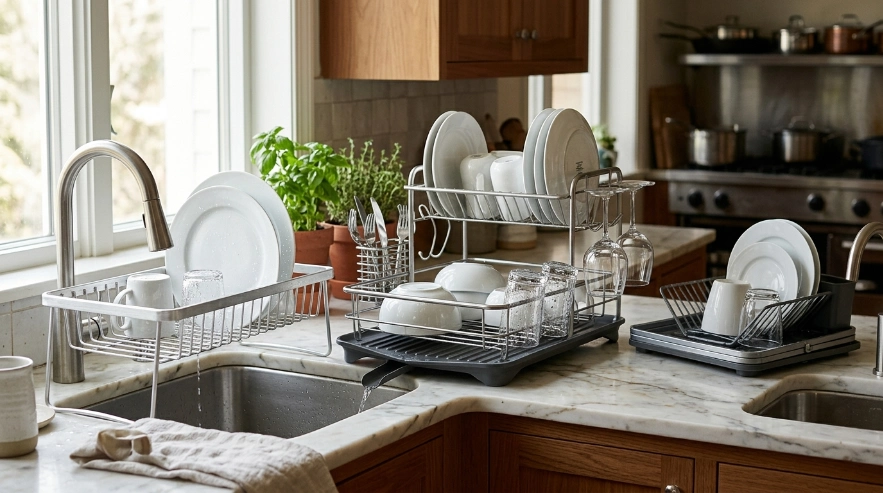
If you’re ready to pick one, these are the types of models I would put on my shortlist. Each solves the rust problem in a slightly different way.
🏆 Best for Rust Prevention
OXO Good Grips Over-the-Sink Aluminum Dish Rack
★★★★★
Its aluminum construction avoids traditional iron rust, while extendable arms let water drain directly into the sink. I like this approach for anyone who wants to remove standing water and rust-prone steel from the equation.
⭐ Best Premium Pick
Simplehuman Steel Frame Dishrack
★★★★★
This rack combines a steel frame with a pivoting drain system, plate supports, and dedicated glass storage. I would choose it when capacity, drainage, and a countertop-friendly design matter as much as corrosion resistance.
🏠 Best for Small Kitchens
OXO Good Grips Aluminum Fold Flat Dish Rack
★★★★☆
The rustproof aluminum frame folds flat and includes a drain board with raised ridges. I like it for apartments or kitchens where a rack should disappear into storage after the dishes are dry.
Frequently Asked Questions
What type of dish rack will not rust?
An aluminum, plastic, or silicone dish rack cannot develop traditional iron rust. Quality 304 stainless steel is also highly corrosion-resistant, making it one of the best choices when you want a rigid metal rack with a premium appearance.
Is stainless steel or aluminum better for a dish rack?
Aluminum is my pick when avoiding ordinary rust is the highest priority because it contains no iron. Stainless steel is often heavier and more rigid, and good 304 stainless offers excellent corrosion resistance when maintained properly.
Why is my new dish rack already rusting?
Rust may start on screws, welds, chipped coatings, or lower-quality steel parts even when the main frame looks stainless. Standing water, harsh cleaning chemicals, salts, and scratches can also accelerate corrosion on vulnerable components.
Is 304 stainless steel good for a dish drying rack?
Yes. Type 304 is widely used in food-contact and kitchen applications because it combines strength with good corrosion resistance. It is a strong choice for a dish rack, although regular cleaning and drainage still help preserve the finish.
How often should I clean my dish rack?
I would give the tray and obvious wet areas a quick clean whenever residue becomes visible, then clean the whole rack regularly according to its manufacturer’s instructions. Frequent light cleaning is easier than removing thick soap scum or mineral buildup later.
Final Takeaway
If you want a good dish rack that doesn’t rust, don’t shop by appearance alone. Start with anodized aluminum or genuine high-quality stainless steel, then inspect the drainage system, joints, removable parts, and overall fit.
For maximum freedom from traditional rust, an aluminum rack is my simplest recommendation. For a heavier premium rack, 304 stainless steel with excellent drainage is a close second and can serve a kitchen well for years.
