
How to Clean a Juicer: Daily Routine and Weekly Deep Clean

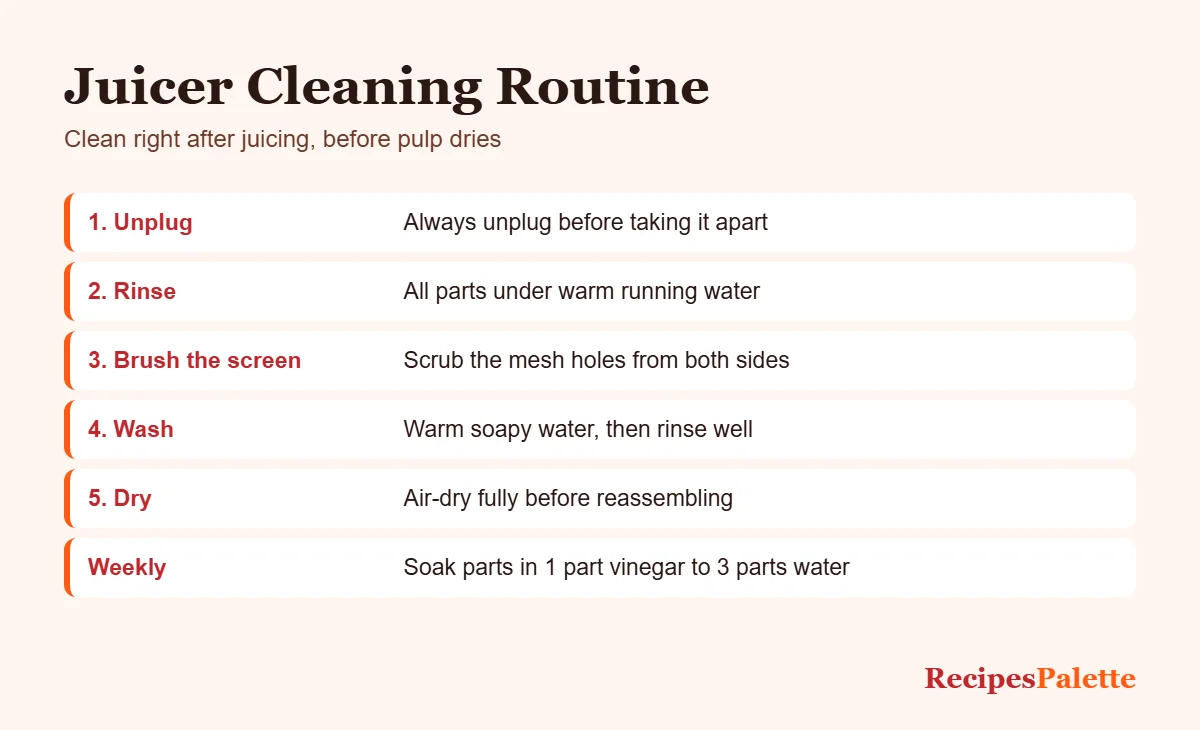
To clean a juicer, unplug it, take it apart, and rinse every part under warm running water straight after juicing, before the pulp dries. Scrub the mesh screen with the brush that came with it, wash the parts in warm soapy water, rinse and let them air-dry. Once a week, or when the screen looks cloudy, soak the screen and parts in warm water with a little white vinegar or baking soda to remove stains and mineral build-up.
A clean juicer makes better-tasting juice, lasts longer and is safer to use, because pulp left inside the machine spoils quickly. The good news: if you clean it right away, most juicers take only three to five minutes. This guide covers daily cleaning, a weekly deep clean, how to remove stains, and tips for both centrifugal and slow juicers.
What You Need
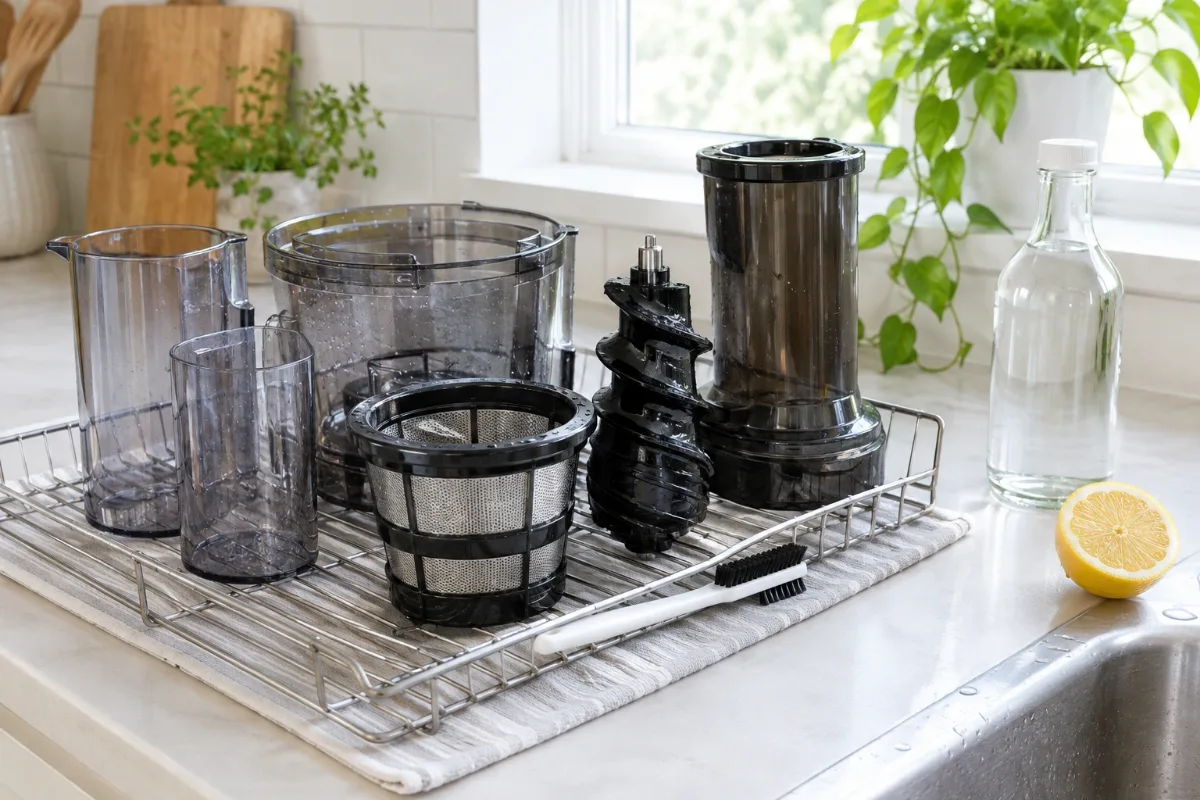
- The cleaning brush that came with your juicer, or a stiff, clean toothbrush
- Mild dish soap
- A sink or large bowl of warm water
- White vinegar and baking soda for deep cleaning
- A clean dish towel or drying rack
- Optional: a fresh lemon half for stains and smells
Avoid steel wool, scouring pads and harsh cleaners such as bleach. They scratch plastic parts and can damage the fine mesh screen.
Daily Cleaning: Step by Step
Do this every time you juice. It is far easier when the pulp is still wet.
- Unplug the juicer. Always unplug before taking anything apart, especially centrifugal models with sharp blades.
- Run some water through (optional). With the juicer still running, pour a cup of water down the chute. It flushes loose pulp out of the screen and spout. Check your manual first; most slow juicers allow this, and some centrifugal models do too.
- Empty the pulp. Tip the pulp container into the compost or a freezer bag if you plan to cook with it. Our juice pulp recipes have ideas.
- Take it apart. Remove the lid, chute, screen or basket, auger or blade, and both containers.
- Rinse every part under warm running water to remove most of the pulp.
- Scrub the screen. Hold the screen under running water and brush it from the outside in, working along the holes. This is the most important step; clogged holes mean less juice next time.
- Wash with soap. Wash all parts in warm soapy water, paying attention to corners, the spout and the seal.
- Rinse well so no soap taste is left behind.
- Wipe the motor base with a damp cloth. Never put it in water or under the tap.
- Air-dry the parts on a rack, then reassemble once completely dry.
Can Juicer Parts Go in the Dishwasher?
Many juicer parts are labeled dishwasher-safe, usually on the top rack only. Even so, many owners hand-wash the screen and auger for two reasons:
- Dishwasher detergent and high heat can cloud or weaken plastic over time.
- A dishwasher does not always clear pulp out of fine mesh holes, so you still need to brush the screen.
Check your manual. If a part is not marked dishwasher-safe, wash it by hand. The motor base never goes in the dishwasher.
Weekly Deep Clean
Once a week, or every few uses, give the parts a soak. This removes stains, film and mineral spots that daily rinsing leaves behind.
Vinegar soak
- Fill a sink or bowl with warm water and add about 1 part white vinegar to 3 parts water.
- Soak the screen, auger or basket, and containers for 15 to 30 minutes.
- Scrub the screen with the brush, paying attention to any white crust in the holes.
- Rinse well with clean water and air-dry.
Vinegar is good for hard-water spots and the cloudy film that builds up on mesh screens.
Baking soda paste
Mix 2 tablespoons baking soda with a little water to make a paste. Rub it onto stained plastic with a soft cloth or brush, leave it for 10 minutes, then scrub and rinse. Baking soda is gentle and also helps remove lingering smells.
How to Remove Stains
Carrots, beets, turmeric and leafy greens can stain plastic parts orange, red or green. Stains are cosmetic and do not mean the juicer is dirty, but they can be reduced.
- Clean straight away. Stains set fast. Rinsing within a few minutes makes the biggest difference.
- Lemon: rub the stained area with the cut side of a lemon, leave for 10 minutes, then wash.
- Baking soda paste: as above, for stubborn spots.
- Sunlight: drying stained plastic parts in sunshine for a few hours can fade carrot and turmeric stains.
- Vegetable oil: a thin film of oil wiped on the inside of the pulp container before juicing beets or turmeric can make stains easier to wash off.
Cleaning a Centrifugal Juicer
The spinning basket has a sharp blade disc at the bottom and a fine mesh wall. Handle it carefully.
- Hold the basket by its rim, never by the blade.
- Brush the mesh from the inside out under running water, then from the outside in.
- Check the area under the basket and around the spout, where fine pulp collects.
- Line the pulp container with a compostable bag if your model allows it; it cuts cleanup time.
Cleaning a Slow (Masticating) Juicer
Slow juicers have more small parts, including silicone wipers or brushes around the screen and a silicone seal at the bottom.
- Remove the rotating wiper brush from the screen holder and rinse it separately.
- Take out silicone seals and plugs once a week and wash behind them; pulp and juice can get trapped there.
- Brush the auger’s grooves, especially near the bottom.
- Many vertical slow juicers have a juice cap on the spout. Open and rinse it every time.
Not sure which type you have? Our guides on masticating vs centrifugal juicers and what a cold press juicer is explain the differences.
Cleaning a Citrus Juicer
Citrus juicers are the easiest to clean. Rinse the cone and strainer right after use, since citrus pulp dries hard. Wash the parts in warm soapy water, brush the strainer holes and dry. A weekly vinegar soak helps if you notice sticky film. See manual vs electric citrus juicer for more on these tools.
How to Make Cleanup Faster
- Clean immediately. Wet pulp rinses off in seconds; dry pulp needs scrubbing.
- Put the parts in a sink of warm water as soon as you finish, even if you drink your juice first.
- Keep the brush next to the juicer so it is always at hand.
- Prep produce well. Cutting fibrous celery and leafy greens into shorter pieces stops strings from wrapping around the auger.
- Choose a juicer with fewer parts next time. Our guide on how to choose a juicer covers what to look for.
Common Juicer Cleaning Mistakes
- Leaving it until later. Dried pulp clogs the screen and can grow mold within a day.
- Putting the motor base in water. It can damage the motor and is a safety risk. Wipe it only.
- Using abrasive pads. They scratch plastic and tear fine mesh.
- Reassembling while wet. Trapped moisture can cause musty smells and mold.
- Ignoring seals and gaskets. These collect juice residue and should be removed and washed regularly.
When to Replace Juicer Parts
Screens, wipers and seals wear out over time. Replace them if the mesh is torn or bent, the screen stays clogged after a deep clean, a seal is cracked or leaking, or the blade on a centrifugal basket looks dull or damaged. Most brands sell spare parts, and a new screen can make an old juicer work like new.
Cleaning is also part of safe juicing. Read our juicing safety tips for washing produce and handling fresh juice.
Frequently Asked Questions
How often should I clean my juicer?
Rinse and wash it every time you use it, and give it a deeper soak about once a week.
Can I leave my juicer until the next morning?
It is best not to. Pulp dries hard and can spoil overnight. At least rinse the parts and leave them in water.
How do I get rid of mold in my juicer?
Wash all parts in hot soapy water, soak them in a vinegar solution for 30 minutes, scrub, rinse and dry fully. Throw away any silicone seal that still looks moldy after cleaning and buy a replacement.
Why does my juicer smell bad?
Usually because pulp or juice is trapped in a seal, the spout or the screen. Take out every removable seal, deep clean with vinegar or baking soda and dry everything before reassembling.
Is it safe to use bleach on a juicer?
Most makers advise against it. It can damage plastic and leave a taste. Mild soap, vinegar and baking soda are enough.
How do I clean a clogged juicer screen?
Soak it in warm water with vinegar for 30 minutes, then scrub the holes with a stiff brush from both sides.
Make cleanup part of the juicing routine: unplug, take apart, rinse, brush the screen, wash and dry. It takes about as long as drinking your juice, and it keeps your juicer working well for years.