
Manual vs Electric Citrus Juicer: Which One Should You Buy?

A manual citrus juicer is cheap, small, easy to clean and perfect for a few lemons or limes. An electric citrus juicer is faster and easier on your hands when you juice several oranges or grapefruit at a time. If you mostly squeeze lemons and limes for cooking and drinks, a handheld squeezer or reamer is all you need. If you make fresh orange juice most mornings, an electric juicer or a lever press saves time and effort.
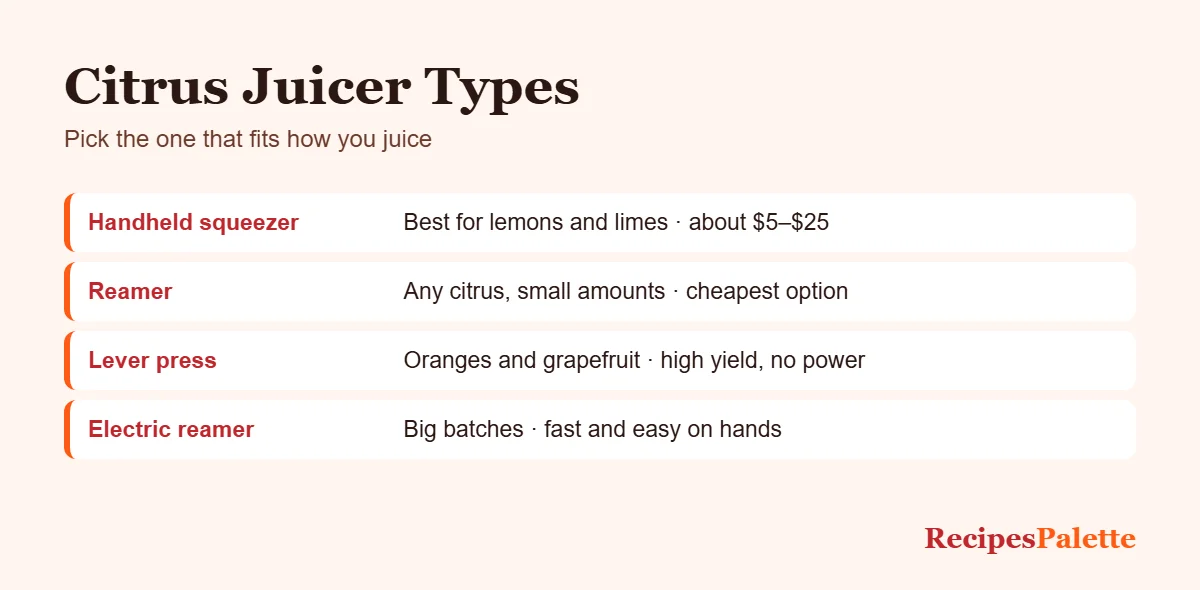
This guide compares the main types of citrus juicers, what each one does best, and what to look for when buying. A citrus juicer only works with oranges, lemons, limes, grapefruit and similar fruit. For carrots, apples or greens, you need a regular juicer; see masticating vs centrifugal juicers.
Types of Manual Citrus Juicers
Handheld squeezer (lemon squeezer)
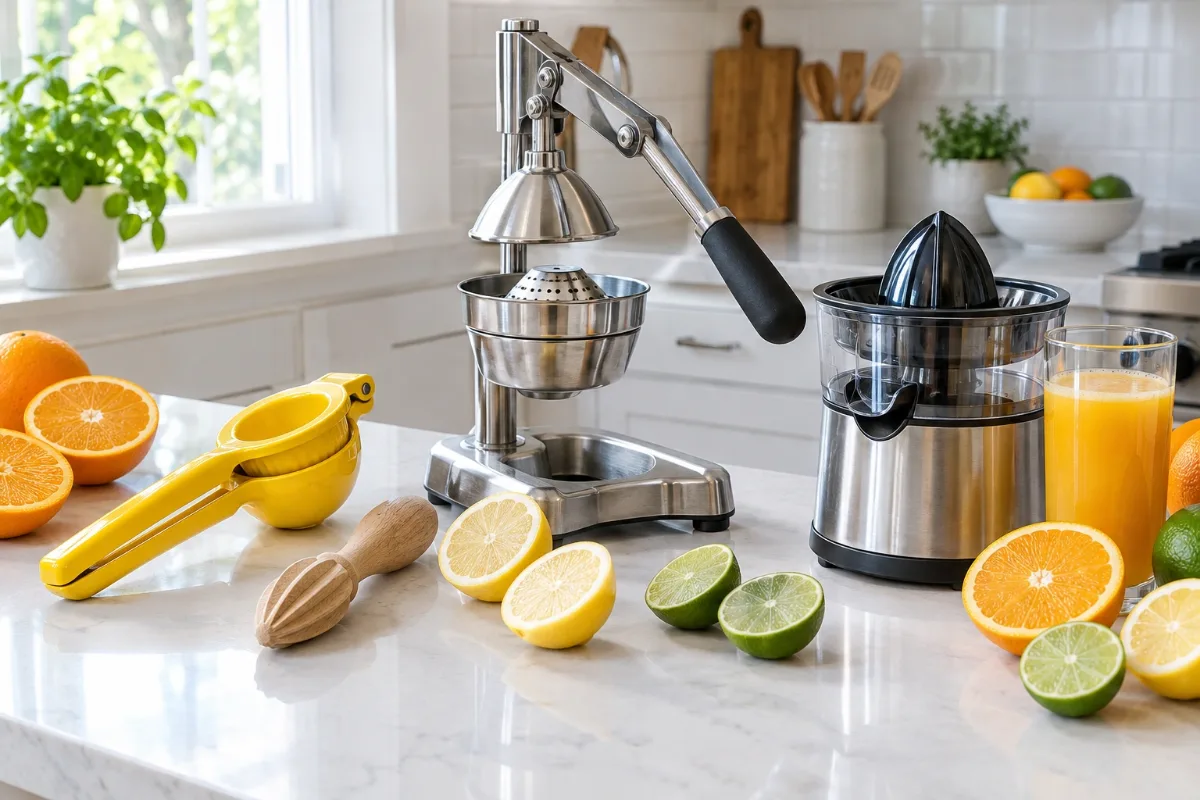
Two hinged bowls, usually metal or enameled. Put a lemon or lime half in, cut side down, and squeeze the handles together. It presses out juice while holding back most seeds.
- Best for: lemons and limes, one or two at a time
- Pros: inexpensive, quick, holds seeds back, fits in a drawer
- Cons: too small for most oranges, tiring for large amounts
Reamer
A ridged cone, either a wooden handheld stick or a cone built onto a bowl. You twist the fruit half on the cone (or the cone in the fruit).
- Best for: any citrus, small amounts
- Pros: very cheap, works with any size fruit, nothing to break
- Cons: slower, seeds and pulp fall into the juice unless the bowl has a strainer
Lever press (manual citrus press)
A countertop stand with a long lever arm that presses a cup down onto the fruit half. The leverage does most of the work.
- Best for: oranges and grapefruit in larger amounts
- Pros: high yield, little effort, no electricity, very durable
- Cons: takes up counter space, more expensive than handheld tools
Types of Electric Citrus Juicers
Electric reamer
The most common type. A motor spins a ridged cone; you press the fruit half down and the cone turns automatically. Many models reverse direction to get more juice, and many have adjustable pulp settings.
- Best for: oranges, grapefruit and big batches of lemons
- Pros: fast, easy on hands and wrists, good yield
- Cons: needs an outlet and counter or cupboard space, more parts to wash
Electric press with lever
Combines a motorized cone with a lever arm, so you do not press down by hand. Often heavier and pricier, but very comfortable for daily orange juice.
Juicer attachments
Some stand mixers and food processors offer a citrus reamer attachment. A good option if you already own the base and want to save space.
Manual vs Electric Citrus Juicer: Comparison
| Manual (handheld or reamer) | Manual lever press | Electric reamer | |
|---|---|---|---|
| Price | About $5 to $25 | About $40 to $150 | About $25 to $150+ |
| Speed | Slow for large amounts | Fast | Fast |
| Effort | Medium to high | Low | Very low |
| Best fruit | Lemons, limes | Oranges, grapefruit | All citrus |
| Yield | Good | Very good | Very good |
| Cleanup | Rinse in seconds | 2 to 3 parts | 3 to 5 parts |
| Storage | Drawer | Counter | Cupboard or counter |
Which One Should You Buy?
Choose a manual handheld squeezer or reamer if:
- You mostly juice lemons and limes for cooking, dressings and drinks
- You juice one to four fruits at a time
- You want something cheap that stores in a drawer
Choose a lever press if:
- You juice oranges or grapefruit often
- You want high yield without electricity
- You have counter space and prefer a sturdy, long-lasting tool
Choose an electric citrus juicer if:
- You make a jug of fresh orange juice several times a week
- You have weak hands, wrist pain or arthritis and want minimal effort
- You want adjustable pulp levels
What to Look for in a Citrus Juicer
- Cone or cup size: small cones for limes, larger cones for oranges and grapefruit. Many electric models include two cones.
- Seed and pulp strainer: keeps seeds out of your juice. Adjustable pulp control is a bonus.
- Material: stainless steel or cast aluminum lasts longer than plastic. Choose food-grade, BPA-free plastic if you go plastic.
- Drip-stop spout: on electric models, lets you juice straight into a glass without mess.
- Dishwasher-safe parts: makes cleanup faster.
- Stability: rubber feet or a heavy base stop it sliding around.
- Handle comfort: on handheld squeezers, look for long, comfortable handles.
How to Get the Most Juice From Citrus
- Use room-temperature fruit. Cold citrus gives less juice. Leave it out for an hour, or microwave a lemon for 10 to 15 seconds.
- Roll it first. Press and roll the fruit on the counter to break down the inside.
- Cut across the middle, not from end to end, so more segments are exposed.
- Place it right in a handheld squeezer. Put the cut side down, facing the holes. It looks backward, but it presses juice out through the holes and turns the peel inside out.
- Do not press the peel too hard on a reamer. Squeezing out the white pith and peel oils can make juice bitter.
For full orange juice instructions, see our guide to juicer vs blender, and for no-tool methods see how to make juice without a juicer.
How Much Juice to Expect
| Fruit | Approximate juice |
|---|---|
| 1 lemon | 2 to 3 tablespoons |
| 1 lime | 1 to 2 tablespoons |
| 1 medium orange | About 1/3 cup (80 ml) |
| 1 grapefruit | About 2/3 cup (160 ml) |
Juicier, thin-skinned fruit gives more. A good press or electric reamer usually gets a little more juice than a basic handheld tool.
Cleaning and Care
- Rinse right after use. Citrus pulp dries quickly and sticks to strainers.
- Use a small brush on strainer holes and cone ridges.
- For enameled handheld squeezers, hand wash to protect the coating.
- Unplug electric juicers before removing the cone, and never put the motor base in water.
- Dry metal parts fully to prevent water spots.
Fresh citrus juice keeps best in a sealed glass jar in the fridge. See how long fresh juice lasts for storage times.
Juicing Other Citrus Fruits
Most citrus juicers handle more than oranges, but each fruit behaves a little differently.
- Lemons and limes: a hinged hand squeezer is the fastest tool. Roll the fruit first and juice at room temperature. A medium lemon gives about 2 to 3 tablespoons of juice; a lime gives 1 to 2 tablespoons.
- Grapefruit: it needs a large cone or a lever press. Small handheld squeezers are usually too small. One grapefruit gives roughly 1/2 to 3/4 cup of juice.
- Blood oranges and mandarins: both work on any reamer or electric juicer. Mandarins and clementines are small and seedy, so strain the juice.
- Pomegranates: a sturdy lever press can juice halved pomegranates, but it needs firm pressure and stains easily.
If you juice a lot of different citrus, an electric juicer with two cone sizes, or a lever press with a wide cup, covers almost everything.
Common Citrus Juicer Mistakes
- Buying a juicer that is too small. Check the bowl or cone size against the fruit you use most.
- Pressing the peel too hard. The bitter oils in the peel end up in the juice.
- Juicing cold fruit. Fruit straight from the fridge gives noticeably less juice.
- Leaving pulp to dry. Rinse the strainer straight away, before pulp sticks.
Frequently Asked Questions
Is an electric citrus juicer worth it?
Yes, if you juice oranges or grapefruit often. It is faster and easier on your hands. For occasional lemons and limes, a manual squeezer is enough.
Can a citrus juicer juice other fruit?
Mostly no. Citrus juicers are designed for fruit with segments. Some people use them for pomegranate halves, but for apples, carrots or berries you need a regular juicer or blender.
Which way do you put a lemon in a squeezer?
Cut side down, facing the holes in the bottom bowl. When you squeeze, the peel turns inside out and the juice comes out through the holes.
Do citrus juicers remove seeds?
Most handheld squeezers and electric reamers have a strainer that catches seeds. Simple wooden reamers do not, so strain the juice afterward.
What is the best citrus juicer for oranges?
A lever press or an electric reamer with a large cone. Both handle full-size oranges and give high yield with little effort.
Can I put a whole orange in a regular juicer?
You can, but peel it first. The peel adds bitterness and can strain the motor. A citrus juicer is usually faster and gives better-tasting juice.
Start with the fruit you juice most. A good handheld squeezer for lemons and limes plus an electric reamer for oranges covers almost every kitchen.