
How to Choose a Juicer: 8 Things to Check Before You Buy

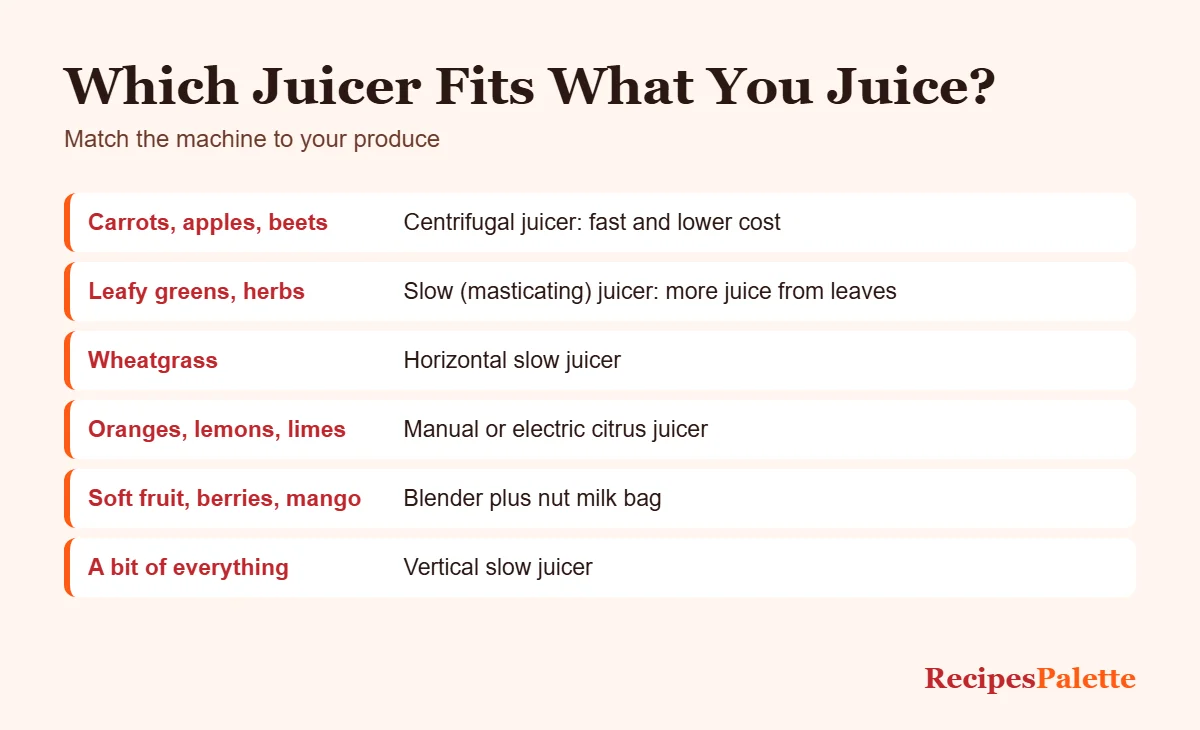
To choose a juicer, decide first what you will juice most. For leafy greens and wheatgrass, pick a slow (masticating) juicer. For hard fruit and vegetables like carrots and apples, a centrifugal juicer is faster and cheaper. For mostly oranges and lemons, a simple citrus juicer is enough. Then check the feed chute size, how many parts need washing, noise, counter space, warranty and price.
A juicer is easy to buy and easy to regret. Many end up in a cupboard because they were too slow, too loud or too hard to clean for the way their owner actually lives. This guide walks through the eight things worth checking before you spend money, so the juicer you buy is one you keep using.
1. Start With What You Will Juice
The produce you plan to use matters more than any feature on the box. Think about the juices you want to make most weeks, not the one ambitious recipe you might try once.
- Mostly hard produce (carrots, apples, beets, pears, cucumbers): almost any juicer works. A centrifugal model is quick and handles these well.
- Lots of leafy greens (spinach, kale, chard, herbs): a slow masticating juicer squeezes much more juice from leaves than a fast spinning one.
- Wheatgrass: you need a masticating juicer, ideally a horizontal one. Centrifugal juicers barely get anything from it.
- Mostly citrus (oranges, grapefruit, lemons, limes): a citrus press or reamer is cheaper, smaller and easier to clean than a full juicer.
- Soft fruit (mango, banana, berries, melon): a blender is usually the better tool. Juicers struggle with very soft flesh.
If your answer is “a bit of everything”, a vertical slow juicer is the most flexible choice for most kitchens.
2. Know the Main Types of Juicer
Centrifugal juicers
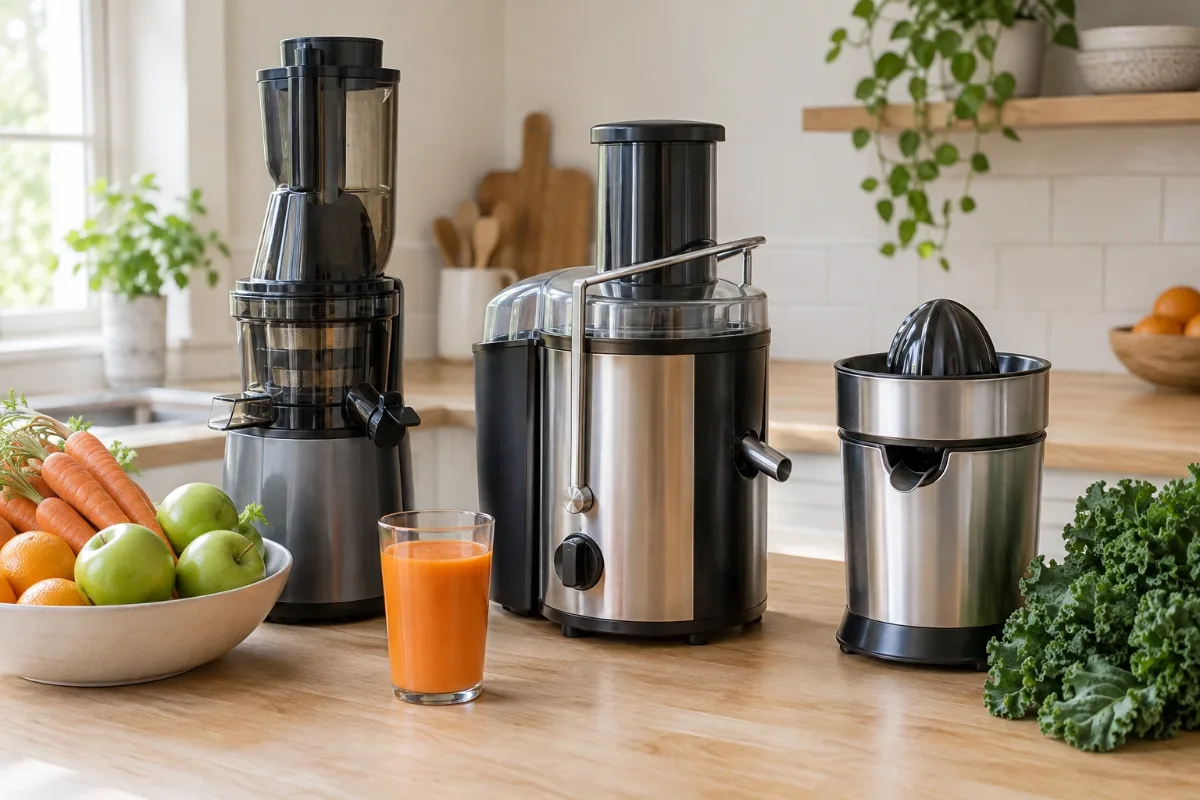
A flat blade spins very fast against a mesh basket, shredding produce and flinging the juice out. They are the most common and usually the cheapest type.
- Good: fast, often have wide chutes, lower price, easy to find.
- Less good: loud, less juice from greens, more foam, and juice tends to separate sooner.
Masticating (slow or cold press) juicers
A slowly turning auger crushes and presses produce against a screen. Vertical models stand upright and take up less counter space; horizontal models are often better for wheatgrass and leafy greens.
- Good: more juice from greens, quiet, less foam, juice keeps its look a little longer.
- Less good: slower, more expensive, often smaller chutes so more chopping.
We explain what “cold press” really means in what is a cold press juicer, and compare the two main types side by side in masticating vs centrifugal juicer.
Citrus juicers
From simple hand reamers to electric presses, these only handle citrus fruit, but they do that job very well and cost little. See manual vs electric citrus juicer if this is mainly what you need.
Do you need a juicer at all?
If you only plan to make juice now and then, a blender plus a nut milk bag does a good job. Our guide on how to make juice without a juicer shows the method, and juicer vs blender explains the trade-offs.
3. Check the Feed Chute Size
The chute is the opening where produce goes in. It decides how much chopping you do every morning.
- Wide chutes (around 3 inches / 7.5 cm or more) can take whole small apples and large chunks. They save a lot of prep time.
- Narrow chutes mean cutting produce into smaller pieces. That is fine on a slow weekend, less fun before work.
Some slow juicers now have extra-wide hoppers that you fill and leave to feed themselves. They cost more but are worth looking at if you juice daily and prep is what puts you off.
4. Count the Parts You Have to Wash
Cleanup is the number one reason people stop juicing. Before you buy, look at how many parts come apart and how they get cleaned.
- Fewer parts usually means faster cleanup. Three to five main parts is easy; seven or more starts to feel like a chore.
- Check whether parts are dishwasher-safe (usually top rack only).
- Look for a cleaning brush in the box. Mesh screens need one.
- Rinse-and-run or “self-cleaning” features help a little, but you still need to take the juicer apart and wash it after each use.
Washing parts straight away, before pulp dries, takes only a few minutes with almost any machine.
5. Think About Noise and Speed
Centrifugal juicers are loud, similar to a blender, but they finish a glass in about a minute or two. Slow juicers are much quieter, closer to a hum, but take several minutes per glass. If you juice early while others are asleep, or live in a small apartment, a quieter slow juicer may suit you better. If speed is everything, a centrifugal model wins.
6. Measure Your Counter and Cupboard
A juicer that lives in a cupboard gets used less. Measure the space where it will stand.
- Vertical slow juicers have a small footprint but can be tall. Check the height under your wall cabinets.
- Horizontal slow juicers are long and low and need more counter width.
- Centrifugal juicers are often bulky, with a large pulp bin on the side or back.
Also check the weight if you plan to lift it in and out of storage every day.
7. Look at Warranty and Build Quality
A juicer has a motor, plastic parts and a mesh screen that all wear over time. A longer warranty is a good sign that the maker expects it to last.
- Many centrifugal juicers come with 1 to 3 years of warranty.
- Many slow juicers come with longer warranties on the motor, sometimes 10 years or more, and shorter cover on parts.
- Check whether spare parts such as screens, augers and seals are easy to buy.
- Choose BPA-free plastic or stainless steel parts that touch the juice.
8. Set a Realistic Budget
Prices change often and vary by store, but as a rough guide in the US:
| Type | Typical price range | Best for |
|---|---|---|
| Manual citrus reamer or press | About $10 to $40 | Occasional orange or lemon juice |
| Electric citrus juicer | About $25 to $150 | Daily orange juice |
| Centrifugal juicer | About $60 to $200 | Fast juice from hard produce |
| Vertical slow juicer | About $150 to $500 | Mixed fruit, vegetables and greens |
| Horizontal slow juicer | About $150 to $400 | Greens and wheatgrass |
Paying more often buys you a better motor, a wider chute and a longer warranty. It does not always buy noticeably better juice. Spend on the features that remove your own biggest hassle.
Quick Match: Which Juicer Fits You?
- “I want carrot or apple juice before work, fast.” A centrifugal juicer with a wide chute.
- “I want green juice most days.” A vertical or horizontal slow juicer.
- “I mainly squeeze oranges at the weekend.” A manual or electric citrus juicer.
- “I am not sure I will stick with it.” Start with a blender and nut milk bag. Our juicing for beginners guide helps you test the habit first.
- “I live in a small apartment.” A compact vertical slow juicer, which is quiet and narrow.
Common Juicer Buying Mistakes
- Buying for the rare recipe. Choose for the juice you will make every week.
- Ignoring cleanup. If it takes 15 minutes to wash, you will stop using it.
- Going for maximum power. Higher wattage on a centrifugal juicer does not always mean more juice.
- Forgetting the chute. A narrow chute adds prep time to every single glass.
- Skipping the warranty check. A cheap juicer with a short warranty can cost more in the end.
Once You Have Your Juicer
Start with simple, forgiving recipes. Our carrot ginger juice and green juice recipe work in any machine, and our list of juice combinations gives you plenty of ideas. Store extra juice the right way using our guide to how long fresh juice lasts, and save the leftover pulp for juice pulp recipes. Always wash produce and parts well; see our juicing safety tips.
Frequently Asked Questions
What type of juicer is best for beginners?
For most beginners, a centrifugal juicer with a wide chute is the easiest and cheapest start. If you know you want green juice often, a vertical slow juicer is the better long-term choice.
Is a slow juicer worth the extra money?
It is if you juice leafy greens or wheatgrass often, or want a quiet machine. For mostly carrots and apples, a good centrifugal juicer does the job for less.
How many watts should a juicer have?
Wattage is not a good guide on its own. Centrifugal juicers often list 500 to 1,000 watts or more; slow juicers usually list much less, around 150 to 250 watts, because they turn slowly with more force.
Can one juicer handle both greens and hard vegetables?
Yes. Most vertical slow juicers handle carrots, apples, beets and greens well. Cut very hard produce into smaller pieces.
What is the easiest juicer to clean?
Look for few parts, dishwasher-safe pieces and an included brush. Simple citrus juicers are the easiest of all.
Should I buy a juicer or a blender?
If you want smooth, pulp-free juice often, a juicer. If you also want smoothies and only juice sometimes, a blender with a strainer bag is more versatile.
Write down the three juices you expect to make most, measure your counter, and decide how much cleanup you will truly put up with. With those answers, the right juicer usually picks itself.