
Will a Stainless Steel Dish Rack Rust? Causes, Fixes, and Prevention

Quick Answer
Yes, a stainless steel dish rack can rust, but good-quality stainless steel is far more rust-resistant than ordinary steel. Rust usually appears when the surface stays exposed to salt, chlorides, harsh cleaners, iron contamination, damaged coatings, or constant trapped moisture that interferes with the metal’s protective layer. You can learn more about how stainless steel resists corrosion.
What Usually Causes the Rust?
- Low-grade metal: Some racks use less corrosion-resistant stainless grades or ordinary steel components.
- Damaged coating: Coated steel can rust quickly when chips expose the metal underneath.
- Harsh cleaners: Bleach and chloride-containing products can attack stainless surfaces.
- Iron contamination: Steel wool or ordinary steel particles can leave orange rust stains on stainless steel.
- Trapped moisture: Standing water around joints, screws, and feet encourages staining and corrosion.
Best Prevention
- Keep the rack clean, let water drain freely, and avoid steel wool, bleach, and strongly chlorinated cleaners.
A shiny stainless steel dish rack looks like the perfect choice for a wet kitchen area. That often leads people to assume it can never develop rust.
The reality is more nuanced. Stainless steel is designed to resist corrosion, but the grade, construction, cleaning products, water exposure, and even the rack’s screws can affect how long it stays spotless.
Why Can Stainless Steel Rust at All?
Stainless steel resists rust because chromium in the alloy creates a thin protective oxide film on its surface. This invisible layer separates the underlying iron from conditions that normally promote corrosion.
Stainless steel generally contains at least about 10.5% chromium. That chromium content is what separates stainless grades from ordinary carbon steel.
The protective surface is often called a passive layer. When clean stainless steel receives enough oxygen, this layer can naturally reform after minor surface disturbance.
- Ordinary steel: Rust can continue developing after moisture reaches exposed iron.
- Stainless steel: Chromium helps create a stable barrier that slows further corrosion.
- Damaged or contaminated stainless: Localized rust or staining can still develop under unfavorable conditions.
That is why the word is stainless, not stain-proof. The material offers strong resistance rather than absolute immunity.
For a deeper explanation of the alloy itself, the World Stainless Association’s introduction to stainless steel explains how chromium gives these steels their characteristic corrosion resistance.
What Causes a Stainless Steel Dish Rack to Rust?
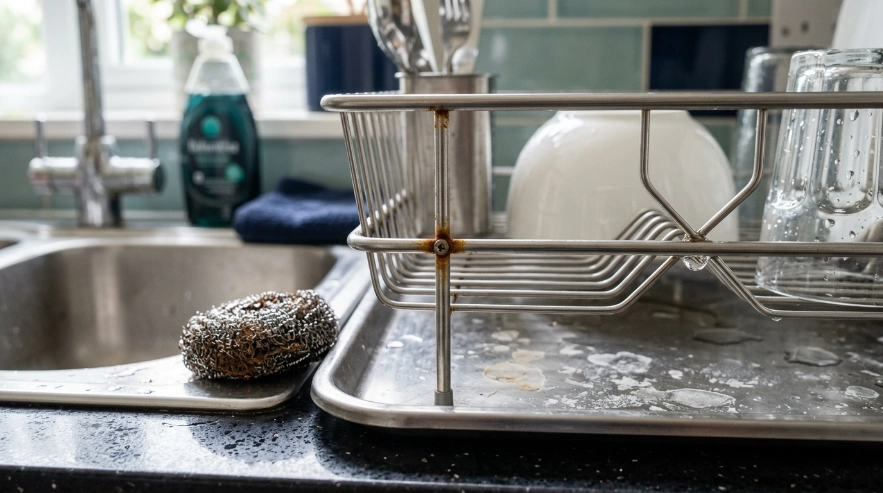
The most common causes are poor material quality, chloride exposure, damaged protective finishes, iron contamination, and moisture collecting in vulnerable areas. A rack may also combine several different metals, so the rusty part may not be stainless steel at all.
I recommend inspecting where the rust starts before deciding the entire rack has failed. Welds, feet, screws, wire intersections, and drainage trays usually reveal more than the large polished surfaces.
1. The Rack May Use a Less Corrosion-Resistant Grade
There isn’t one single type of stainless steel. Different stainless grades contain different amounts of chromium, nickel, molybdenum, and other alloying elements.
Those differences affect corrosion resistance. Manufacturers that clearly identify the stainless grade make comparison easier, while vague phrases such as “metal finish” tell you less.
| Dish Rack Material | Typical Rust Risk | Wet-Kitchen Performance | What to Check |
|---|---|---|---|
| 304 stainless steel | Low under normal indoor use | Strong choice for regular water exposure | Look for disclosed 304 or SUS304 construction |
| 430 stainless steel | Low to moderate | Usually suitable when cleaned and dried regularly | Avoid prolonged salt or chloride exposure |
| Coated carbon steel | Moderate if coating becomes damaged | Good only while the protective finish remains intact | Inspect chips, scratches, welds, and corners |
| Mixed stainless and ordinary-steel hardware | Varies | Main frame may stay clean while screws rust | Check fasteners, springs, feet, and welded joints |
| Plastic or aluminum body | No red iron rust on the main body | Useful alternative in constantly wet areas | Check metal accessories separately |
2. Chlorides and Salt Can Attack the Surface
Chlorides are a known challenge for stainless steel. They can contribute to localized forms of corrosion such as pitting when conditions are unfavorable.
In a kitchen, chloride exposure can come from salt, salty food residue, some cleaners, and bleach-based products. Rinsing away residue is therefore more important than many people realize.
- Don’t leave salty cooking utensils dripping on the rack for long periods.
- Rinse cleaner residue completely from stainless surfaces.
- Avoid chlorine bleach unless the rack manufacturer specifically approves it.
- Don’t let concentrated cleaning solution sit around joints or welds.
The British Stainless Steel Association’s stainless steel cleaning guidance also advises against chloride solutions and carbon-steel wool.
3. Steel Wool Can Make Stainless Steel Look Rusty
Orange stains on a stainless rack do not always mean the stainless steel itself is rusting. Small particles from ordinary carbon steel can become embedded in the surface and rust when they get wet.
This is why I don’t recommend steel wool for cleaning a dish rack. A pad previously used on ordinary steel can also transfer contamination.
The same problem can occur during manufacturing or handling. Metal debris from non-stainless tools may eventually produce isolated brown spots.
- Use a soft sponge or nylon cleaning brush.
- Keep ordinary steel brushes away from stainless surfaces.
- Check whether orange staining wipes away without leaving a pit.
The BSSA guidance on iron contamination explains that wet carbon-steel contamination can create rust staining even on otherwise sound stainless steel.
4. Water Can Sit in Welds, Joints, and Trays
Water alone does not mean a quality stainless rack will quickly rust. After all, dish racks are specifically built for wet dishes.
The bigger concern is water trapped with dirt, salts, or cleaning residue. Tight crevices around joints and fasteners can remain wet long after the visible frame dries.
- Keep the drain spout clear.
- Empty standing water from trays.
- Clean underneath removable holders.
- Dry corners that stay wet for hours.
- Remove food residue before it builds into a film.
Good drainage matters more than obsessively towel-drying every wire. A rack that sends water directly toward the sink has a practical advantage.
How Can You Tell Whether the Rack Itself Is Rusting?
Clean the suspicious area first and inspect what remains. Surface contamination often produces removable orange staining, while corrosion of the underlying metal may leave roughness, pits, bubbling coating, or recurring discoloration.
The location also gives useful clues. Rust concentrated on one screw or welded joint may indicate a different metal component rather than failure of the entire stainless frame.
| What You See | Likely Explanation | Next Step |
|---|---|---|
| Light orange film that wipes away | Surface contamination or deposited rust | Clean gently, rinse, dry, and monitor |
| Rust only on screws | Non-stainless or less-resistant hardware | Ask manufacturer about replacement hardware |
| Coating bubbling or peeling | Underlying coated steel may be corroding | Replace if deterioration keeps spreading |
| Small pits in bare stainless | Localized corrosion | Stop harsh cleaners and contact the manufacturer |
How Do You Remove Rust From a Stainless Steel Dish Rack?
Start with the gentlest cleaning method. Mild surface staining usually doesn’t require aggressive abrasives or strong chemicals.
- Empty the rack. Remove utensil holders, trays, and detachable accessories.
- Wash with warm water and mild dish detergent. Use a soft cloth, sponge, or nylon brush.
- Rinse thoroughly. Remove all soap, salt, and loosened residue.
- Treat remaining light stains carefully. Use a manufacturer-approved, non-scratching stainless steel cleaner if needed.
- Rinse again. Never leave cleaning chemicals sitting on the rack.
- Dry the surface. Pay special attention to joints, screws, feet, and welded areas.
If the rack manufacturer provides its own cleaning instructions, follow those first. Product-specific coatings and plastic components can react differently to household cleaners.
For example, Simplehuman advises cleaning its stainless steel with mild detergent, clean water, and a soft cloth while avoiding steel wool, bleach, salts, and acids.
What Should You Avoid When Removing Rust?
Aggressive cleaning can turn a small cosmetic problem into permanent surface damage. Scratching stainless steel also creates more places for residue to collect.
- Carbon-steel wool: It can scratch the finish and deposit rusting iron particles.
- Chlorine bleach: Chlorides can harm stainless steel under certain conditions.
- Metal scraping tools: They can damage polished surfaces or protective coatings.
- Unknown acids: Don’t experiment with strong chemical rust removers on a kitchen rack.
- Long soaking: Avoid leaving mixed-material racks submerged unless the manufacturer allows it.
Similar care principles apply to other kitchen equipment. Our guide to caring for stainless-steel cookware surfaces also explains why drying and non-abrasive cleaning matter.
How Do You Keep a Stainless Steel Dish Rack From Rusting?
Keep the rack clean, free-draining, and away from harsh chloride cleaners. Prevention is much easier than repairing corrosion after the finish becomes damaged.
I focus on simple maintenance rather than polishing the rack after every use. The goal is to prevent persistent deposits and standing water.
- Let water drain: Position the rack so its spout empties directly into the sink.
- Clean weekly: Remove soap film, mineral buildup, food residue, and grime.
- Rinse after salty dishes: Don’t leave concentrated salt residue on the metal.
- Avoid steel wool: Use soft sponges, microfiber cloths, or nylon brushes.
- Skip bleach: Choose mild cleaners unless the manufacturer says otherwise.
- Inspect fasteners: Catch rust around screws and joints before it spreads or stains nearby surfaces.
- Keep the drain tray clean: Slime and residue can hold moisture against components.
If you routinely clean kitchen equipment in the dishwasher, remember that material-specific care still matters. Our dishwasher guide for frying pans explains why manufacturer instructions should take priority.
Is 304 Stainless Steel Better for a Dish Rack?
304 stainless steel is generally an excellent material for indoor kitchen equipment because it offers strong corrosion resistance under normal household conditions. A clearly disclosed 304 construction is therefore a useful buying signal.
However, the grade isn’t the only factor. Drainage design, weld quality, screws, coating choices, and cleaning habits still influence long-term performance.
- Prefer manufacturers that clearly state the rack material.
- Look for stainless fasteners as well as a stainless main frame.
- Choose drainage that minimizes standing water.
- Check warranties covering corrosion or manufacturing defects.
- Read the manufacturer’s cleaning restrictions before buying.
Don’t assume every silver-colored rack is solid stainless steel. Some products use coated ordinary steel, chrome plating, stainless-look finishes, or a mixture of materials.
Does a More Expensive Dish Rack Mean It Will Never Rust?
No price guarantees a completely rust-free rack. Higher-priced models may offer better materials, drainage, warranties, and construction, but maintenance still matters.
Look at specifications instead of relying on price alone. A well-designed rack should make it easy for water to leave rather than collect around the frame.
For other kitchen products, the same principle applies: materials and cleaning instructions matter more than assumptions based on appearance. Our rice cooker pot cleaning guide provides another example of checking construction before choosing a cleaning method.
What Should You Look for When Buying a Rust-Resistant Dish Rack in 2026?
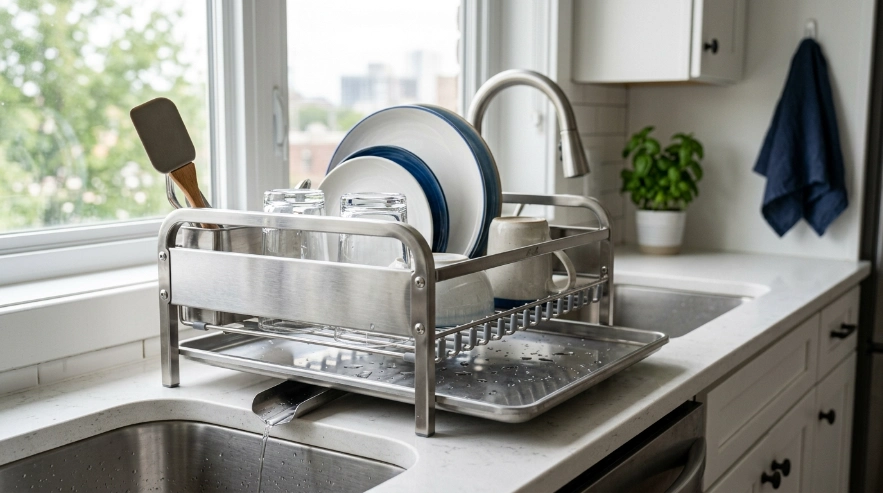
Prioritize disclosed stainless construction, good drainage, removable trays, easy-to-clean joints, and a meaningful warranty. These details tell you more than marketing phrases alone.
- Material disclosure: 304 or another identified stainless grade is more useful than “metal.”
- Direct drainage: A spout reduces standing water on the counter and tray.
- Accessible cleaning: Removable trays and utensil cups help prevent residue buildup.
- Protected dish contact: Silicone or plastic caps can reduce scratching.
- Quality fasteners: Screws and connectors should resist the same wet conditions as the frame.
- Warranty: A longer warranty can provide reassurance if premature corrosion appears.
If you’re ready to choose one, these are two practical stainless-steel options I would put on the shortlist.
🏆 Best Premium Pick
Simplehuman Steel Frame Dishrack
★★★★★ 4.8/5 editorial fit
This rack uses a steel-frame design with a pivoting drain spout, removable components, silicone-capped dish supports, and a five-year warranty. I like it for this topic because the manufacturer specifically highlights rust resistance and gives clear stainless-steel cleaning instructions.
📦 Best Foldaway Design
OXO Good Grips Foldaway Dish Rack
★★★★☆ 4.5/5 editorial fit
OXO lists stainless steel as the rack material and includes a drainage spout, folding plate supports, and a compact convertible layout. I would consider it when counter space matters as much as corrosion-resistant construction.
Frequently Asked Questions
Does real stainless steel ever rust?
Yes. Genuine stainless steel can corrode when its protective passive layer is compromised by conditions such as chloride exposure, contamination, harsh chemicals, or persistent crevices. Good stainless steel remains much more corrosion-resistant than ordinary carbon steel, but it isn’t completely immune.
Why did my stainless steel dish rack rust so quickly?
Quick rusting may indicate ordinary-steel hardware, a damaged coating, iron contamination, harsh cleaner exposure, or a less corrosion-resistant material. Check whether the rust begins around screws, welds, chips, or joints rather than across the entire stainless surface.
Can I use steel wool on a stainless steel dish rack?
No. Carbon-steel wool can scratch stainless surfaces and leave small iron particles behind. Those particles can rust in a wet kitchen and create orange stains that make the stainless rack itself appear corroded.
Can bleach cause stainless steel to rust?
Bleach and other chloride-containing cleaners can damage stainless steel under certain conditions and may contribute to staining or localized corrosion. Use a mild detergent or a cleaner specifically approved by the rack manufacturer instead.
Should I replace a dish rack that has rust?
Light removable staining doesn’t always require replacement. Clean the rack and monitor it first. Replace the rack if corrosion keeps returning, coating is peeling, wires are deeply pitted, structural parts are weakened, or the manufacturer recommends replacement.
Final Takeaway
A stainless steel dish rack can rust, but good material and proper care greatly reduce the risk. Most problems start with harsh chemicals, contamination, poor drainage, damaged coatings, or vulnerable non-stainless components.
Choose a rack with clearly stated materials and effective drainage. Then clean it gently, keep salt and bleach away, and deal with small orange spots before they become a larger problem.
