
How to Juice a Pomegranate: 5 Easy Methods (With or Without a Juicer)

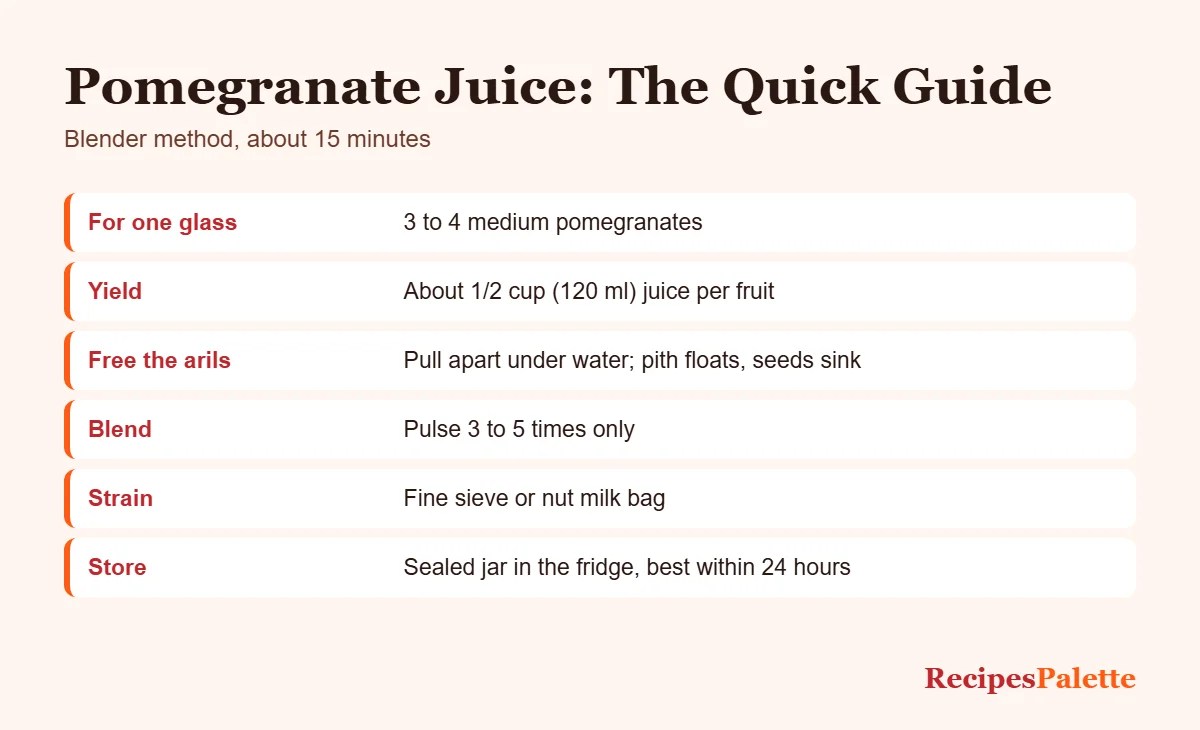
The easiest way to juice a pomegranate is to remove the seeds (arils) in a bowl of water, pulse them in a blender for a few seconds, then strain through a fine sieve. You can also roll and squeeze a whole pomegranate in a bag, press halves on a citrus juicer, or run the arils through a slow juicer. One medium pomegranate gives about 1/2 cup (120 ml) of juice, so plan on 3 to 4 for a full glass.
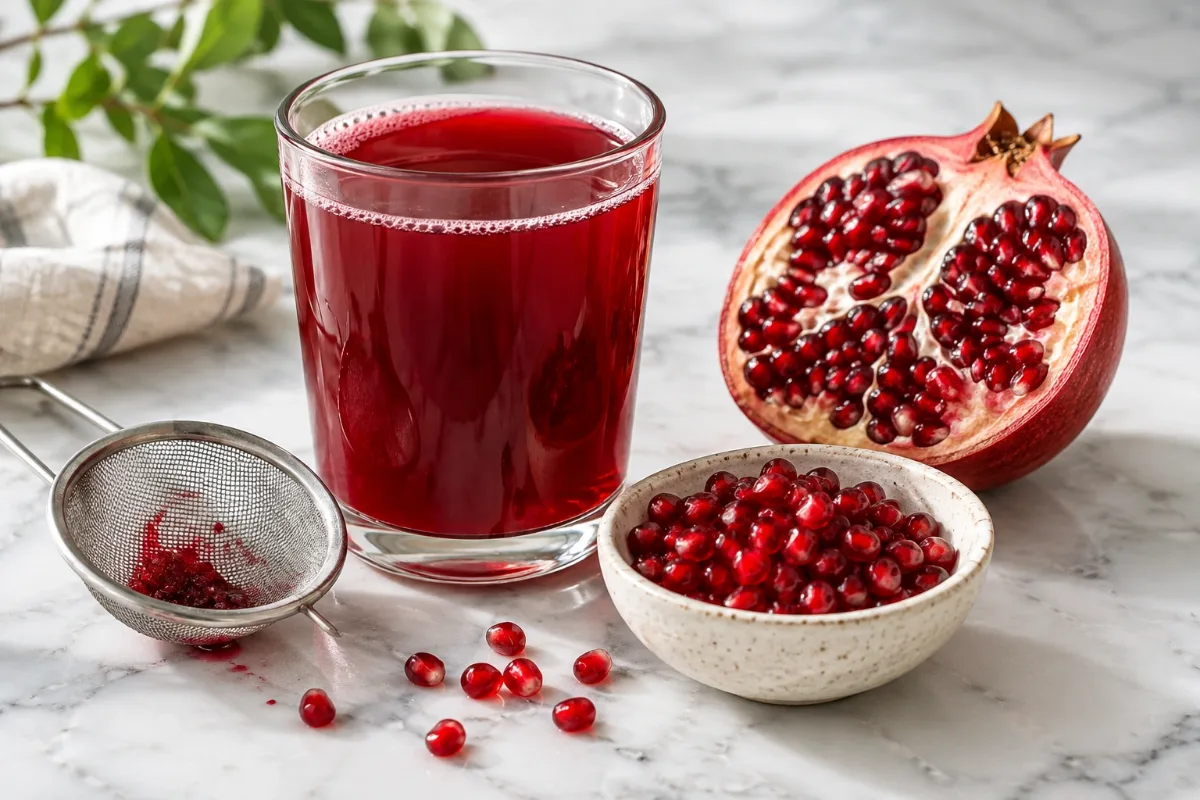
Fresh pomegranate juice is tart, deep ruby red and tastes nothing like many bottled versions. It is a little messy to make, but with the right method you can do it in about 15 minutes without staining your whole kitchen. Here are five methods, from no tools at all to a slow juicer, with tips for picking fruit and storing the juice.
What You Need
- 3 to 4 medium pomegranates for one 12-ounce glass
- A sharp knife and cutting board (a plastic board stains less than wood)
- A large bowl of cold water
- A fine mesh sieve or nut milk bag
- A blender, citrus juicer or slow juicer, depending on the method
- An apron or old shirt; pomegranate juice stains fabric
How to Pick a Good Pomegranate
- Heavy for its size. Weight means juicy seeds.
- Firm, smooth skin that is deep red to red-brown. Color varies by variety, so weight matters more.
- Slightly squared sides. As the arils swell, the round fruit takes on flatter, angular sides.
- No soft spots or deep cracks. Small surface scratches are fine.
In the US, fresh pomegranates are mainly in stores from about September to January. Whole fruit keeps for several weeks in the fridge.
Step 1: Remove the Seeds Without the Mess
Every method except the whole-fruit squeeze starts with the arils, the juicy red seeds. The water method keeps juice from splattering.
- Wash the pomegranate under running water.
- Cut off the crown, the little flower-shaped top, with a shallow slice.
- Score the skin in 4 to 6 lines from top to bottom, following the white ridges you can see inside. Cut only through the skin.
- Pull it apart into sections under the water in your bowl.
- Loosen the arils with your fingers. They sink, while the white pith floats.
- Skim off the pith, then pour the arils into a sieve and drain.
A medium pomegranate gives roughly 1 cup of arils.
Method 1: Blender (Easiest)
- Put the arils in a blender.
- Pulse 3 to 5 times, just a second each. You want to burst the arils, not grind the hard inner seeds, which can make the juice bitter and cloudy.
- Pour into a fine sieve set over a bowl and press with a spoon, or squeeze through a nut milk bag.
- Taste and serve. It is naturally tart; a splash of orange or apple juice softens it.
This is the method we use most. It is quick, gets plenty of juice, and the blender is easy to rinse. Our guide to making juice without a juicer has more straining tips.
Method 2: Citrus Juicer or Press
Cut the pomegranate in half across the middle, like a grapefruit. Press each half cut side down on a citrus reamer or in a lever press, the same way you would juice an orange. A lever press works best because pomegranates need firm pressure. The skin can add a little bitterness, so do not press too hard at the end. If you are choosing a press, see manual vs electric citrus juicer.
Method 3: Slow (Masticating) Juicer
Feed the arils into a slow juicer a handful at a time. It separates juice and seeds neatly and gives a clear, smooth result. Do not put pieces of skin or pith in. Centrifugal juicers can work too but tend to spray and give a foamier juice. Read what is a cold press juicer if you are curious how these machines work.
Method 4: Squeeze in a Bag (No Tools)
- Put the arils in a sturdy zip-top bag and press out the air.
- Roll a rolling pin or bottle over the bag, or press with your palms, until the arils burst.
- Snip a small corner and pour the juice through a sieve into a glass.
This is great for one small glass or for kids who want to help.
Method 5: Roll the Whole Fruit
Press and roll a whole pomegranate firmly on the counter for a minute or two, turning it, until it feels soft and you can hear the arils pop inside. Hold it over a glass, cut a small hole in the skin and squeeze out the juice. It works, but you get less juice and some bitterness from the pith, so treat it as a fun trick rather than an everyday method.
Which Method Gives the Most Juice?
| Method | Juice yield | Effort | Best for |
|---|---|---|---|
| Blender and sieve | High | Low | Everyday juice |
| Slow juicer | High | Medium | Clear, smooth juice |
| Citrus press | Medium | Low | Quick single glass |
| Bag squeeze | Medium | Medium | No equipment |
| Whole-fruit roll | Lower | Medium | Fun, no cleanup |
Pomegranate Juice Combinations
- Pomegranate + orange: 1 cup pomegranate juice with 1/2 cup fresh orange juice. Sweeter and bright.
- Pomegranate + apple + lemon: softens the tartness, great in winter.
- Pomegranate + beet + carrot: deep red and earthy.
- Pomegranate sparkler: half pomegranate juice, half sparkling water, a lime wedge.
- Pomegranate + ginger: a small piece of ginger blended with the arils adds warmth.
Find more ideas in our list of juice combinations.
Ways to Use Fresh Pomegranate Juice
Fresh pomegranate juice is not only for drinking. Its tart, fruity flavor works well in the kitchen too.
- Salad dressing: whisk 2 tablespoons pomegranate juice with 3 tablespoons olive oil, 1 teaspoon honey, a little Dijon mustard, salt and pepper.
- Quick glaze: simmer 1 cup juice with 1 tablespoon honey until it reduces by about half. Brush it over roasted chicken, carrots or salmon near the end of cooking.
- Breakfast: stir a splash into plain yogurt or overnight oats, then top with fresh arils.
- Ice pops and granita: mix with a little orange juice, then freeze in molds, or freeze in a shallow tray and scrape with a fork every 30 minutes.
- Party mocktail: pomegranate juice, lime juice and sparkling water over ice, with a few arils dropped in each glass.
Common Mistakes When Juicing Pomegranates
- Leaving the pith in. Even small pieces add bitterness. Skim it all off in the water bowl.
- Blending too long. A few quick pulses are enough.
- Juicing on a wooden board. It will stain. Use plastic or glass.
- Buying light fruit. Light pomegranates are often dry inside.
How to Store Pomegranate Juice
- Fridge: sealed glass jar, filled near the top, at 40°F (4°C) or colder. Best within 24 hours; it can keep reasonable flavor for 2 to 3 days.
- Freezer: freeze in ice cube trays or freezer-safe containers with space at the top, for a few months.
- Arils: keep extra arils in a sealed container in the fridge for about 5 days, or freeze them flat on a tray, then bag them.
See how long fresh juice lasts for general storage rules, and our juicing safety tips for hygiene.
How to Remove Pomegranate Stains
- Hands: rub with lemon juice, then wash with soap.
- Cutting boards and counters: wipe quickly; scrub stubborn spots with a paste of baking soda and water.
- Clothes: rinse the back of the fabric under cold water straight away, treat with a stain remover and wash. Avoid hot water and the dryer until the stain is gone.
Frequently Asked Questions
How many pomegranates make one cup of juice?
About 2 medium pomegranates make 1 cup (240 ml) of juice, depending on size and method.
Can you blend pomegranate seeds whole?
Yes, but only pulse briefly. Long blending grinds the hard inner seeds and makes the juice bitter and cloudy.
Why is my pomegranate juice bitter?
Usually because white pith or skin got in, or the seeds were blended too long. Remove all pith and pulse gently.
Should I add sugar to pomegranate juice?
Fresh pomegranate juice is tart but not usually sour. If you want it sweeter, mix it with orange or apple juice rather than adding sugar.
Can I use frozen pomegranate arils?
Yes. Thaw them first, then blend and strain as usual.
What can I do with the leftover seeds and pulp?
The pressed pulp is mostly hard seed. Compost it, or use any leftover whole arils in salads, yogurt and oatmeal.
Use the water bowl to free the arils, pulse them briefly, strain, and you will have a glass of bright, fresh pomegranate juice with very little mess.