
Are Dish Racks Sanitary? How to Keep Yours Clean and Hygienic

Quick Answer
Yes, dish racks can be sanitary when they are cleaned regularly, drain freely, and dry between uses. The main problems start when food residue, standing water, slime, or mold builds up, so I recommend following basic USDA kitchen cleaning guidance and treating the rack like any other washable kitchen surface.
What keeps a dish rack sanitary?
- Good drainage: Water should flow toward the sink instead of pooling underneath dishes.
- Regular cleaning: Wash away soap film, food particles, grease, and mineral deposits before they build up.
- Complete drying: Let the rack and drain tray dry thoroughly whenever possible.
- Clean surroundings: Keep raw-meat juices, dirty sponges, and food-prep mess away from clean dishes.
- Easy-to-clean parts: Removable trays, utensil cups, and drain spouts make maintenance much simpler.
Clean it sooner if you notice:
- Slimy film, discoloration, standing water, stale odors, visible food debris, or mold-like growth.
A dish rack looks harmless because it normally holds freshly washed plates, cups, and utensils. Yet it spends much of its life damp, which makes its cleaning routine more important than many people realize.
The good news is simple. A well-maintained rack is a practical and hygienic way to air-dry everyday dishes.
Are Dish Racks Sanitary for Everyday Use?
Yes, a dish rack can be sanitary for everyday dishes if it is clean, drains properly, and gets enough airflow to dry. A rack does not automatically make clean dishes dirty just because they sit on it.
The bigger issue is the condition of the rack itself. Water trapped under the drain board can combine with soap residue, grease, dust, and tiny food particles.
- Clean rack: Low concern during normal household dish drying.
- Wet rack with standing water: Needs better drainage or more frequent drying.
- Rack with slime or food residue: Wash before placing clean dishes on it.
- Rack with visible mold-like growth: Stop using it until it has been thoroughly cleaned.
As of 2026, public food-safety guidance still favors allowing cleaned utensils and equipment to air-dry rather than relying on a potentially contaminated cloth. USDA sanitation guidance also includes air-drying after cleaning and sanitizing.
If you want to improve the rest of your kitchen routine too, my guide to kitchen safety for home cooks covers cross-contamination, sinks, utensils, and food-preparation surfaces.
Definition: A sanitary dish rack is a rack maintained so clean dishes can drain and air-dry without being exposed to avoidable food residue, standing water, visible grime, or contaminated kitchen surfaces.
Why Can a Dish Rack Become Unsanitary?
Moisture by itself is not the whole problem. The combination of moisture, residue, poor drainage, and infrequent cleaning creates the conditions that make a rack unpleasant and harder to keep hygienic.
Standing Water Stays Trapped in the Tray
Flat drain boards can develop small puddles when they are not angled toward the sink. Those wet areas also collect minerals and detergent residue.
Check the lowest corners after a full load of dishes dries. If water is still sitting there hours later, improve the angle or empty the tray manually.
Food and Grease Reach the Rack
A plate can look clean while still carrying a small amount of residue. Pots, cutting tools, and utensils can also drip into the tray.
The rack should therefore be washed as equipment, not treated as permanent countertop furniture.
The Sink Area Cross-Contaminates It
The kitchen sink handles raw ingredients, dirty dishes, hands, utensils, and food scraps. USDA has specifically identified the sink as an important area to clean and sanitize because contamination can spread to nearby items.
Keep the rack away from raw poultry packages, meat juices, unwashed produce, and dirty cleaning cloths. You can read the USDA discussion of kitchen sink food safety for more context.
Small Parts Get Forgotten
The plate slots are easy to see, but drain spouts, utensil cups, tray corners, rubber feet, and joints are often overlooked. These are the spots I would inspect first when a rack smells stale.
- Remove the utensil holder.
- Check underneath rubber or silicone parts.
- Inspect the drain channel and spout.
- Look under the rack where water may collect.
- Clean seams with a small brush when needed.
How Often Should You Clean a Dish Rack?
There is no single federal cleaning interval for every household dish rack. The right schedule depends on how often you use it, how well it drains, and whether visible residue develops.
For an ordinary kitchen, I like a simple rule: inspect it daily and give it a thorough wash about once a week as a practical baseline. Clean it sooner whenever you see residue, slime, standing water, or contamination from food preparation.
| Situation | Cleaning Priority | What I Recommend |
|---|---|---|
| Normal everyday dishes | Routine | Empty water, let the rack dry, inspect daily, and wash regularly. |
| Visible slime, odor, or residue | Immediate | Wash the rack and tray before drying another load. |
| Raw-meat or poultry juices splash nearby | Immediate | Clean and use an appropriate food-contact-safe sanitizer if the material allows. |
| Rack used for infant feeding items | Higher | CDC advises washing and sanitizing the rack every few days, with daily care in certain higher-risk situations. |
That last row deserves special attention. CDC guidance for infant feeding items is stricter than ordinary dish-rack advice.
CDC notes that drying racks may trap moisture and can be difficult to clean. For infant items, it recommends dedicated rack use and frequent cleaning and sanitizing.
How Do You Clean a Dish Rack Properly?
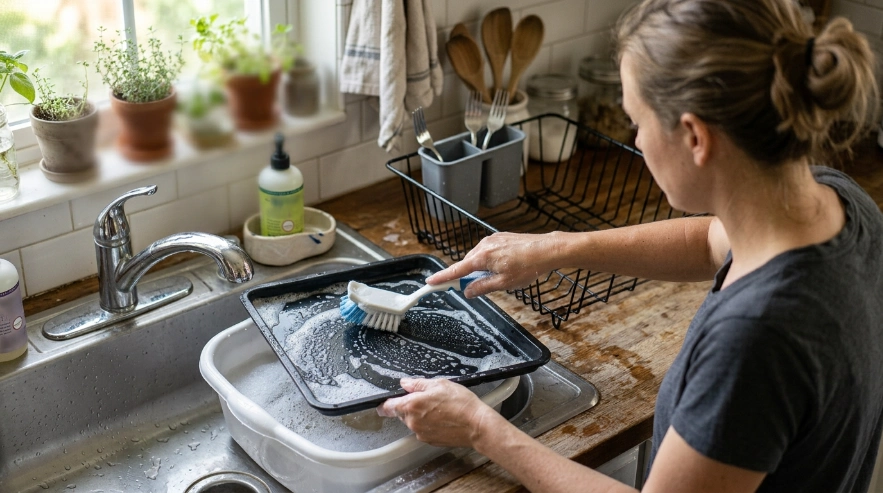
Start with physical cleaning before worrying about sanitizing. Soap and scrubbing remove the film and residue that can protect germs from a sanitizer.
- Empty the rack completely. Remove dishes, cups, utensil holders, mats, and detachable drain parts.
- Pour out standing water. Check underneath the tray and around the drain channel.
- Wash with warm soapy water. Use a soft sponge or brush that can reach corners and joints.
- Scrub removable parts separately. Pay attention to utensil cups and drain spouts.
- Rinse away detergent and loosened debris. Follow the rack manufacturer’s care instructions.
- Sanitize when appropriate. Use a product labeled for the relevant surface and follow its directions exactly.
- Let everything dry thoroughly. Reassemble the rack only after trapped areas are no longer wet.
USDA explains the useful distinction between cleaning and sanitizing. Cleaning removes soil and some microbes, while sanitizing follows cleaning when an added germ-reduction step is appropriate.
You can review that two-stage approach in the USDA’s cleaning and sanitizing guidance.
Can You Put a Dish Rack in the Dishwasher?
Only if the manufacturer says the rack or removable part is dishwasher-safe. Heat can warp some plastics, damage coatings, or shorten the life of bonded components.
Do not assume a stainless-looking rack can go straight into a dishwasher. It may contain plastic feet, coated wires, adhesive parts, or drainage components with different care requirements.
For dishwasher-safe kitchen items, USDA notes that mechanical dishwashing can effectively clean and sanitize suitable utensils and cutting boards. Its dishwasher food-safety guidance explains the role of proper detergent, heat, and removal of food matter.
Is Air-Drying Dishes More Sanitary Than Using a Towel?
Air-drying is a good choice because it avoids rubbing a clean dish with a towel that may carry contamination. The rack still needs to be clean enough that the drying process does not introduce a new problem.
CDC specifically tells caregivers not to rub or pat infant feeding items dry with a dish towel because germs can transfer from the towel. USDA food-safety rules also recognize air-drying after cleaning and sanitizing.
- Use clean dishes only: Do not place partly washed items on the rack.
- Leave airflow around items: Avoid stacking wet bowls tightly together.
- Point cups downward at an angle: Allow water to escape rather than pool inside.
- Drain the tray: Do not leave clean utensils sitting above stagnant water.
- Store dishes when dry: Trapping moisture inside stacked cookware can create odors and spotting.
Good drying is only one part of kitchen hygiene. Safe cooling and storage matter too, especially after meals, so see my guide to storing cooked food safely if you are tightening up your whole kitchen routine.
Which Dish Rack Materials Are Easiest to Keep Sanitary?
The easiest rack to maintain is one with smooth surfaces, removable parts, effective drainage, and few inaccessible joints. Material matters, but design often matters more.
Stainless Steel and Coated Metal
Metal frames tend to feel sturdy and expose plenty of surface area to air. Their weakness is that seams, coatings, and attached plastic parts can still collect grime.
Drying the frame helps prevent water spots and keeps mineral buildup under control.
Plastic
Plastic racks are light and easy to rinse. Molded trays can also be simple to scrub when their corners are open and accessible.
Deep grooves are less convenient. Look for removable pieces and smooth drainage paths.
Wood and Bamboo
Wooden racks can work well when they are designed for wet kitchen use and allowed to dry completely. Follow the maker’s cleaning instructions because prolonged soaking can damage some finishes or cause swelling.
The same principle applies to wooden cookware. Care instructions should match the material rather than using one aggressive cleaning method for everything.
What Features Make a Dish Rack More Hygienic?
I prioritize drainage and cleanability over decorative features. A rack that keeps water moving and comes apart easily is much simpler to maintain.
- Angled drain board: Sends water toward the sink.
- Drain spout: Reduces pooling on the counter and tray.
- Raised ridges: Keep bowls and glasses above collected water.
- Removable utensil cup: Makes trapped residue easier to reach.
- Smooth surfaces: Give food residue fewer difficult crevices to hide in.
- Removable tray: Makes deep cleaning much faster.
- Open construction: Improves airflow around drying dishes.
My quick inspection method is to wipe the drain-tray corners and underside with a clean white paper towel. A slick film or unexpected discoloration tells you more than looking at the shiny top rails.
If you regularly clean cookware by hand, similar drying habits help after washing pieces such as an enamel Dutch oven.
When Should You Replace a Dish Rack Instead of Cleaning It?
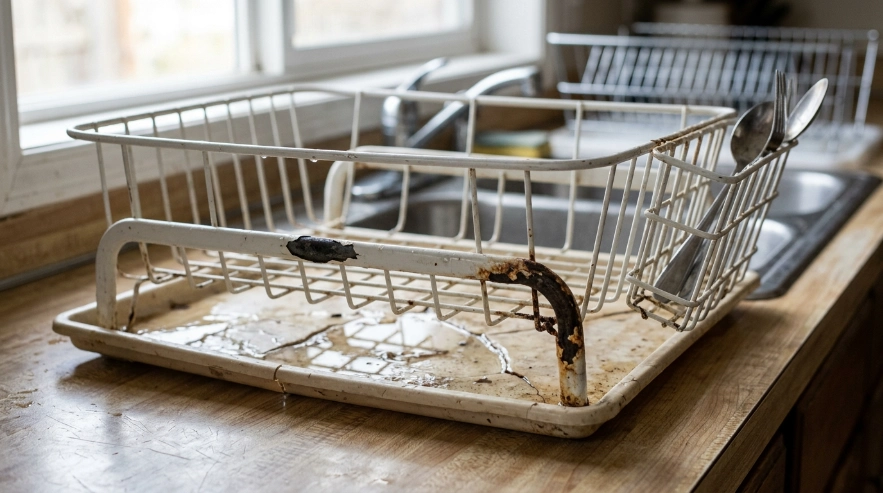
Replace the rack when damage makes thorough cleaning or drainage difficult. Cosmetic water spots alone are not a reason to throw it away.
- Cracks that repeatedly trap dirty water
- Peeling or badly damaged coatings
- Deep corrosion or structural rust
- Warped trays that no longer drain
- Broken drain components
- Permanent inaccessible buildup
- Loose or damaged sections that no longer hold dishes safely
A rack that is only stained may still be usable after proper cleaning. A rack that cannot be cleaned or dried effectively is different.
For cookware that has its own moisture concerns, I also cover cleaning timing in my guide on when to clean a cast iron skillet.
Dish Racks I Like for Easier Draining and Cleaning
If you are replacing a rack, I would focus on drainage, removable parts, and open surfaces rather than promises about being “germ-proof.” These three current designs have practical features that can make routine cleaning easier.
🏆 BEST DRAINAGE DESIGN
Simplehuman Steel Frame Dishrack
★★★★★ 4.8/5 editor fit
The swivel spout drains toward the sink, while the inner tray is designed to spread and move water efficiently. I like the removable drainage components because they give you access to areas cheaper racks often hide.
🧼 BEST FOR EASY STORAGE
OXO Good Grips Aluminum Fold Flat Dish Rack
★★★★☆ 4.6/5 editor fit
Its rustproof aluminum frame folds flat, and raised drain-board ridges keep drying items above collected water. The removable utensil cup is another useful feature when you want to clean small parts separately.
💧 BEST EASY-CLEAN CADDY
Umbra Holster Dish Rack
★★★★☆ 4.4/5 editor fit
This model combines a molded plastic caddy with a stainless-steel frame and a dual-position drainage spout. I favor that simple open construction because the manufacturer specifically designed the caddy to be easy to wash.
Frequently Asked Questions
Can bacteria grow on a dish rack?
Yes, microorganisms can persist or grow where moisture and residue remain. The practical solution is to remove food and soap buildup, prevent standing water, clean the rack regularly, and let the rack dry thoroughly between periods of heavy use.
Can mold grow on a dish drying rack?
Mold can develop on persistently damp surfaces when suitable organic material is present. Clean visible buildup promptly, scrub hard-to-reach areas, improve drainage, and replace parts that are damaged badly enough to remain dirty or wet.
Should I sanitize my dish rack every day?
Most ordinary household racks do not need aggressive daily sanitizing when they are clean and dry properly. Infant-feeding racks are different: CDC recommends much more frequent washing and sanitizing, especially for babies under two months, premature infants, or those with weakened immune systems.
Is a dish rack cleaner than a drying mat?
Either can be hygienic when maintained properly. A rack usually offers more airflow, while a drying mat can be easier to launder, so the better choice is the one you can keep clean, dry, and free of trapped water.
Is it safe to leave dishes in a drying rack overnight?
Yes, clean dishes can normally remain on a clean rack while they finish air-drying. Keep the rack away from food-preparation splashes, pets, dirty cloths, and other contamination, then store dishes once they are fully dry.
Final Takeaway
Dish racks are not inherently unsanitary. Problems develop when the rack becomes a permanent wet zone that nobody thinks to clean.
Keep water moving toward the sink, wash residue away regularly, inspect the tray and small components, and let the whole rack dry. Those simple habits make air-drying dishes practical, tidy, and hygienic for everyday kitchen use.
