
What to Put Under a Dish Rack? Best Options for a Dry Counter

Quick Answer
The best thing to put under a dish rack is a draining tray, silicone drying mat, absorbent dish mat, or quick-drying stone mat. Your choice should keep standing water away from the counter and be easy to clean. If your main problem is countertop clutter, these ways to hide a dish rack can also help.
Best choices under a dish rack
- Drain board: Best when you want water directed straight toward the sink.
- Silicone mat: Easy to rinse, reusable, and good for protecting the counter from drips.
- Microfiber mat: Absorbs small amounts of water and folds away after use.
- Stone drying mat: Absorbs moisture quickly and gives the counter a low-profile look.
- Rack drip tray: Often the simplest choice because it fits directly beneath the rack.
One thing I avoid
- I don’t leave an ordinary kitchen towel permanently under the rack because it can stay damp and needs frequent changing.
Water under a dish rack looks harmless until the counter stays wet for hours. I prefer a setup that catches drips while still letting moisture escape.
The right choice depends on your rack, sink, countertop, and how many dishes you wash. Here is how I choose the simplest option without creating another cleaning chore.
What Should You Put Under a Dish Rack?
Put something under your dish rack that either drains water away or absorbs it and dries quickly. A plain wet surface defeats the whole purpose.
I usually narrow the choice to five options.
- Draining tray: Catches water and directs it toward the sink.
- Silicone drying mat: Creates a washable barrier between the rack and countertop.
- Microfiber dish mat: Absorbs drips from smaller washing loads.
- Stone drying mat: Pulls moisture away from the surface and dries between uses.
- Built-in drain board: Requires no separate mat when the sink already has a proper draining area.
For most kitchens, I would start with a draining tray or silicone mat. They are simple to clean and don’t depend on fabric staying dry.
Simple definition: A dish rack mat or tray is a protective surface placed beneath a drying rack to collect, drain, or absorb water from freshly washed dishes.
Which Material Works Best Under a Dish Drying Rack?
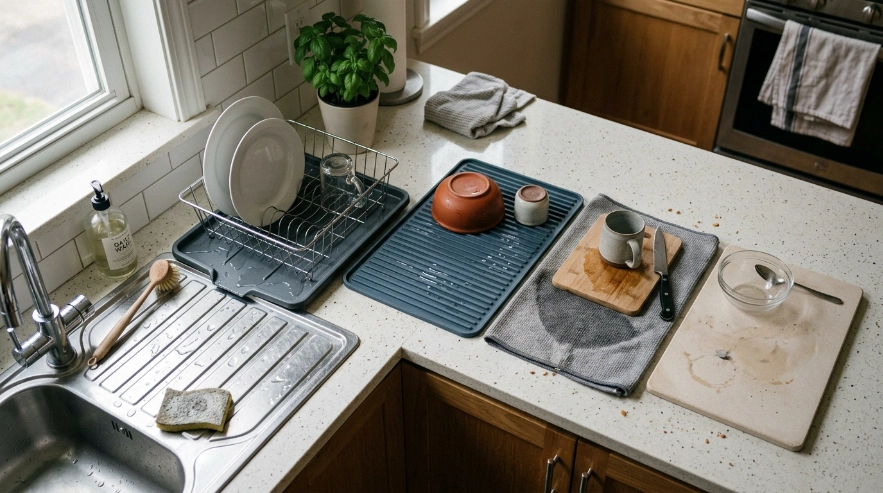
There is no single best material for every kitchen. I choose based on whether I want absorption, drainage, easy cleaning, or compact storage.
This comparison makes the differences clearer.
| Option | Handles Water By | Storage | Best For | Main Drawback |
|---|---|---|---|---|
| Drain tray | Collecting or draining | Rigid | Daily dishwashing | Needs regular rinsing |
| Silicone mat | Holding and channeling drips | Rolls or folds | Small kitchens | Water may need tipping off |
| Microfiber mat | Absorbing | Folds flat | Light dish loads | Must dry between uses |
| Stone mat | Absorbing and evaporating | Usually rigid | Low-profile counters | Can be heavier or brittle |
| Sink drain board | Direct drainage | Built in | Permanent setups | Not available with every sink |
Drain Tray or Drain Board
A drain tray is my first choice for a rack that stays beside the sink every day. It keeps most drips in one controlled area.
A sloped tray is even better when its edge reaches the sink. Water can move away instead of sitting beneath the dishes.
- Choose a tray slightly wider than the rack feet.
- Keep the drainage path pointed toward the sink.
- Remove food residue before it dries onto the tray.
- Check underneath the tray when cleaning the counter.
Silicone Drying Mat
Silicone works well when I want something thinner than a plastic drain board. Raised ridges can keep the rack slightly above collected water.
The surface is also simple to rinse. Many designs roll or fold into a cabinet when the counter needs to be cleared.
Microfiber Dish Drying Mat
A microfiber mat is useful for smaller loads because it absorbs scattered drips. It also protects delicate countertops from the feet of a metal rack.
The key is letting the mat dry. I would keep a second mat available if the first one is still damp at the next washing session.
Stone Drying Mat
Stone-style drying mats have become more common in modern kitchens. Their thin appearance works well when you dislike bulky plastic trays.
I would still lift the mat regularly and inspect underneath it. No under-rack material should become a reason to ignore the counter below.
Is It Okay to Put a Towel Under a Dish Rack?
A clean towel can work for a short drying session, but I would not use one as a permanent under-rack solution. Fabric can remain damp when water keeps dripping onto the same area.
If a towel is your temporary solution, treat it like laundry rather than part of the counter.
- Start with a clean, dry towel.
- Replace it when it becomes wet.
- Hang it open so it can dry.
- Do not leave a soaked towel trapped under a loaded rack overnight.
- Wash reusable towels regularly.
The U.S. Environmental Protection Agency’s moisture guidance stresses controlling moisture and drying wet areas promptly. That principle is useful around a constantly wet kitchen workstation too.
I also avoid cardboard, newspaper, and paper grocery bags. They absorb water but are poor reusable barriers beneath a dish rack.
How Do You Keep Water From Collecting Under a Dish Rack?
The easiest fix is to give the water a clear path toward the sink. A good drying setup should not depend on you discovering a hidden puddle later.
I use this simple routine.
- Level the rack: Make sure all feet sit securely on the tray or mat.
- Angle the drain: Point the tray’s draining edge or spout toward the sink.
- Leave airflow: Avoid packing dishes so tightly that everything stays wet.
- Empty standing water: Tip out any water that does not drain on its own.
- Clean underneath: Lift the rack and mat during normal counter cleaning.
- Let parts dry: Do not immediately trap damp mats or trays inside a closed cabinet.
The USDA recommends cleaning kitchen sink areas and allowing sanitized surfaces to air-dry. Its kitchen sink food-safety guidance is a useful reminder that moisture management matters around washing areas.
If the rack constantly leaves water outside its tray, the rack may simply be too large for the base. In that case, changing the tray is easier than wiping the counter several times each day.
What Should You Put Under a Dish Rack on Wood or Stone Counters?
On moisture-sensitive surfaces, I prefer a waterproof barrier rather than an absorbent mat alone. The goal is to stop repeated water contact with the countertop.
Always follow the countertop maker’s care instructions because finishes and sealants vary.
- Wood or butcher block: Use a waterproof tray or silicone barrier and wipe escaped water quickly.
- Laminate: Keep water away from seams and exposed edges.
- Natural stone: Use a clean mat or tray and follow the stone manufacturer’s care guidance.
- Quartz: A silicone mat or draining tray keeps the drying station easier to clean.
- Stainless steel: Direct-draining trays work well because water can return toward the sink.
I don’t choose an under-rack material only because it looks attractive. It still needs to handle water every day.
Should a Dish Rack Drain Directly Into the Sink?
Direct drainage is usually the easiest setup when the rack sits beside the sink. You avoid repeatedly emptying a tray full of water.
However, direct drainage only works when the spout reaches the basin and maintains a downward path.
- The rack should remain stable.
- The tray should not slope away from the sink.
- The drainage channel should stay clear.
- The spout should end over the basin.
If direct drainage is impossible, an absorbent or catchment mat is fine. Just build emptying and drying into your routine.
The FDA Food Code also uses air drying as part of proper equipment and utensil handling in food-service settings. You can review the broader FDA Food Code guidance for the underlying food-safety framework.
How Often Should You Clean Under a Dish Rack?
I check beneath my drying setup whenever I clean the surrounding counter. Visible water, food residue, mineral deposits, or odor means it needs attention sooner.
The exact schedule depends on how often you hand-wash dishes.
- After heavy washing: Empty obvious standing water.
- During counter cleaning: Lift the rack and wipe beneath it.
- When residue appears: Wash the tray instead of wiping around the buildup.
- When fabric feels damp: Replace or wash the drying mat.
- Before cabinet storage: Make sure removable pieces are dry.
One mistake I see is cleaning the visible rack but never moving it. The hidden area underneath deserves the same attention.
What Should You Avoid Putting Under a Dish Rack?
I avoid materials that trap moisture, fall apart when wet, or make the rack unstable. Saving a few dollars is not helpful if the counter stays soaked.
- Cardboard: It softens quickly and is meant to be discarded.
- Newspaper: It becomes soggy and can transfer ink or debris.
- Permanent wet towel: It requires frequent drying and washing.
- Unsealed wood board: Repeated moisture can be hard on the surface.
- Uneven improvised supports: They can make a loaded rack unstable.
- Oversized fabric: Loose edges can stay wet around the sink.
A simple purpose-made tray often causes fewer problems. It also makes cleaning faster.
How Can You Make the Whole Dish-Drying Area Work Better?
The surface under the rack is only one part of the setup. Dish placement and storage habits matter too.
I start with these changes.
- Keep plates upright instead of stacking wet plates together.
- Place cups where air can enter them.
- Keep utensils loose enough to drain.
- Put fully dry dishes away instead of storing them permanently on the rack.
- Keep the drain path free from dishes and utensils.
Once dishes are dry, a good cabinet system helps the rack become empty again. My guide on how to arrange dishes on shelves covers a practical everyday setup.
Deep lower storage can work too. If that suits your kitchen better, see how to store dishes in a drawer without creating unstable stacks.
You may also find that you need less drying equipment than expected. This guide explains whether you really need a dish rack based on your washing habits and available space.
My Simple Under-Dish-Rack Setup
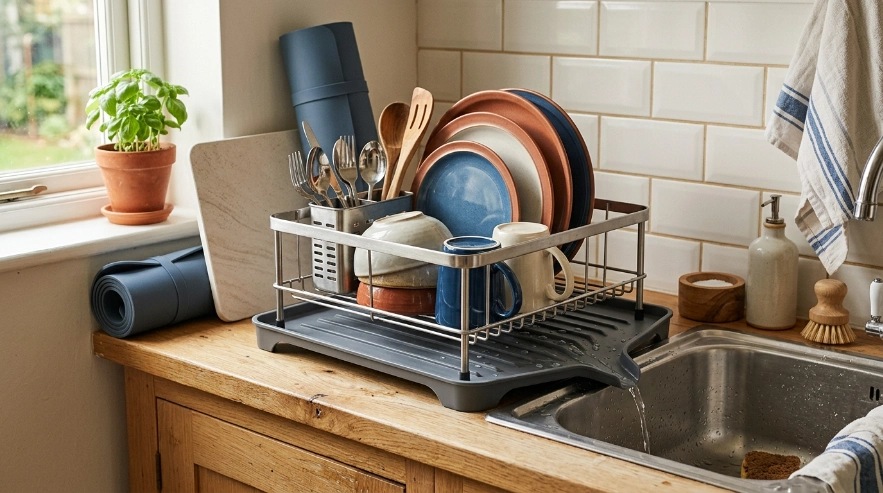
For a normal countertop beside the sink, I prefer a rack with a properly sized draining tray. The tray should send water toward the sink rather than hold a shallow puddle.
For a tiny kitchen, I prefer a silicone or folding drying system. It is easier to put away once the dishes and drying surface are completely dry.
- Heavy daily dishwashing: Rack plus draining tray.
- Small apartment: Folding rack plus silicone mat.
- Occasional hand washing: Absorbent drying mat.
- Minimal countertop look: Stone drying mat or low-profile drainer.
- Sink with built-in drain board: Use the existing drainage surface when it fits the rack safely.
The best setup is boring in a good way. Water goes where it should, the counter stays dry, and cleanup takes almost no thought.
If you’re ready to improve the drying area, these are the three product styles I would consider first:
🏆 Best Fold-Flat Rack
OXO Good Grips Aluminum Fold Flat Dish Rack
★★★★☆ 4.7/5 editorial fit
The folding design combines raised drying surfaces with a removable utensil cup and compact storage. I like this style when the rack needs to leave the counter after cleanup.
💰 Best Mat-and-Rack Combo
Umbra UDRY Dish Drying Rack and Mat
★★★★☆ 4.6/5 editorial fit
UDRY combines a microfiber mat with a removable plate rack and folds for storage. I would choose it for lighter loads when flexibility matters more than maximum capacity.
↔ Best Expandable Design
Joseph Joseph Extend Slim Steel Dish Drainer
★★★★☆ 4.6/5 editorial fit
Its sliding tray expands the drying area, while the adjustable drainage spout helps send water toward the sink. I like the idea for daily hand washing when a fixed small rack sometimes needs extra capacity.
Frequently Asked Questions
Can I put a dish rack directly on the countertop?
Yes, but I prefer a tray or mat beneath it when water regularly drips from the rack. A protective surface makes standing water easier to spot and clean, especially around seams, wood, or other areas where repeated moisture is unwanted.
Is a silicone mat good under a dish rack?
Yes. Silicone is a practical choice because it creates a reusable water-resistant surface and is easy to rinse. Raised or grooved designs can also keep the rack above collected drips, but you still need to empty or drain any water that remains.
Can I use a microfiber mat under a metal dish rack?
Yes, as long as the mat is large enough and the rack stays stable. Microfiber absorbs drips and can protect the counter from rack feet, but the mat should be washed and allowed to dry instead of remaining wet beneath the rack.
What is better under a dish rack: a mat or a tray?
A tray is better for heavy daily washing because it handles larger amounts of water and may drain into the sink. A mat is better when you want something flexible, absorbent, or easy to fold away after a smaller dish load.
How do I stop my dish rack from getting moldy underneath?
Reduce trapped moisture first. Empty standing water, clean the rack and tray, wipe the counter beneath them, and let wet parts dry before enclosing them. Check hidden areas regularly instead of cleaning only the visible top of the rack.
Final Takeaway
So, what should you put under a dish rack? For most kitchens, I recommend a draining tray, silicone mat, microfiber drying mat, or quick-drying stone mat.
Choose the option that keeps water controlled without creating another damp surface to manage. Drainage and easy cleaning matter more than appearance.
If I had to choose one simple everyday setup in 2026, I would use a stable dish rack over a washable tray that drains toward the sink. It keeps the counter protected and makes the whole drying routine easier.
